- Belgium nuclear policy reversal halts decommissioning of ENGIE's remaining 4 reactors.
- Units secure 6 GW baseload with 92% capacity factors.
- Benelux grids target 5.5 GW storage by 2030 amid AI growth.
By Finley Vance
Belgium's Prime Minister Bart De Wever announced the Belgium nuclear policy reversal. The government halts decommissioning of ENGIE's remaining four nuclear reactors at Doel and Tihange sites. This reverses the 2003 Nuclear Phase-out Act originally targeting 2025 completion and secures 6 GW baseload power. (42 words)
Three reactors—Doel 1, Doel 2, and Tihange 1—shut down prematurely between 2012 and 2023. The operating Doel 3, Doel 4, Tihange 2, and Tihange 3 units deliver 6 GW nameplate capacity at 90%+ capacity factors. ENGIE signed a letter of intent for lifetime extensions. Negotiations now target 10- to 20-year power purchase agreements (PPAs), sidestepping nationalization risks.
Belgium's parliament voted for extensions in March 2024. De Wever declared: "This government chooses safe, affordable, and sustainable energy with less fossil import dependence." (dpa-international report, October 9, 2024).
Belgium's nuclear fleet historically generated 55% of national electricity in peak years, per World Nuclear Association 2024 country profile.
Nuclear Baseload Enhances Grid Stability
Nuclear reactors deliver dispatchable baseload at 92% average capacity factors, according to International Energy Agency (IEA) data. Operators ramp units without weather dependence, smoothing 12 GW solar and wind variability by 2030.
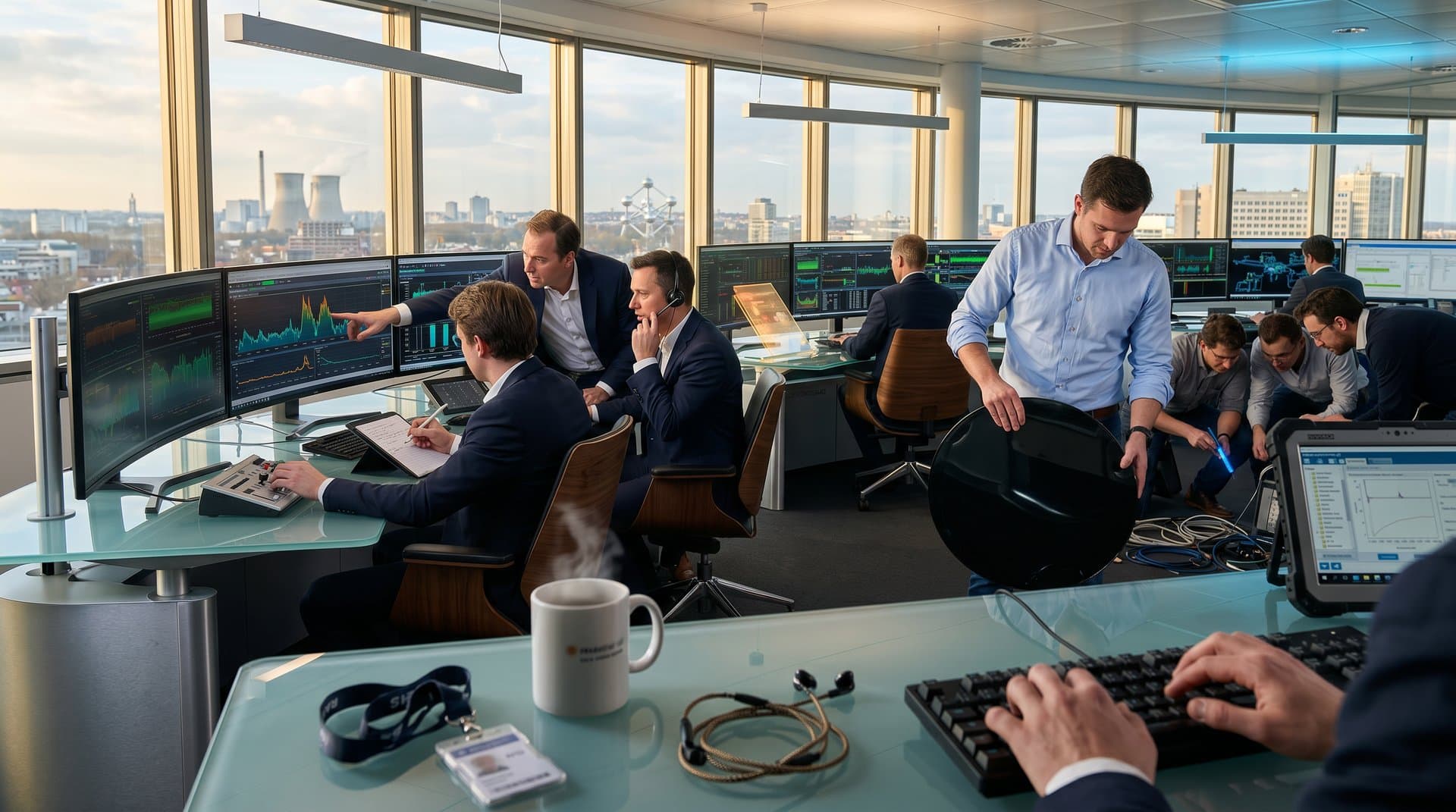
Elia Group, Belgium's transmission system operator (TSO), plans to integrate those renewables. Nuclear output reduces curtailment by 20%, Elia states in its 2024 Grid Investment Plan.
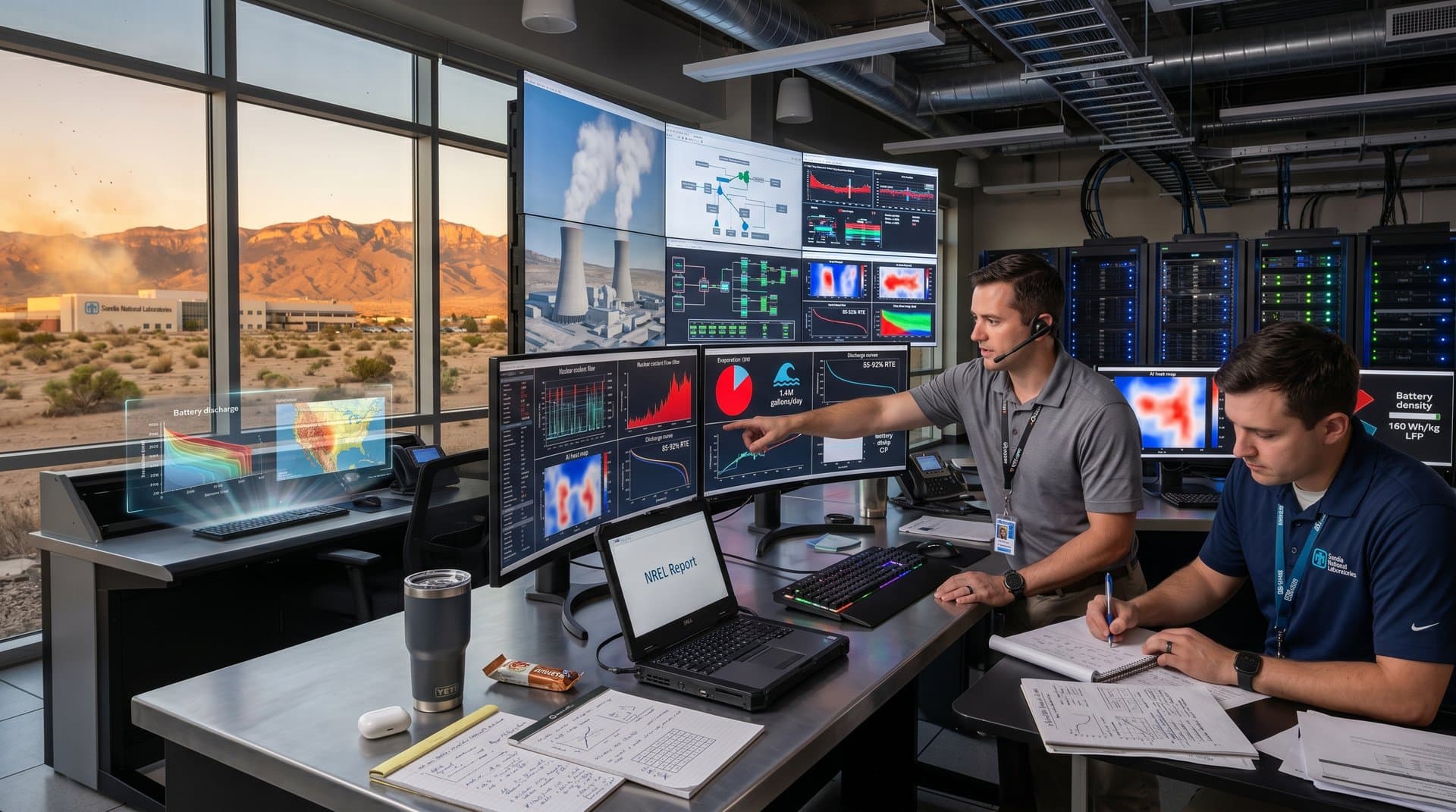
Lithium-ion batteries complement this, offering 86-90% round-trip efficiency (RTE) at 0.5C discharge rates per IEC 62619 standards. Baseload reduces deep-cycle stress, extending cycle life to 6,000 cycles at 80% depth-of-discharge (DoD), per Sandia National Labs testing. This cuts replacement capex by 15% over 15 years.
Stable profiles also lower levelized cost of storage (LCOS) risks. BloombergNEF Q3 2024 Storage Report pegs LCOS at USD 145/MWh for 4-hour lithium-ion systems.
AI Data Centers Accelerate Storage Demand
AI training and inference will demand 500 TWh annually by 2026 across EMEA, IEA projects in its 2024 Electricity Report. Hyperscalers like Microsoft target 5 GW additions in Benelux by 2030.
Nuclear provides firm supply, but batteries handle sub-100 ms ramping and black-start capabilities. Developers now deploy 250 MW/4-hour battery energy storage systems (BESS) for peak shaving, capturing 15% arbitrage spreads.
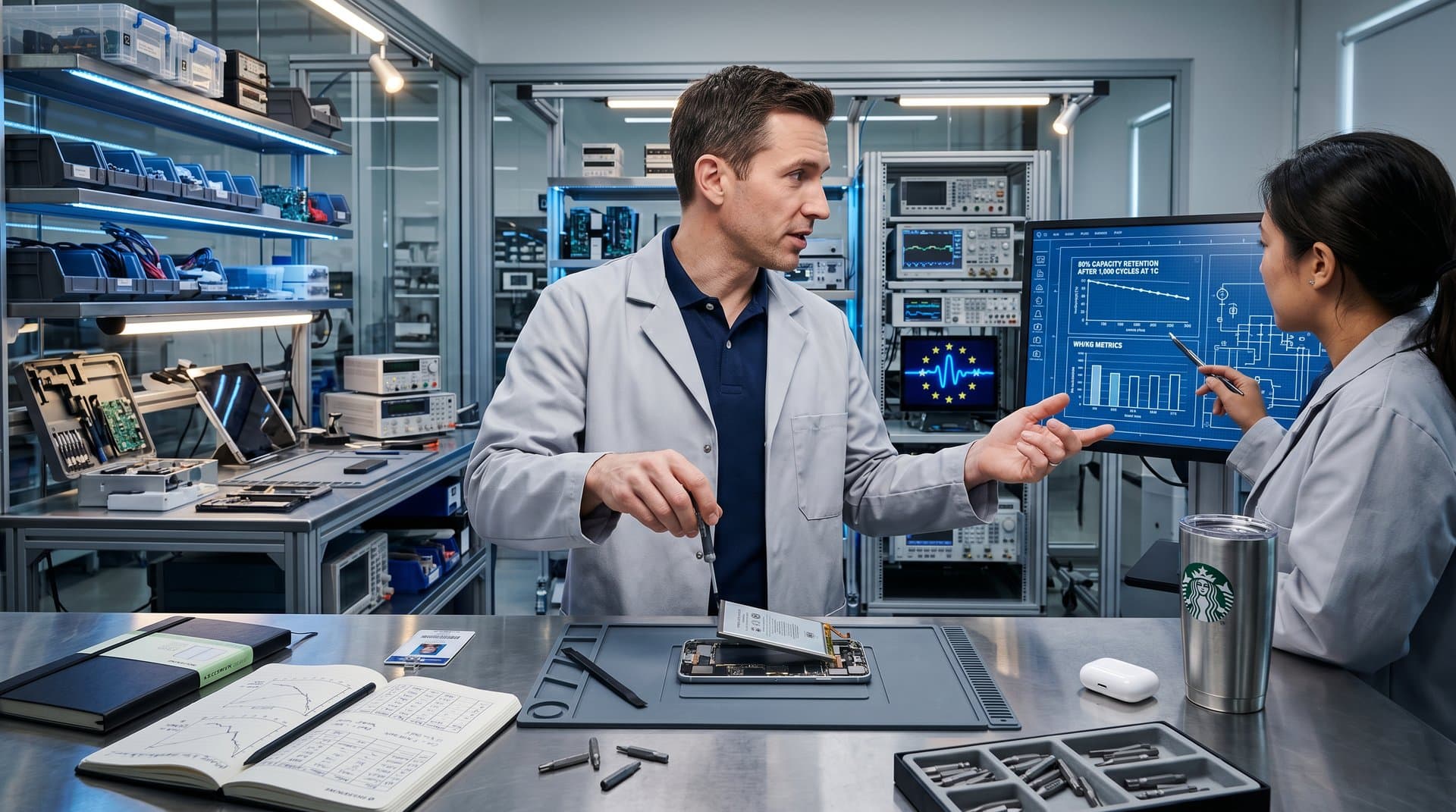
EU Battery Regulation (2023/1542) requires 12% recycled cobalt by 2030, pressuring lithium supply chains from Australia and Chile. Long-duration energy storage (LDES) gains traction: iron-air batteries hit 150 Wh/kg energy density, 100-hour duration, and USD 50/MWh LCOS per Form Energy specs.
Vanadium redox flow batteries deliver 75% RTE with unlimited cycles and 30 Wh/L density, per Invinity Energy Systems benchmarks. These technologies address cobalt price volatility, up 25% year-over-year per Benchmark Mineral Intelligence.
Hybrid Nuclear-Storage Assets Maximize Revenue
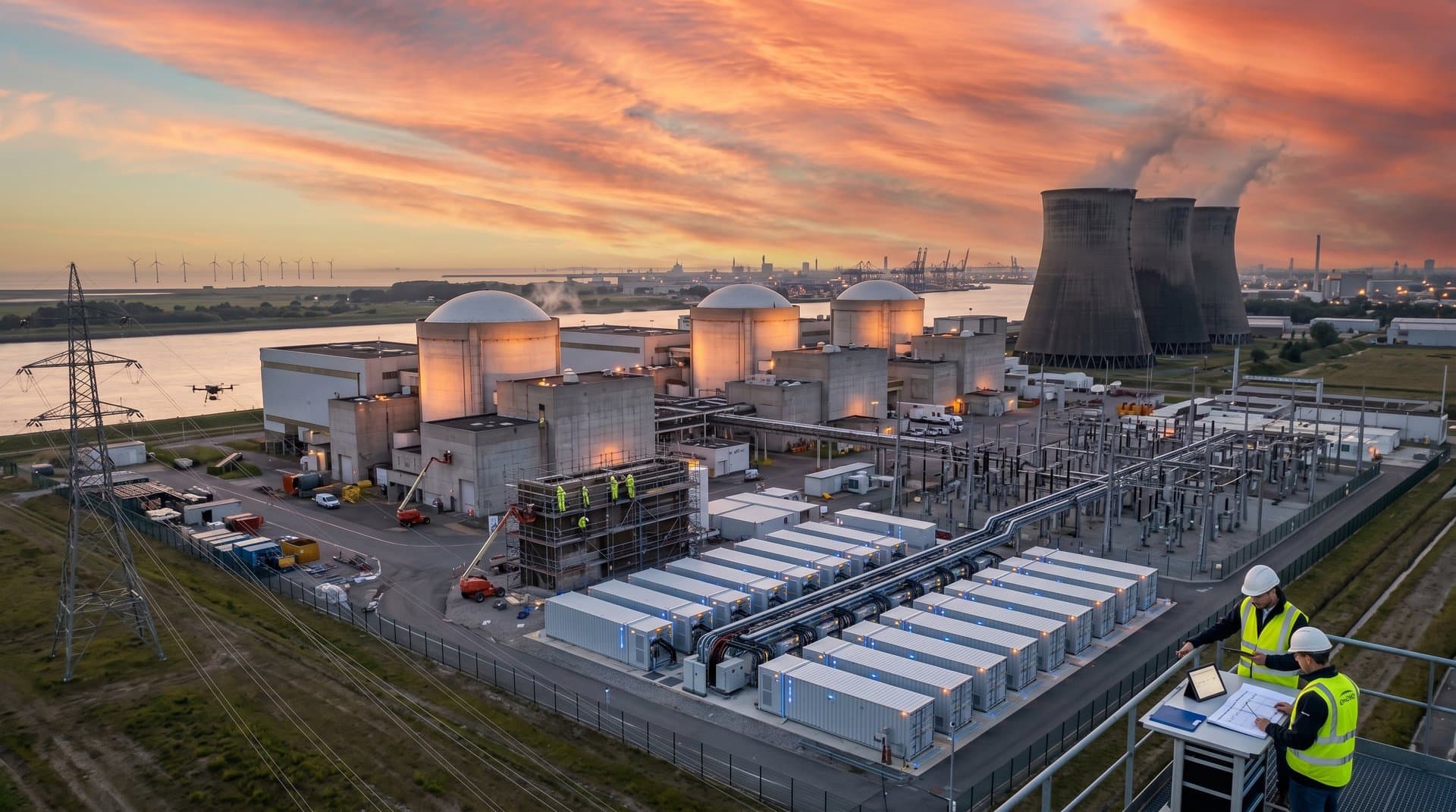
ENGIE evaluates 500 MW BESS co-location at Doel 4 and Tihange 3. National policy mandates 20% storage pairing for reactor extensions.
Elia forecasts 5.5 GW utility-scale storage across Benelux by 2030 in its 2024 System Adequacy Report. Tenders favor 8-hour iron-air and 4-hour lithium-ion mixes.
Revenue stacks reach EUR 200/kW-year: capacity markets (EUR 60/kW), frequency containment reserve (EUR 90/MW), and intraday spreads (EUR 25/MWh). BloombergNEF models LCOS at USD 130/MWh in hybrids, yielding 11% internal rates of return (IRR) on 15-year PPAs.
Arbitrage and Capacity Markets Benefit Storage
The Belgium nuclear policy reversal widens peak-to-trough spreads to EUR 35/MWh. Capacity payments reward 6 GW firmness against 2 GW AI evening peaks.
Developers secure EUR 75-85/MWh corporate PPAs. RTE above 87% delivers 95% availability, per NREL hybrid plant modeling.
This policy secures energy independence. Storage investments hit EUR 4 billion, fortifying grids for 20% compute load growth by 2030.
Frequently Asked Questions
What triggered Belgium's nuclear policy reversal?
Prime Minister Bart De Wever halted decommissioning of ENGIE's remaining 4 reactors, reversing the 2003 Act after 2024 parliament vote. Letter of intent enables 10-20 year extensions.
How does the reversal impact grid stability?
4 reactors deliver 6 GW baseload at 92% capacity factors. This supports 12 GW renewables integration and cuts curtailment by 20%, per Elia.
Why does it boost energy storage demand?
AI data centers add 5 GW loads; storage provides ramping and arbitrage. Benelux plans 5.5 GW BESS/LDES by 2030 with LCOS at USD 145/MWh.
What are Belgium's nuclear reactor details?
ENGIE's reactors at Doel/Tihange total ~6 GW nameplate. 3 units offline since 2012-2023; 4 units extend operations. Fleet supplied 55% electricity historically.