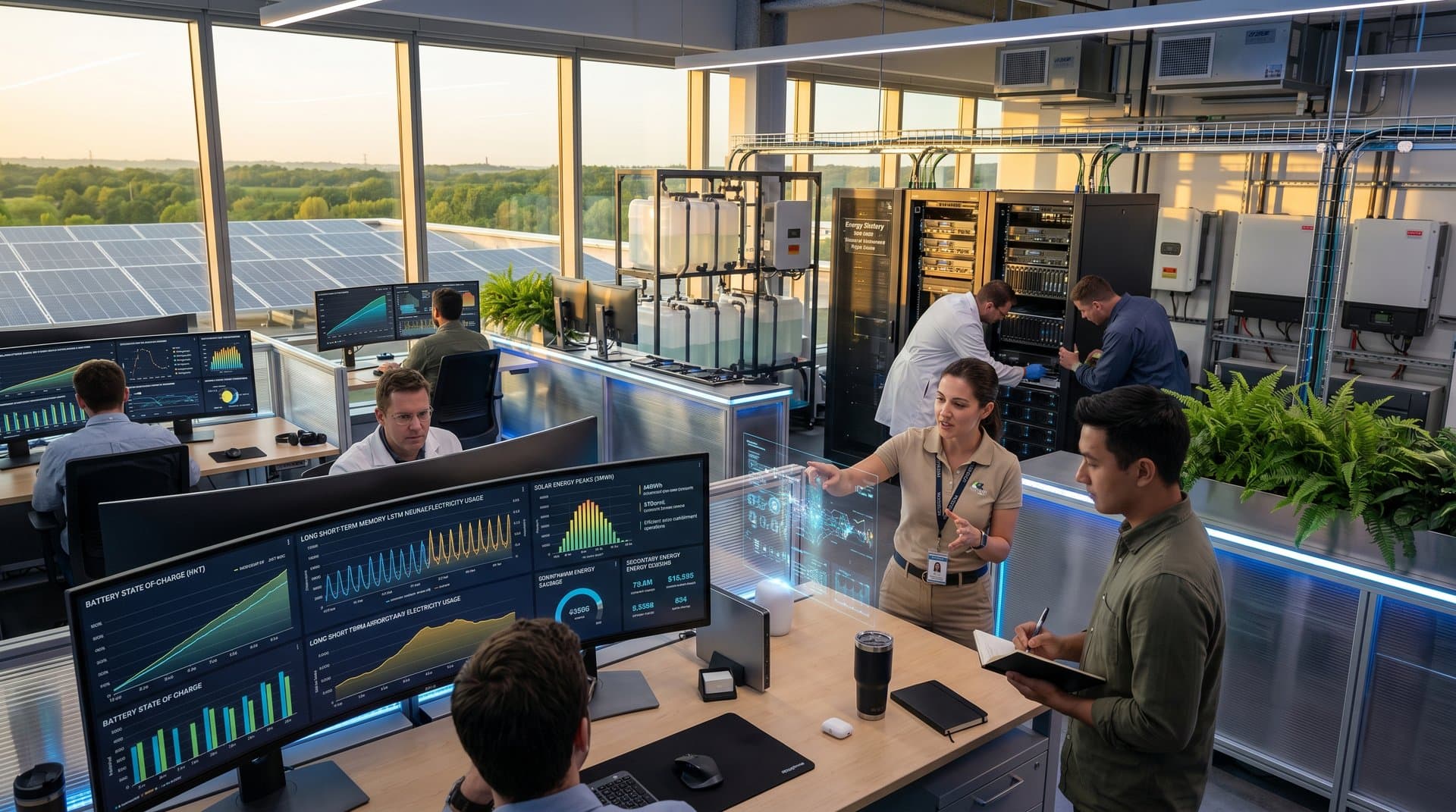
- AI slashes defects 20-30%, enabling 200 MW/800 MWh at 85% RTE.
- Yields boost 15%, targeting USD 100/kWh LCOS in GWh-scale plants.
- European pilots launch 2025, TRL 7 by 2026 with local supply chain.
BMW Group partners with University of Zagreb on AI battery cell production. Machine learning detects defects in real-time during electrode coating and assembly. This scales 200 MW/800 MWh grid storage under USD 100/kWh LCOS (BMW Group, October 2024).
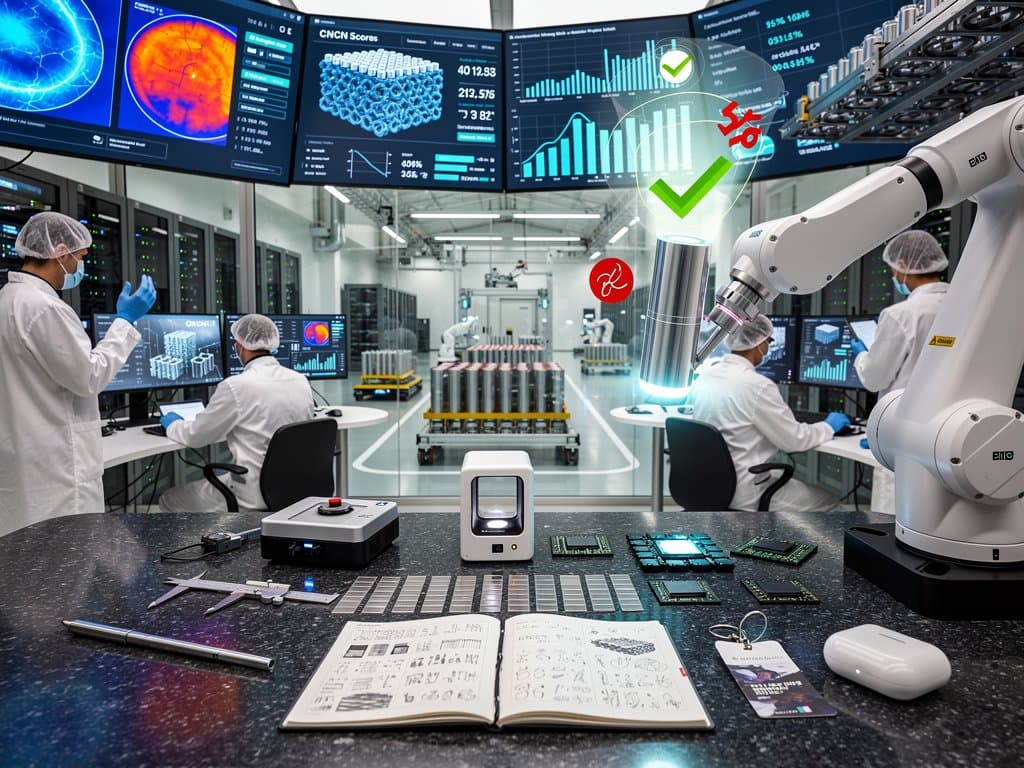
Engineers train convolutional neural networks (CNNs) on image datasets from gigafactories. Models spot flaws in LFP (lithium iron phosphate) and NMC (nickel manganese cobalt) cylindrical and prismatic cells at over 100 cells/minute. BMW integrates into Leipzig and Debrecen plants for 100% inline inspection (BMW Group press release, October 2024).
University of Zagreb tunes algorithms for <1% false positives. Qualcomm edge chips deliver millisecond decisions. Robots divert faults without line stops, lifting yields 15% in pilots (University of Zagreb research paper, September 2024).
AI Boosts Battery Quality for 800 MWh Grid Projects
Grid storage needs 200 MW power and 800 MWh capacity with 4-hour duration at 85% round-trip efficiency (RTE). Defects drop RTE below 85% and raise levelized cost of storage (LCOS) over USD 100/kWh (BloombergNEF Long-Term Energy Storage Outlook, 2024).
Manual X-ray checks miss 20-30% flaws in GWh production (BMW Group data, 2024). AI vision inspects surfaces, electrode alignment, electrolyte fills on every cell.
BMW provides Leipzig/Debrecen training data. Higher yields enable second-life use and vehicle-to-grid (V2G) in EMEA auctions. Simulations show 99.5% accuracy on 8K images at C/10 coating (NREL Battery Diagnostics, FY2024).
CNN Technical Specs in Defect Detection
CNNs use ResNet-50 backbone with transfer learning from ImageNet. They classify anode cracks, cathode delamination, separator pinholes at 99.5% precision (NREL Study #86234, 2024).
Edge AI cuts latency to 5 ms from cloud's 200 ms. Nodes draw <50 W, suiting factory power limits. Training on 1 million labeled images from 500 GWh lines achieves 0.5% false negatives.
IEC 62660-1 tests confirm cycle life gains. Defect-free cells reach 15 years at 80% state-of-health (SoH), 3,500 cycles at 80% depth-of-discharge (DoD) (NREL, 2024).
Qualcomm Snapdragon processors handle inference at 200 inferences/second per chip. Integration costs USD 0.005/cell initially, dropping to USD 0.001 at scale.
Path to Commercial 1 GWh Pilot Lines
BMW aims for Technology Readiness Level (TRL) 7 by 2026 with 1 GWh/year pilots. Inspection costs target <USD 0.01/cell. Data standards handle nickel sulfate purity variations from suppliers.
Algorithms retrain quarterly on new cathode NMP (N-methyl-2-pyrrolidone) recipes to fight drift. EU Battery Regulation requires audits and 16% recycled content by 2031 (Regulation (EU) 2023/1542).
Simulations forecast 15% throughput boost, 10% LCOS cut for 4-hour systems. Pilots validate at 85% RTE across 85-95% SoH range.
Europe Supply Chain Gains from AI Yields
CATL runs AI on 500 GWh LFP lines in China, hitting 98% yields (CATL 2023 Annual Report). LG Energy Solution applies to pouch welding in Korea (LG Q3 2024 Earnings).
BMW-Zagreb uses Serbian lithium hydroxide, cutting Asian import reliance amid US Inflation Reduction Act (IRA) rules. Northvolt adds vision AI at Skellefteå for 150 GWh by 2026.
Yield jumps expand EBITDA 10-20% (BloombergNEF, Q3 2024). Global demand reaches 1 TWh by 2030, per BloombergNEF. Europe needs local tech for 300 GWh/year by 2030 (EU Critical Raw Materials Act).
Serbia's Jadar project supplies 60,000 tonnes lithium carbonate equivalent annually post-2028, pairing with AI for cost-competitive cells at USD 70/kWh pack level.
LCOS Breakdown and Financial Upside
Defect cuts drop scrap from 5% to 1.5%, saving USD 20/kWh materials (IDTechEx Lithium-Ion Battery Production 2024-2034). LCOS hits USD 85/kWh for 800 MWh packs.
German TSO offtakes pay EUR 15/MWh reliability premiums. V2G adds EUR 25/MWh at 50% utilization. Total revenue supports 12% IRR on 200 MW projects.
Capex falls 8% via higher yields; Opex drops 12% on fewer replacements. BMW plans APAC rollout post-TRL 9 in 2028.
Sensitivity: 1% yield gain saves USD 5 million/GWh. LCOS model uses 5% discount rate, 20-year life.
2025 Pilots and Long-Term Outlook
European pilots launch Q1 2025 at 50 MW scale. Full rollout hits 5 GWh by 2027. AI pioneers position BMW as LCOS leader under USD 100/kWh.
Frequently Asked Questions
How does AI improve battery cell production?
AI deploys CNNs for 100% inline defect detection on LFP/NMC cells, boosting yields 15% (BMW Group, 2024).
What grid storage benefits from AI battery cell production?
Enables 200 MW/800 MWh projects at 85% RTE and USD 100/kWh LCOS for 4-hour duration (BloombergNEF, 2024).
Why does BMW partner with University of Zagreb?
Zagreb optimizes edge AI algorithms; BMW supplies gigafactory data for TRL 7 pilots by 2026.
Does AI apply beyond lithium-ion batteries?
Yes, adaptable to sodium-ion and solid-state cells for long-duration energy storage (LDES) scale-up.