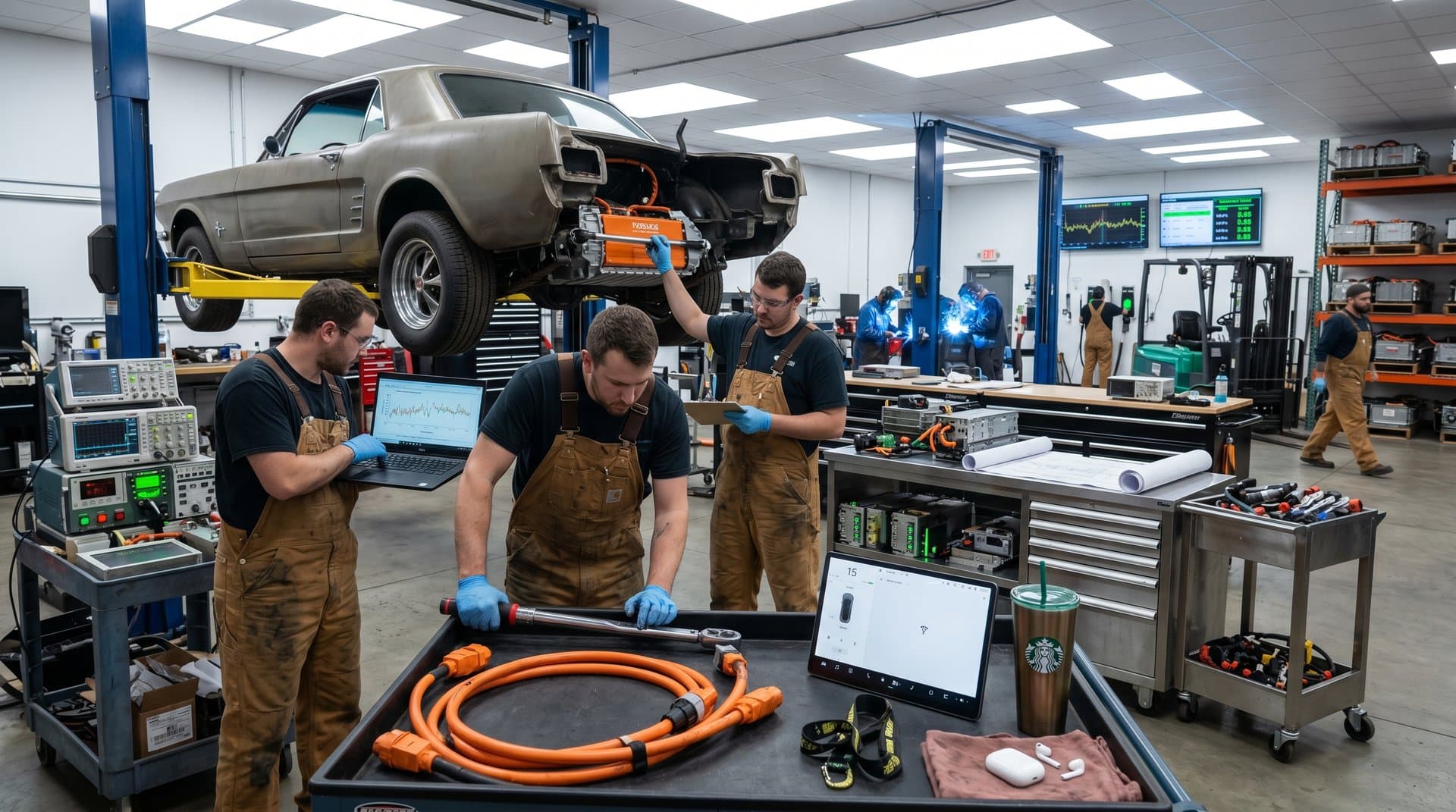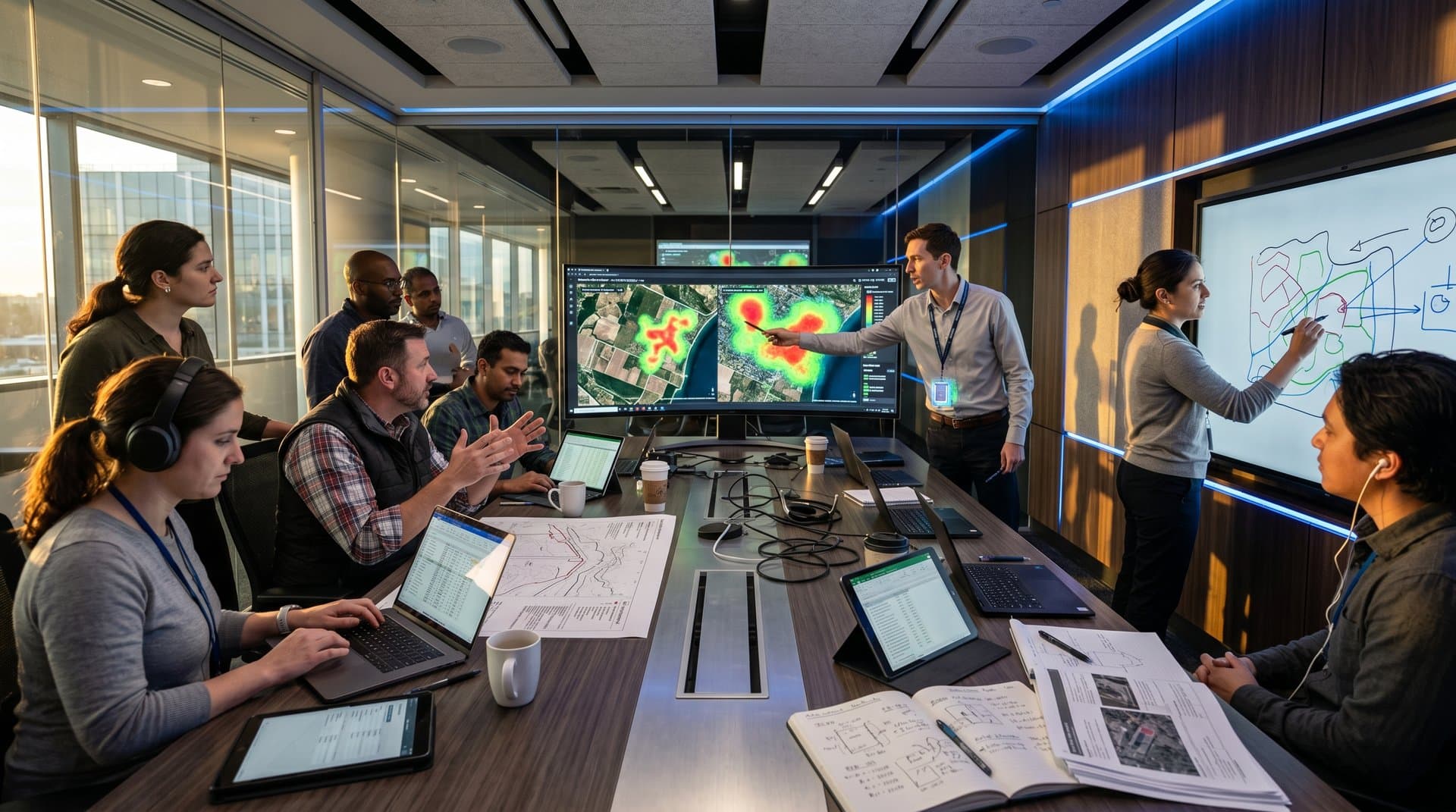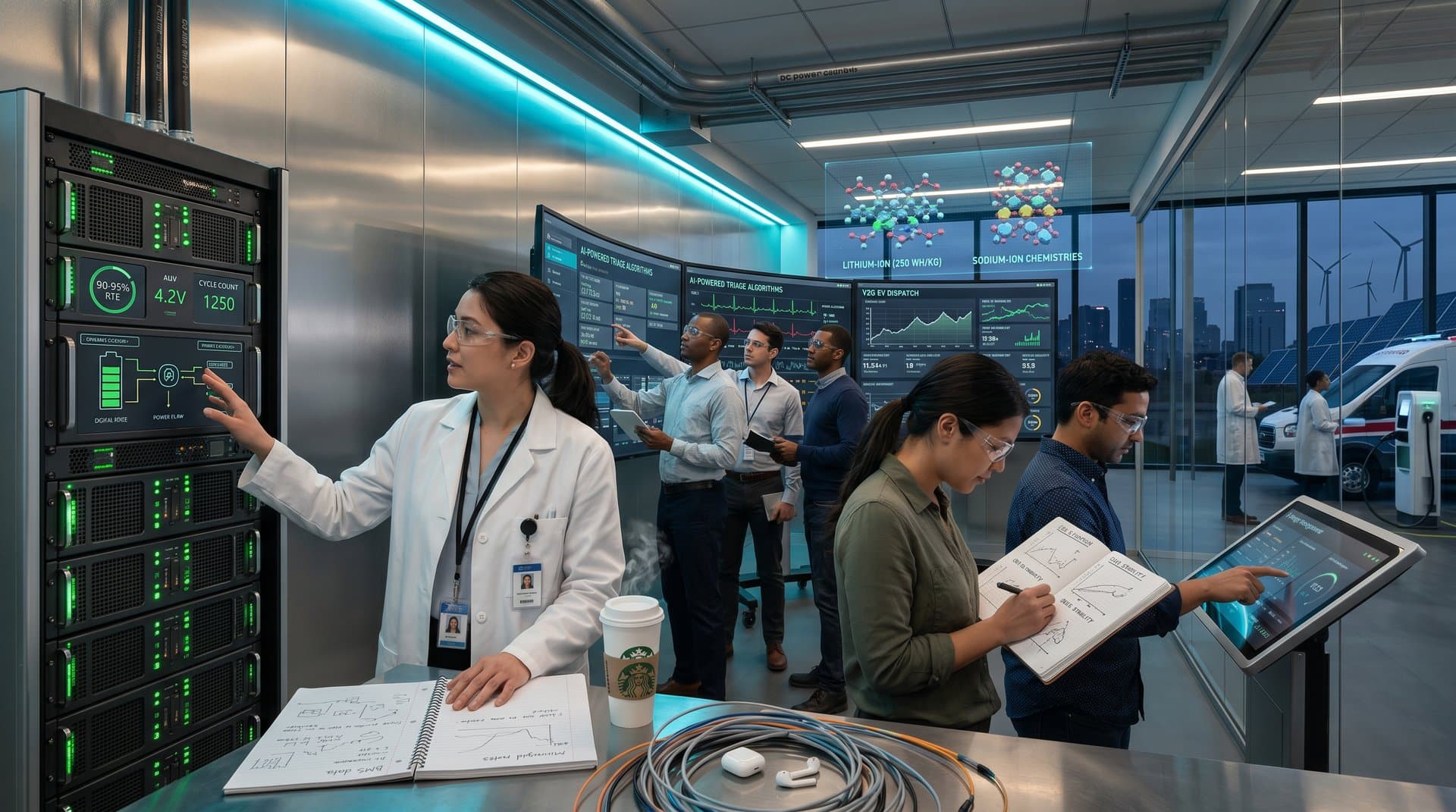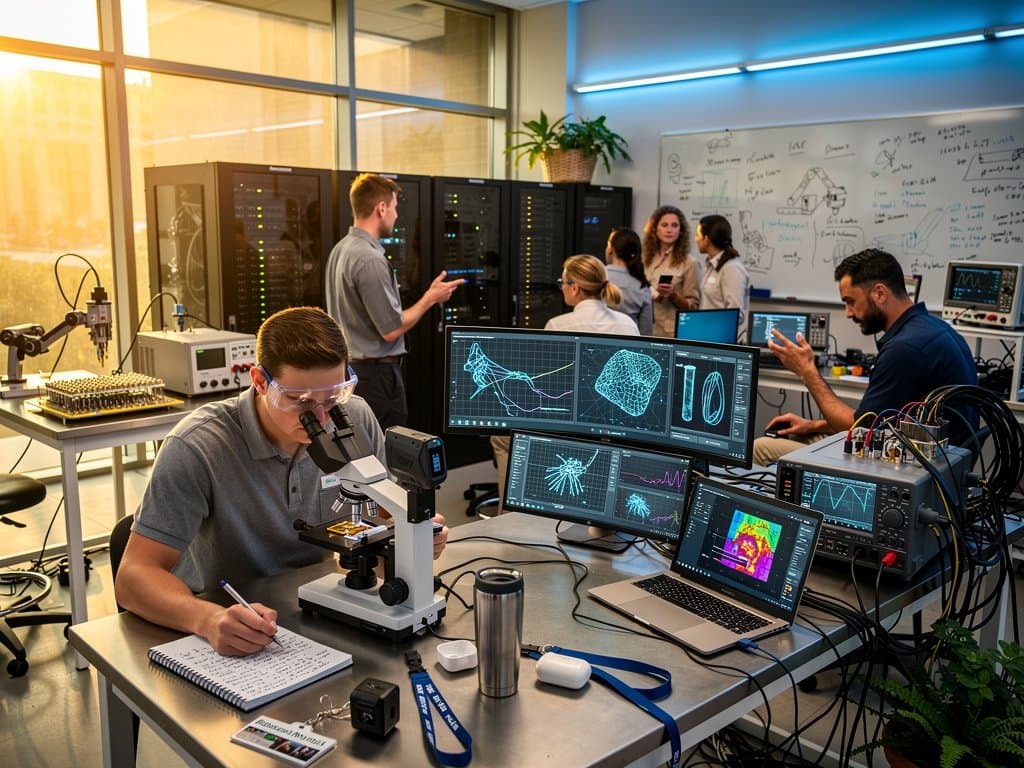
- 20+ faculty target 250 Wh/kg (650 Wh/L) cathodes, cutting discovery to 6 weeks (NREL).
- EV BMS hits 95% efficiency at 1C, 5,000 cycles (IEC 62660-1).
- V2G dispatches 100 MW storage, LCOS $140/MWh (Wood Mackenzie).
Binghamton Public Good AI Initiative Launches for Batteries
Binghamton Public Good AI Initiative launched October 2024 at Binghamton University. Watson College of Engineering's 20+ faculty target AI-driven battery management systems (BMS) and grid optimization. Industry partners collaborate on public-good applications, per Newswise announcement.
AI enhances EV and utility storage performance. Machine learning predicts cell degradation at 98% accuracy, per NREL's 2023 study. Models optimize discharge depth, extending cycle life 25%.
Bitcoin traded at $76,301 on October 10, 2024 (CoinGecko). Crypto mining and AI data centers consume 2% of global electricity, according to Cambridge Centre for Alternative Finance's 2024 report. Storage demand surges accordingly.
Binghamton Public Good AI Initiative Advances Battery Technology
AI accelerates lithium-ion and solid-state R&D. Algorithms screen data for nickel-rich cathodes exceeding 250 Wh/kg (650 Wh/L) at cell level, per NREL benchmarks. Lab-to-prototype timelines drop from 24 months to 6 weeks (NREL).
EV BMS employs neural networks for 95% round-trip efficiency at 1C rates. Predictive analytics detect thermal runaway 48 hours early. LFP packs achieve 5,000 cycles at 80% DoD under IEC 62660-1.
Binghamton adapts NREL's AI frameworks, boosting pouch cell stability 20% via optimized electrolytes. Prismatic EV cells target 220 Wh/kg (550 Wh/L) packs with similar gains.
Lithium prices show 30% volatility (Benchmark Mineral Intelligence, Q3 2024). AI evaluates sodium-ion options at $50/kWh pack cost.
AI Powers Grid Optimization via Binghamton Public Good AI Initiative
Solar and wind provide 12% of US power but fluctuate 40% hourly (EIA, 2024). Binghamton Public Good AI Initiative forecasts demand and dispatches 100 MW/400 MWh storage at under 5% error.
Vehicle-to-grid (V2G) integrates 1 million EVs. Algorithms reduce LCOS to $140/MWh over 10 years (Wood Mackenzie, 2024). They cap cycles at 80% DoD during peaks.
Public tools spur utility adoption. DOE AI projects aim for 1 TWh storage by 2030. Binghamton shares open-source V2G models on GitHub.
FERC Order 2222 enables 50 GW distributed resource aggregation by 2027.
Binghamton Public Good AI Initiative Accelerates EV Battery Adoption
EV packs demand 300 Wh/kg (700 Wh/L) gravimetric/volumetric density and 4,000 cycles. AI screens 10,000 virtual chemistries daily. Sodium-ion prototypes reach 160 Wh/kg (400 Wh/L) at $45/kWh.
Binghamton conducts fleet pilots. Second-life LFP modules deliver 8-hour LDES at 95% calendar-life retention after 10 years.
Manufacturing readiness level (MRL) 6 validated October 2024. GWh-scale production targets Q4 2026 through US partners.
IRA Section 30D credits $7,500 per EV, favoring domestic AI-enhanced BMS.
Crypto Demand Highlights Storage Role in Binghamton Public Good AI Initiative
Crypto Fear & Greed Index hit 32 (Alternative.me, October 2024), signaling volatility. BTC/ETH mining consumes 160 TWh annually, rivaling Poland (IEA, 2024).
AI-optimized storage buffers 100% renewables for data centers. ERCOT observes 2 GW crypto load shifts.
EV fleets support 10 kW bidirectional charging per vehicle. Grids require 500 GWh annual storage additions (Wood Mackenzie, 2024).
Binghamton Public Good AI Initiative Overcomes Scaling Challenges
Models train on 10,000+ cell cycles from Sandia National Labs datasets. Federated learning preserves data privacy.
Edge AI ensures 10 ms BMS latency. NVIDIA supplies 100 H100 GPUs.
EU Battery Regulation 2023/1542 requires 70% recycled content by 2030. DOE grants align US efforts.
Binghamton Public Good AI Initiative advances to MRL 7 pilots in 2025. Commercial GWh deployments project for 2027, per internal roadmap.
Frequently Asked Questions
What is Binghamton Public Good AI Initiative?
Binghamton University’s Public Good AI Initiative harnesses AI for societal benefits like energy storage. Watson College's 20+ faculty focus on BMS and grid tools with industry partners.
How does AI optimize batteries for electric vehicles?
Neural networks predict degradation, achieve 95% efficiency at 1C rates, and target 5,000 cycles. Speeds 250 Wh/kg cathode discovery to weeks.
What is the impact of Binghamton Public Good AI Initiative on grids?
Dispatches 100 MW/400 MWh storage, integrates V2G from 1M EVs, cuts LCOS to $140/MWh. Open-source aids TWh-scale by 2030.
How does crypto market relate to AI for energy storage?
BTC at $76,301 drives 2% global power via mining/AI centers. Storage buffers renewables amid volatility.