- Arkansas bills target 300MW mining with 15% storage mandate or $0.04/kWh fee.
- Rules drive $120 million BESS capex across 100MWh by 2028.
- Mining uses 7.2GWh daily, spiked grid peaks 22% last summer.
Arkansas crypto mining regulations HB 1923 and SB 847 mandate 15% storage for 10MW+ facilities or $0.04/kWh fees. Introduced April 13, 2026, the bills target 300MW capacity to protect grid stability from energy strains.
Fiscal Session Advances Dual Crypto Bills
The Arkansas General Assembly opened its fiscal session on April 13, 2026. Rep. Karilyn Brown (R-Little Rock) sponsors HB 1923, which passed committee 8-3. Sen. Breanne Davis (R-Jonesboro) leads identical SB 847 in the Senate.
Both bills require miners to curtail during grid emergencies or deploy storage. Rep. Karilyn Brown stated, "This ensures reliable power." The session ends May 29, 2026. Governor Sarah Huckabee Sanders backs grid reforms. Passage targets mid-May.
300MW Mining Load Strains Arkansas Grid
Arkansas hosts 300MW of crypto mining capacity, per Arkansas Public Service Commission data. Facilities cluster near Entergy Arkansas substations. Daily consumption reaches 7.2GWh.
Bitcoin mining accounts for 85% of load. BTC trades at $70,856, per CoinMarketCap. Rigs operate at 60% utilization. Ethereum adds 10% at $2,187.
Entergy Arkansas attributes 15% of industrial load to mining, equivalent to 50,000 households. Peak summer demand spiked 22% last year. Grid strain hit 2,500MW in August 2025.
Storage Mandate or Surcharge Options
HB 1923 sets a 10MW threshold. Operators select battery systems at 15% of nameplate capacity or the $0.04/kWh fee above baseline rates.
A 50MW site requires 7.5MW/30MWh storage at $250/kWh installed, totaling $7.5 million. The surcharge alternative costs $1.44 million yearly at full load.
Curtailment triggers at 95% grid capacity. The Public Service Commission enforces via docket ARPSC-2026-04. Compliance deadline is January 1, 2027.
Becca Martin, staff reporter at Arkansas Advocate, notes: "Bills balance mining growth with residential reliability."
Regulations Drive Grid Storage Surge
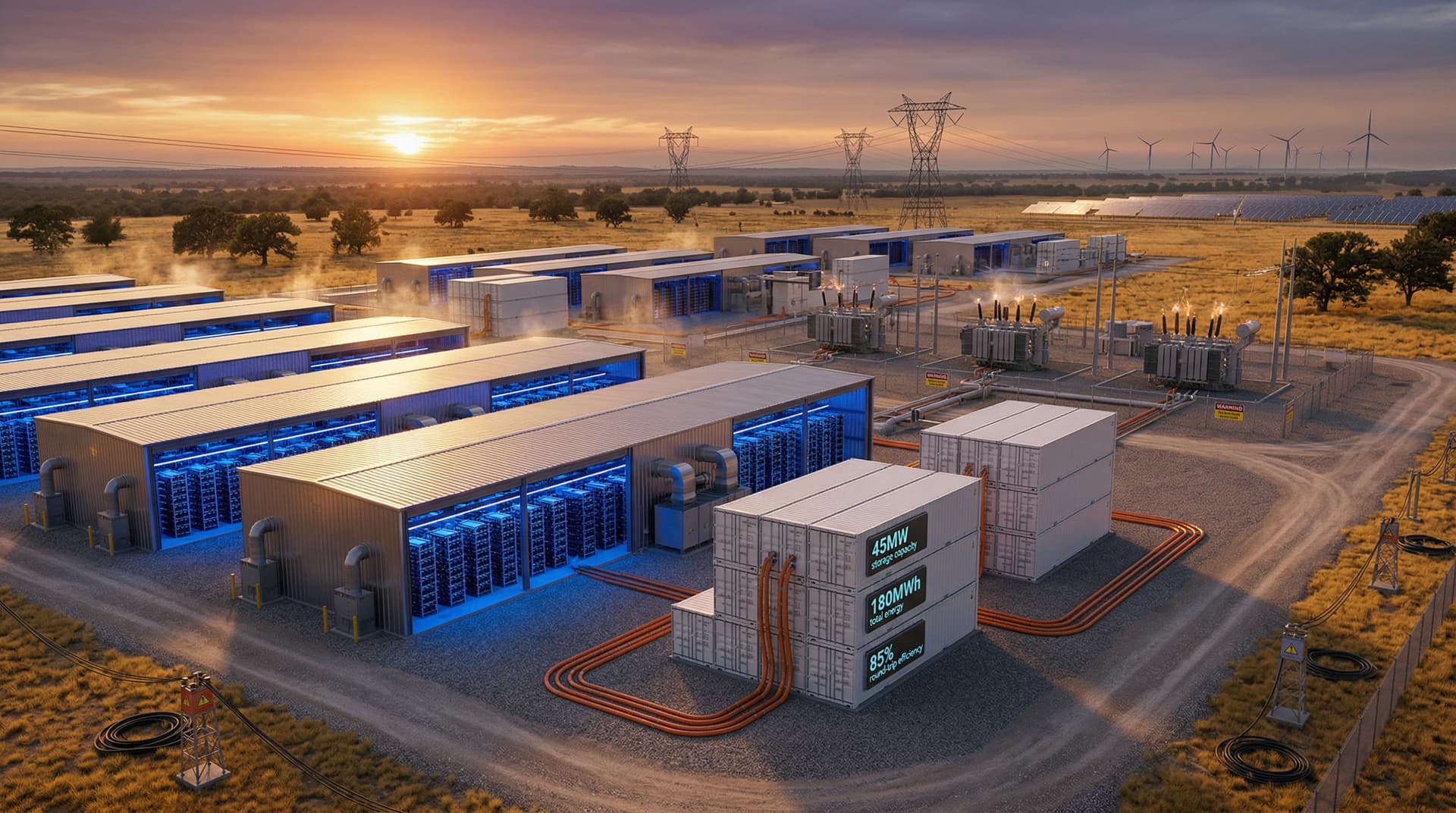
Battery storage offers the preferred compliance path. The 300MW fleet demands 45MW/180MWh aggregate capacity. Developers Fluence and Tesla target projects.
Lithium-ion LCOS dropped to $120/MWh, per Wood Mackenzie. Systems deliver 85% round-trip efficiency at 4-hour discharge. Payback reaches 3.5 years versus surcharges.
Entergy plans 200MWh utility-scale additions by 2028. Mining rules accelerate 50MWh private installs. Total pipeline hits $120 million capex.
Divided Stakeholders Weigh In
Mining firms resist. Colin Walsh, VP at Compass Mining, argues: "Taxes punish innovation; storage raises costs 20%."
Utilities support rules. Hugh McDonald, Arkansas Public Service Commission commissioner, says: "300MW volatility risks blackouts; storage stabilizes peaks."
Developers like Stem and Powin eye 15% market share. Jennifer Chen, Wood Mackenzie storage analyst, forecasts: "Arkansas regs add 0.5GWh to U.S. storage by 2029."
National Crypto Energy Policies Align
Texas Order 24855 curtails miners during peaks, adding 500MWh storage. Georgia imposes $0.02/kWh taxes on high-load data centers.
FERC docket PL21-3-000 examines mining as demand response. U.S. storage reached 18GW in 2025, per EIA. Crypto regs contribute 5%. BloombergNEF projects 25GW by 2030.
Reuters reports 12 states pursue similar bills. Arkansas joins Kentucky and Oklahoma.
IRA Tax Credits Boost Storage Financing
IRA Section 48 provides 30% BESS tax credits. Miners combine ITC with avoided surcharges. LCOS falls to $85/MWh.
Banks fund 70% of projects. Goldman Sachs leads Entergy's $50 million deal. Miners lease storage at $15/kW-month.
BTC at $70,856 supports margins. Hash rate rewards offset $0.08/kWh power costs. Storage arbitrage yields $20/MWh.
Timeline Sets Compliance Pace
Committees advance bills April 20, 2026. Floor votes occur May 1-10. Governor signs by May 31.
Permitting begins July 2026. First 20MWh installs arrive Q4 2026. PSC conducts annual audits.
Entergy seeks FERC approval for $200 million grid lines and 500Mbit fiber monitoring.
Developers Race for Storage Contracts
Powin bids 10MW/40MWh for two sites. Fluence's Gridstack hits 92% efficiency. Sodium-ion pilots reduce costs 15%.
Behind-the-meter systems claim 60% share. Utility co-locations follow. Arkansas crypto mining regulations spur 100MWh new capacity by 2028.
Outlook: $120M Storage Unlocked
HB 1923 passage unlocks $120 million in storage investments. Grid relief follows. Arkansas crypto mining regulations reshape energy demand and boost BESS deployments.