- Alphabet shares dropped 10% on USD 13B Q3 AI capex.
- IEA forecasts data centers double power to 1,000 TWh by 2026.
- WoodMac predicts 120 GW annual grid storage adds by 2030.
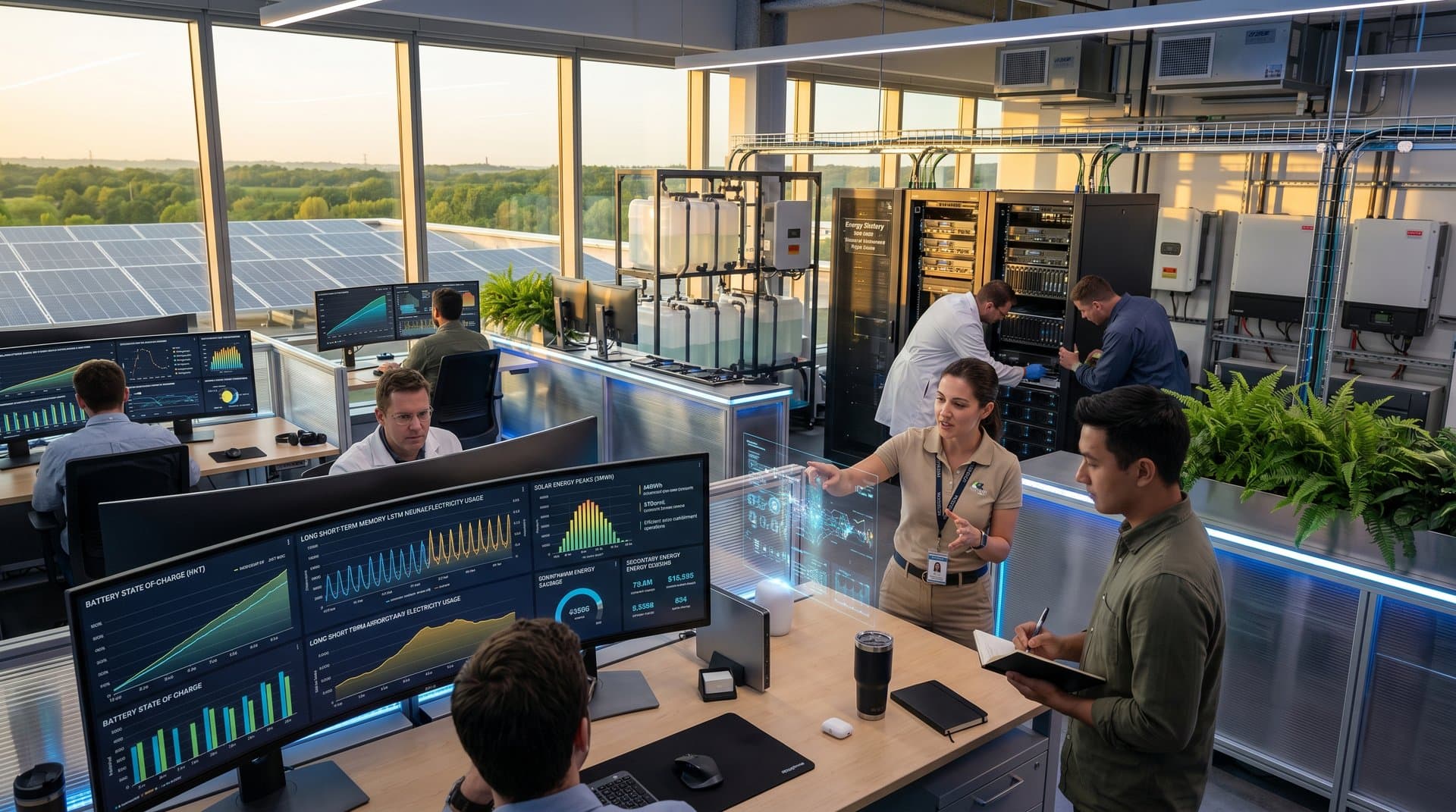
Alphabet shares plunged 10% last week after Q3 AI capex hit USD 13 billion, per Yahoo Finance coverage. AI data center grid storage demand accelerates as hyperscalers deploy batteries to stabilize megawatt-scale loads.
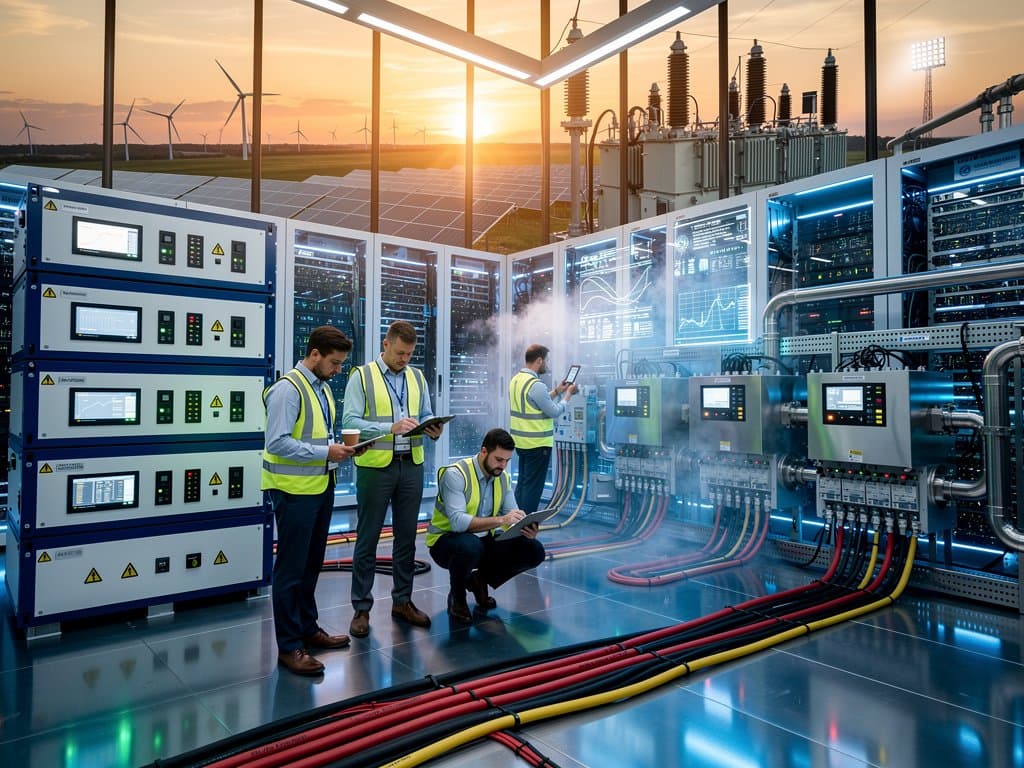
Google's Gemini AI models power these sites. Each data center draws 100-500 MW continuously, straining local grids. Lithium-ion batteries and long-duration energy storage (LDES) manage peaks and intermittency.
The International Energy Agency (IEA) projects global data center electricity demand doubling to 1,000 TWh by 2026.
Google AI Expansions Strain Grids, Drive Storage Deployments
Google announced 20+ new data centers since 2023. Loads rival small cities at 100 MW+ per site. Transmission delays risk blackouts during AI training surges.
Utilities deploy front-of-meter storage. Lithium-ion systems respond in milliseconds with 85-90% round-trip efficiency (RTE), states the US National Renewable Energy Laboratory (NREL) Annual Technology Baseline (ATB) 2023.
Renewable integration lowers costs. Levelized cost of storage (LCOS) falls to USD 140/MWh in solar-heavy regions, per NREL ATB 2023 data.
IEA's "Data Centres and Data Transmission Networks" report (2024) links hyperscaler growth to grid upgrades. Alphabet's USD 50 billion annual capex exemplifies the trend.
Hyperscaler Capex Fuels Gigawatt-Scale Battery Demand
AI clusters demand gigawatts with spiky profiles. Northern Virginia data centers curtailed operations in 2024 due to grid constraints, reports BloombergNEF AI power analysis.
Developers scale batteries to 500 MW/2 GWh. Fluence Energy secured 1.5 GW contracts with US utilities for AI-adjacent hubs.
BloombergNEF forecasts 25% compound annual growth in storage demand through 2030, exceeding grid buildout. Batteries capture USD 200/MWh peak arbitrage spreads.
BloombergNEF's "AI Data Centers Could Use More Power Than the Netherlands by 2030" (2024) quantifies compute-driven storage needs at 50 GW globally by decade-end.
Sodium-ion batteries enter pilots. They offer USD 50/kWh packs by 2028 with 5,000 cycles at 80% depth of discharge (DoD), per CATL specifications.
Key Battery Technologies for AI Data Center Support
Lithium iron phosphate (LFP) dominates 2-4 hour storage. It achieves 160 Wh/kg and 400 Wh/L at USD 130/kWh installed, NREL ATB 2023 confirms.
LDES targets 10+ hours. Form Energy's iron-air batteries promise USD 20/kWh LCOS over 100 hours.
Invinity's vanadium flow batteries provide 200+ cycles annually at 90% RTE. Modular designs avoid thermal runaway risks.
- Technology: LFP · Duration: 2-4 hrs · Energy Density (Wh/kg: 160 · Wh/L): 400 · Cycles (80% DoD): 4,000-6,000 · LCOS (USD/MWh): 120-150 · Maturity: Commercial
- Technology: Sodium-ion · Duration: 4-8 hrs · Energy Density (Wh/kg: 150 · Wh/L): 300 · Cycles (80% DoD): 5,000+ · LCOS (USD/MWh): 100-130 · Maturity: Pilot
- Technology: Iron-air · Duration: 100 hrs · Energy Density (Wh/kg: 50 · Wh/L): 120 · Cycles (80% DoD): 10,000+ · LCOS (USD/MWh): 20-50 · Maturity: Prototype
Sources: NREL ATB 2023, Form Energy datasheets, CATL sodium-ion reports. Hybrid systems match AI's variable 24/7 loads.
Supply Chain Risks and Policy Boosts for Scaling
LFP supply chains face volatility. Benchmark Mineral Intelligence reports lithium carbonate prices swung 50% in 2024; APAC controls 75% cathode capacity.
US permitting delays average 18-24 months. FERC Order No. 2023 reforms slash 2.5 TW interconnection queues by prioritizing storage.
Behind-the-meter systems evade queues. Inflation Reduction Act (IRA) 48C tax credits fund USD 4 billion in LDES projects.
Wood Mackenzie analyst Phil Hewitt projects 120 GW annual storage additions by 2030 in "Long Duration Energy Storage Set for Explosive Growth" (2024).
Solid-state advances, like QuantumScape's 500 Wh/kg prototypes, target grid integration by 2028.
Storage Stocks Rally on Hyperscaler Power RFPs
Alphabet's dip mirrors Microsoft's USD 56 billion 2025 capex forecast. Data centers trigger storage tenders.
Enphase Energy (ENPH) and Stem Inc. (STEM) shares climbed 15% on California deals. State's IRP requires 5 GW storage by 2028.
Texas and Arizona attract AI hubs with wind-solar hybrids. Hyperscaler PPAs forecast 100 GW storage wave through 2030.
AI data center grid storage solidifies as essential grid resilience. Monitor Alphabet Q4 earnings December 2024 for capex guidance and deployment signals.
Frequently Asked Questions
How does Alphabet AI spending boost AI data center grid storage demand?
Alphabet's USD 13B Q3 capex funds gigawatt data centers straining grids. Batteries manage peaks, spurring 120 GW utility deployments (WoodMac).
What grid storage solutions support power-intensive AI data centers?
LFP provides 2-4 hours at 160 Wh/kg, 85% RTE (NREL). Iron-air LDES offers 100 hours at USD 20/MWh LCOS. Hybrids ensure reliability.
Is Alphabet's 10% stock drop linked to AI data center grid storage trends?
Yes, capex fears highlight expansions needing storage. Hyperscalers issue RFPs; batteries resolve grid bottlenecks (BloombergNEF).
Why prioritize LDES for AI data center power management?
AI requires multi-hour discharge beyond LFP limits. Iron-air and flow batteries slash LCOS to USD 20/MWh with IRA support.