- IEA forecasts 460-1,050 TWh annual data center power by 2026.
- Tesla Megapack stores 3.9 MWh with 3,500 cycles at 100% DoD.
- EPRI sees US data center demand double to 35 GW by 2030.
Globe and Mail Warns of AI Data Center Power 'Silent Spring'
Globe and Mail columnist Dan Breznitz warns AI data center power demand risks grid collapse like Rachel Carson's 'Silent Spring.' IEA's Electricity 2024 report projects data centers consume 460-1,050 TWh annually by 2026, doubling 2022's 240-340 TWh. Tesla Megapacks counter with proven 3.9 MWh lithium-ion storage.
AI Training Drives Exponential Power Surge
Hyperscalers Google and Microsoft deploy gigawatts for AI GPU clusters. Each Nvidia DGX H100 cluster draws 700 kW. Cooling adds 40% more load in Texas heat, per EIA data.
Lithium iron phosphate (LFP) batteries lead deployments. They offer 175 Wh/kg energy density and 450 Wh/L volumetric density at pack level, per Tesla specs.
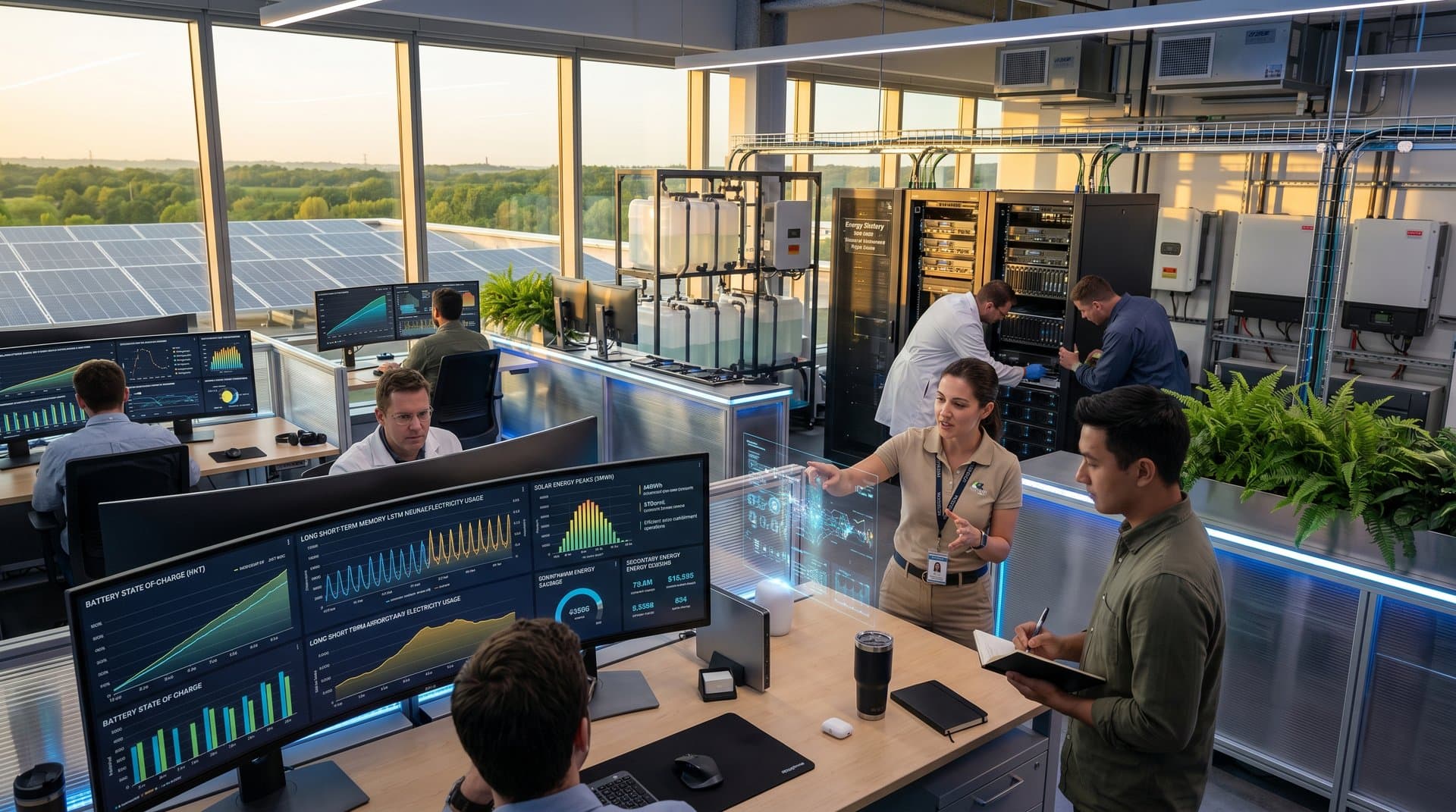
Operators charge Megapacks on midday solar. They discharge during evening AI inference peaks, capturing USD 100/MWh spreads.
Renewables Intermittency Strains 24/7 Loads
Data centers require firm 100+ MW baseload. Gas peakers handle peaks but emit CO2. Battery inverters supply synthetic inertia, stabilizing 60 Hz frequency.
Solar ramps down at 6 PM amid query spikes. ERCOT targets 5 GW storage by 2025, per PUC filings, to backstop data centers.
California's CPUC Rule 21 mandates behind-the-meter batteries for new data centers over 5 MW. FERC Order No. 2023 speeds hybrid solar-storage queues.
Tesla Megapack Specs: 3.9 MWh, 3,500 Cycles
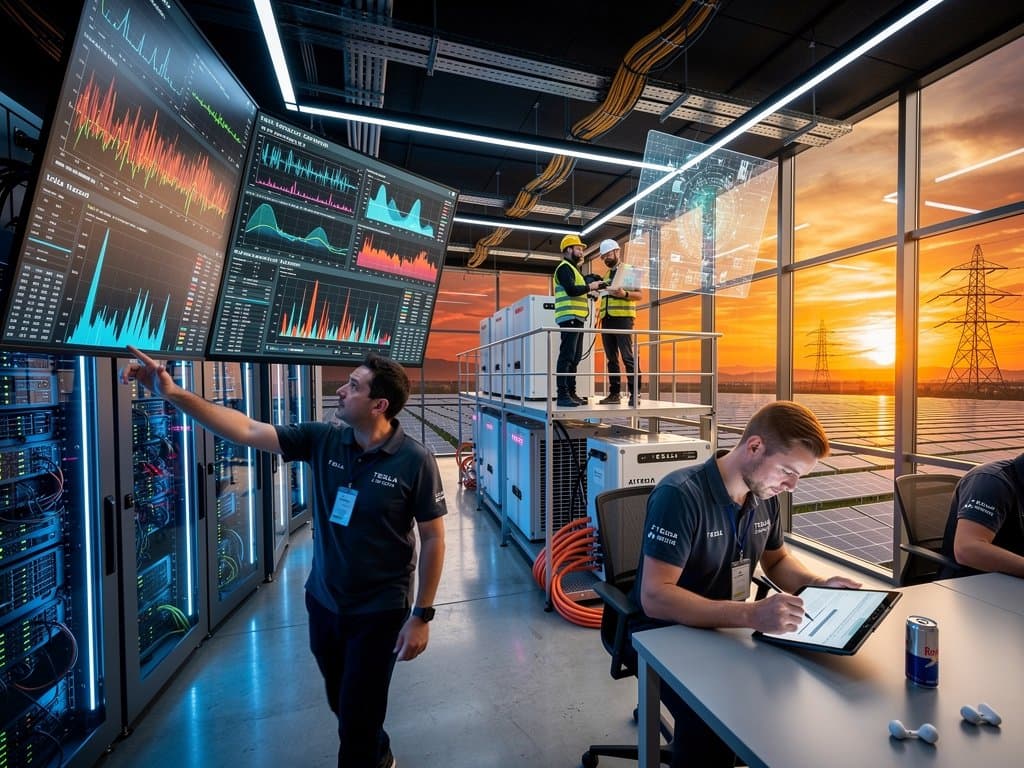
Each Megapack delivers 1.93 MW power and 3.9 MWh energy for two-hour duration. Tesla guarantees 3,500 cycles at 100% depth of discharge (DoD), per 2024 datasheet.
Gigafactory Nevada and Shanghai ramp output to 40 GWh/year. System costs fall to USD 185/kWh installed, BloombergNEF estimates.
Levelized cost of storage (LCOS) reaches USD 0.095/kWh at 4-hour discharge, undercutting gas peaker LCOE of USD 0.175/kWh.
Real-World Deployments Prove Scalability
PG&E's 182.5 MW Diablo Energy Center uses 50 Megapacks for Bay Area data centers. Vistra's 1.2 GWh Moss Landing dispatches 300 MW for ERCOT loads.
NextEra equips Florida hyperscalers with 850 MWh Manatee project. These sites achieve 91.5% round-trip efficiency (RTE) under IEC 62619 standards.
Supply Chain Enables Megapack Expansion
CATL supplies LFP cells; lithium carbonate prices stabilize at USD 12,000/tonne post-2024 peak, Fastmarkets reports.
Sodium-ion pilots hit TRL 7 with 160 Wh/kg at HiNa Battery. US IRA's 30-70% Investment Tax Credit covers Megapacks.
BloombergNEF forecasts USD 52 billion US grid storage adds through 2027.
Hyperscalers Commit to Battery Backstops
Google contracts 1 GWh for Finnish campuses. Microsoft funds 250 MW/1 GWh Hornsdale Power Reserve expansion.
Hybrids slash upgrade costs 42%, EPRI calculates. Lithium-ion hits TRL 9 with 90% RTE, 3,000+ cycles.
EPRI projects US data center load doubles to 35 GW by 2030. Batteries must scale 3x faster. Track FERC queues for 10 GW+ pipeline.
Frequently Asked Questions
What is the 'Silent Spring' of AI data center power?
Globe and Mail columnist Dan Breznitz compares unchecked AI power growth to 1960s pesticide crisis, risking blackouts. Megapacks mitigate via peak storage.
How much power will AI data centers need by 2026?
IEA's Electricity 2024 report projects 460-1,050 TWh yearly for data centers, driven by AI training and inference on hyperscaler clusters.
How do Tesla Megapacks prevent AI grid collapse?
Each delivers 3.9 MWh at 1.93 MW with 91% RTE and 3,500 cycles. Moss Landing's 1.2 GWh proves data center-scale reliability.
What grid risks arise from AI data center power?
Constant MW loads destabilize frequency without inertia. Renewables gaps worsen peaks. ERCOT and CPUC deploy 5+ GW batteries.