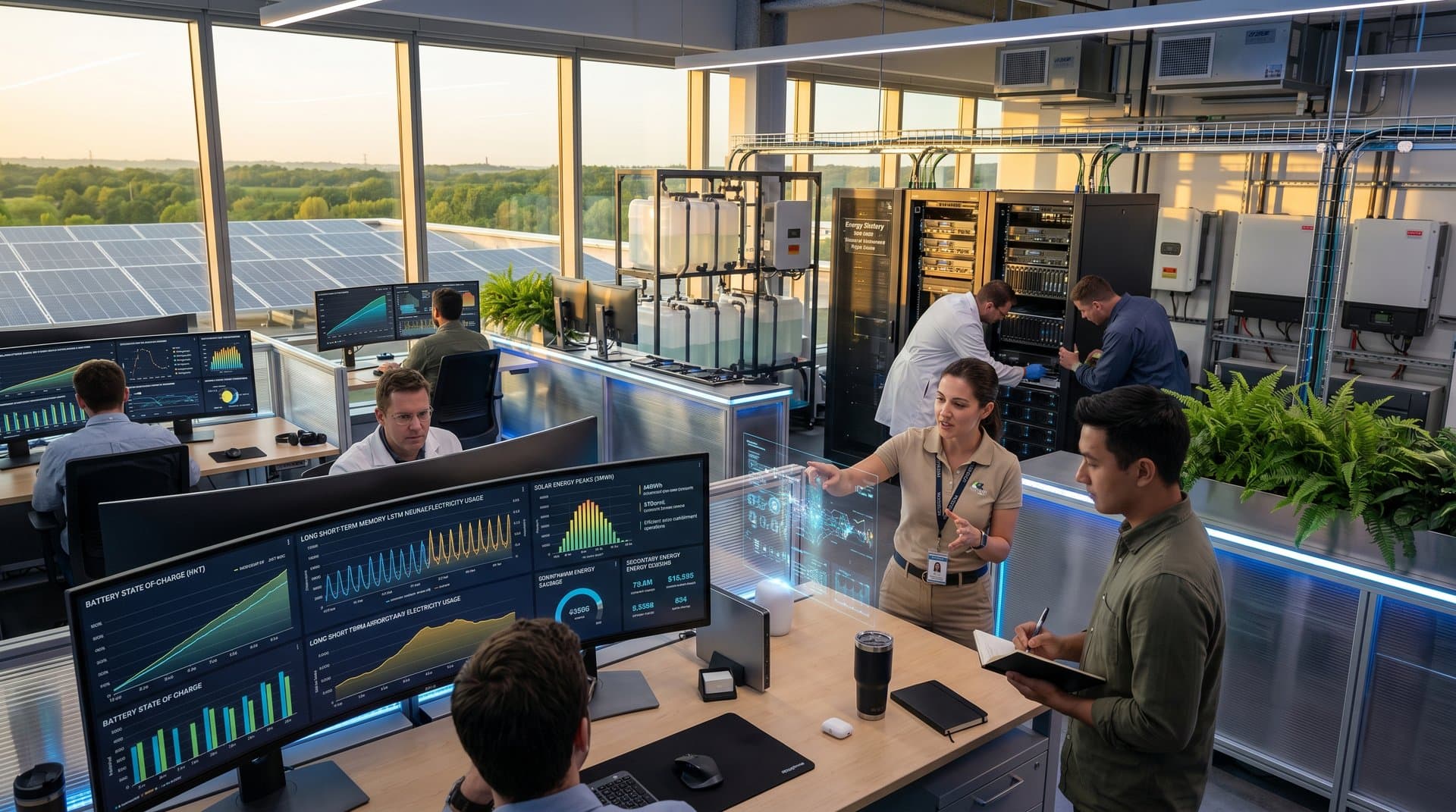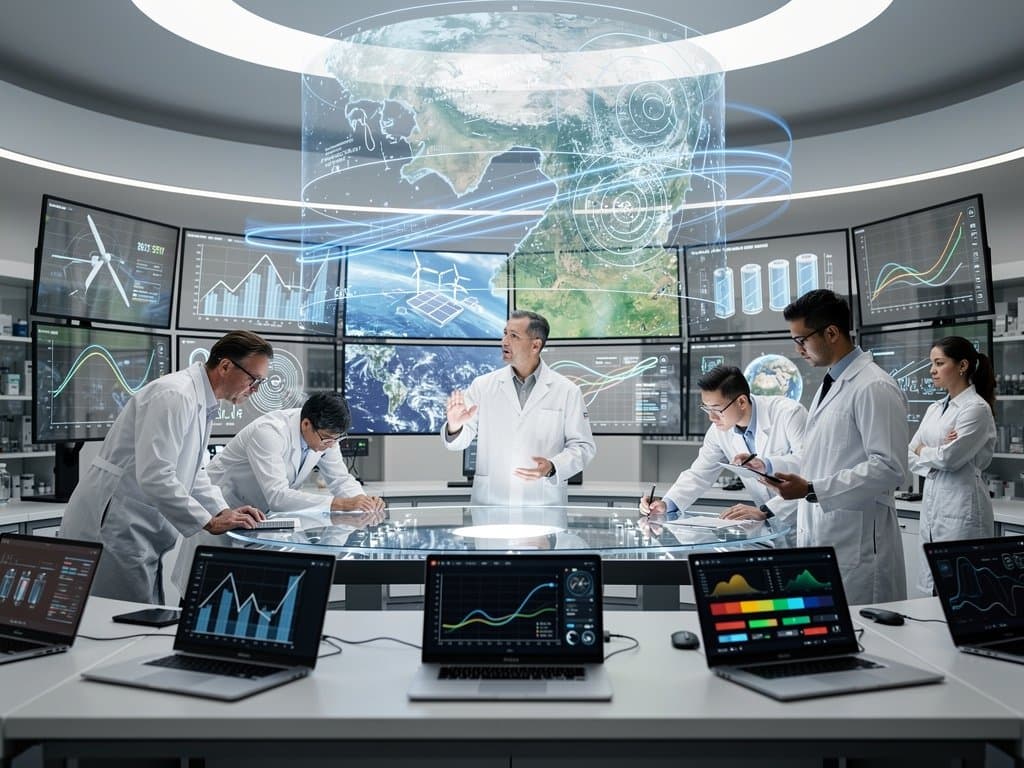
- DeepMind GraphCast cuts wind forecast error 20% over 36 hours.
- NREL models accelerate storage simulations 1,000x faster.
- IRA 30% ITC supports standalone storage over 5 MWh.
DeepMind's AI predictive models boost renewable energy forecasts 20% over 36-hour horizons. DeepMind researchers published results in 2023. The models optimize energy storage dispatch for solar and wind. NREL tools complement them for grid planning.
Lithium-ion batteries deliver round-trip efficiency (RTE) above 85% at 1C discharge under IEC 62660-1, per NREL tests.
AI Predictive Models Enhance Battery Dispatch
AI predictive models process satellite imagery, radar data, and atmospheric variables. They outperform traditional numerical weather prediction (NWP) by capturing nonlinear patterns. DeepMind's GraphCast achieves 20% accuracy gains for wind farms, as detailed in their technical blog (DeepMind, 2023).
Batteries charge midday solar surplus at $20/MWh in California. Operators discharge during evening peaks over $100/MWh. Arbitrage stacks frequency regulation revenues. BloombergNEF pegs LCOS below $150/MWh for 4-hour lithium-ion systems (BNEF, 2024).
Flow batteries suit long-duration use. They hold 70% RTE at 10-hour discharge with over 10,000 cycles at 80% DoD, per Zapata Energy.
| Forecasting Approach | Accuracy Gain | Horizon | Source |
|---|---|---|---|
| Traditional NWP | Baseline | 24 hours | ECMWF |
| AI Neural Networks (DeepMind GraphCast) | +20% | 36 hours | DeepMind (2023) |
| NREL ML Models | 1,000x faster | Variable | NREL (2023) |
NREL models run 1,000 times faster than physics-based codes. This speed supports real-time storage optimization.
Utilities Adopt AI Predictive Models for Stability
CAISO grids hit 40% renewables penetration. ERCOT nears that level. AI predictive models drive dynamic battery dispatch. CAISO reports 15% less renewable curtailment (CAISO, 2024).
PG&E pilots NREL AI on 100 MW batteries. FERC Order 2222 unlocks markets for spinning reserves and black start.
IRA provides 30% ITC for standalone storage over 5 MWh. Developers apply it to AI-optimized systems.
Sodium-ion batteries hit 200 Wh/kg at cell level and 160 Wh/L. AI models predict 5,000 cycles, per CATL engineers (CATL, 2024).
Lithium-ion compares at 250 Wh/kg and 700 Wh/L with 4,000 cycles at 80% DoD.
Battery Developers Apply AI for Financial Gains
Developers cut LCOS risks with accurate revenue forecasts. They lock offtake at $40/MWh fixed. Lenders offer tight debt spreads on modeled cash flows.
Second-life EV batteries serve behind-the-meter via V2G. AI predictive models hit 90% utilization on household demand.
IEA notes AI's energy transition role, per IEA analysis (IEA, 2024). Data centers add 50 GW demand by 2030. Storage pairs it with renewables.
BloombergNEF forecasts 50 GWh annual deployments by 2025 via AI (BNEF, 2024).
EurekAlert covers AI in environmental science for grids.
Lithium carbonate rose 20% to $15,000/tonne in Q1 2024 (S&P Global, 2024). AI maximizes assets, delays mines.
NMC 811 cathodes cost $25/kWh. AI dispatch lifts IRRs over 12%.
AI predictive models enable 100% renewables grids. Early adopters gain financing and market edges.
Frequently Asked Questions
How do AI predictive models optimize energy storage?
They forecast renewables to charge batteries during surplus and discharge at peaks. DeepMind gains 20% accuracy; LCOS falls under $150/MWh.
What role do AI predictive models play in grid management?
AI integrates weather data for dispatch, cutting curtailment 15%. NREL speeds simulations 1,000x for planning.
How does AI reshape environmental science for storage?
AI enables predictive analytics on climate-renewables impacts. EurekAlert reports precision breakthroughs.
Why adopt AI models under IRA incentives?
IRA 30% ITC pairs with AI revenue stacking. FERC 2222 enables markets for optimized batteries.