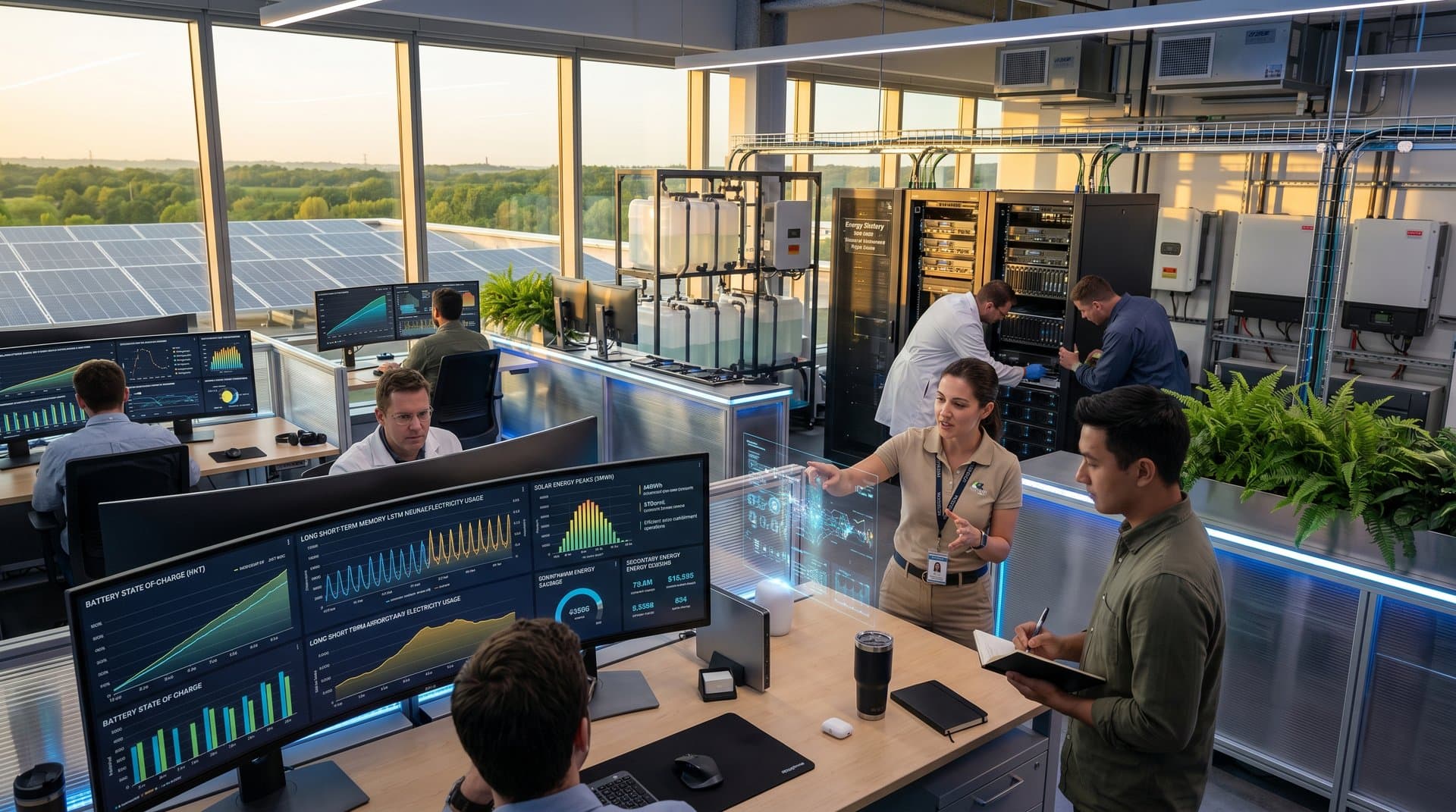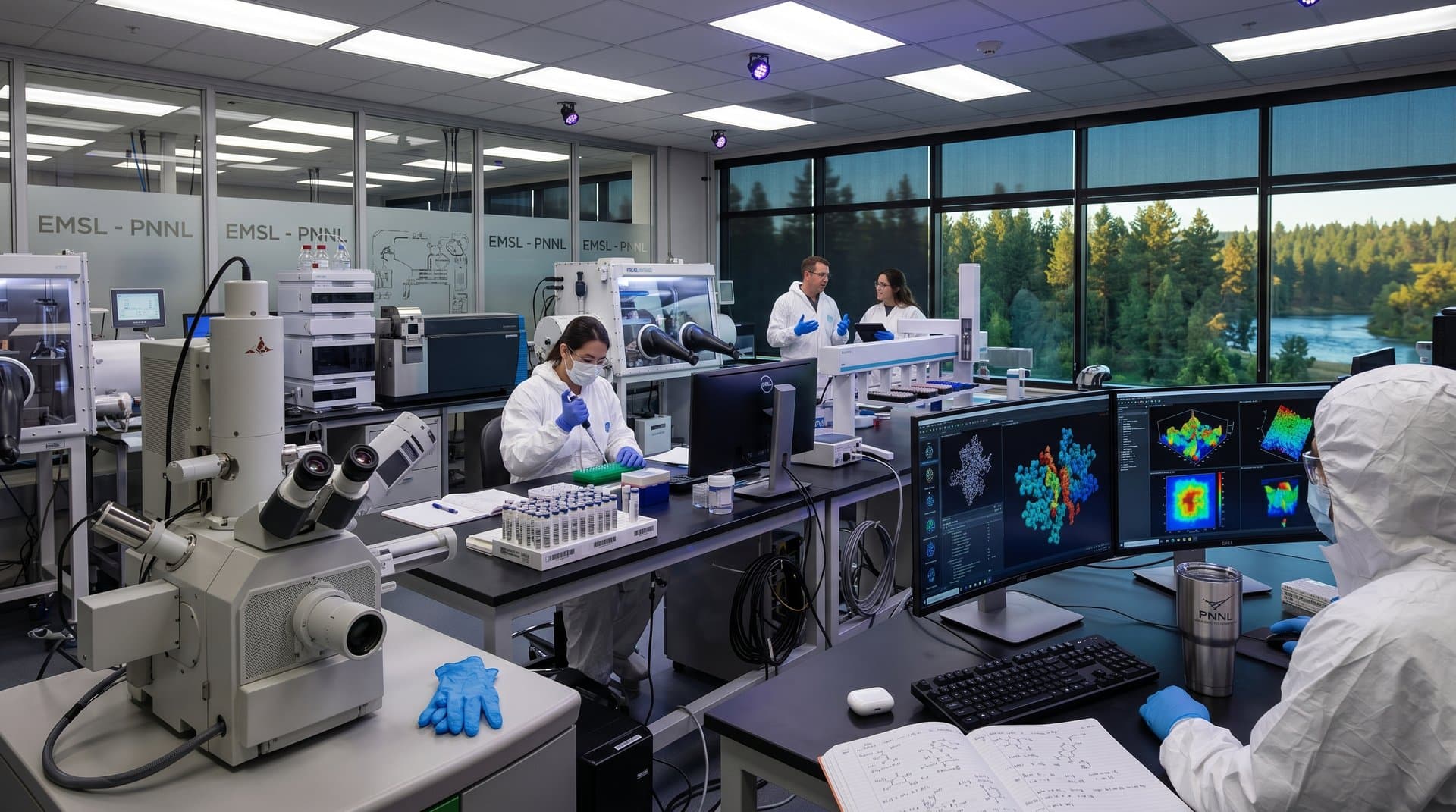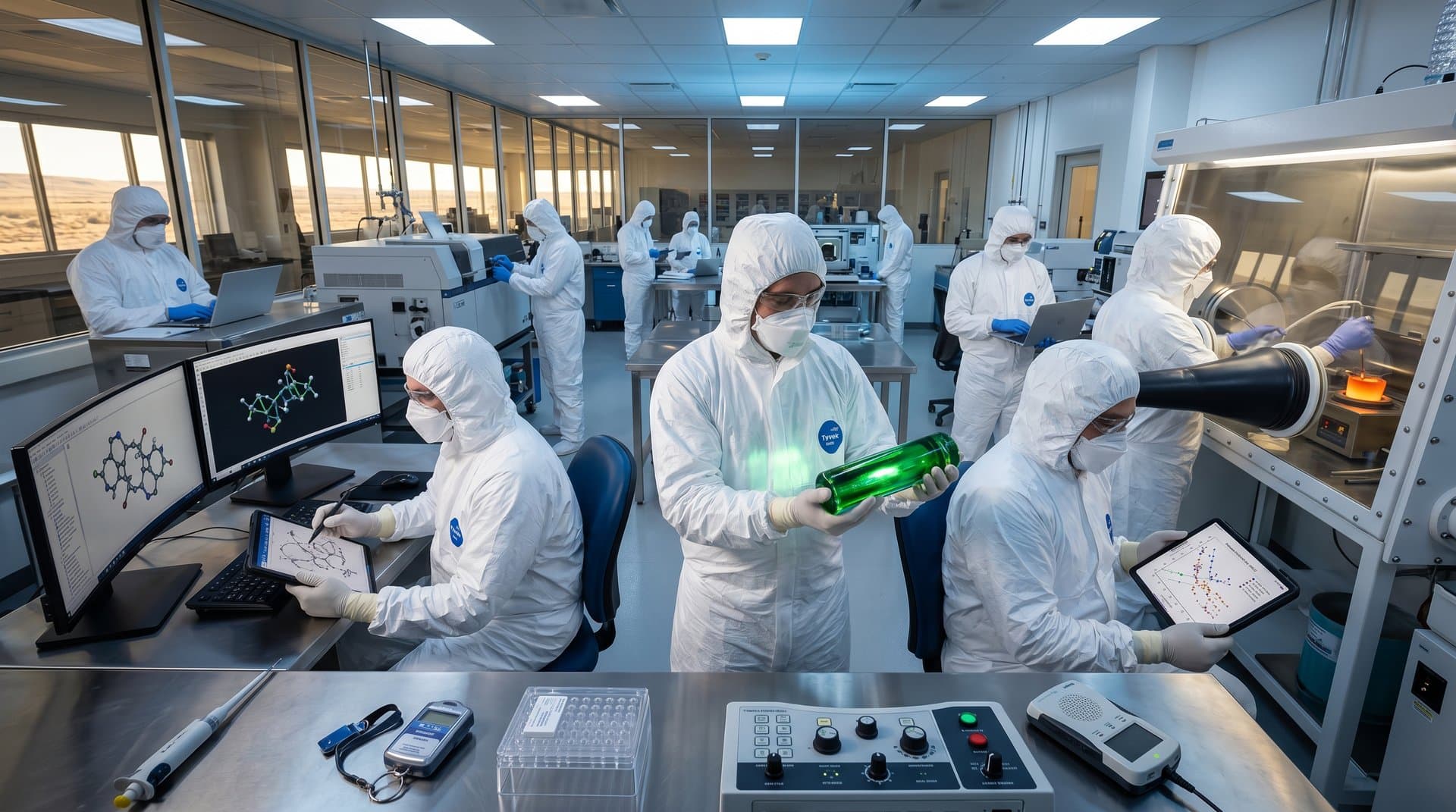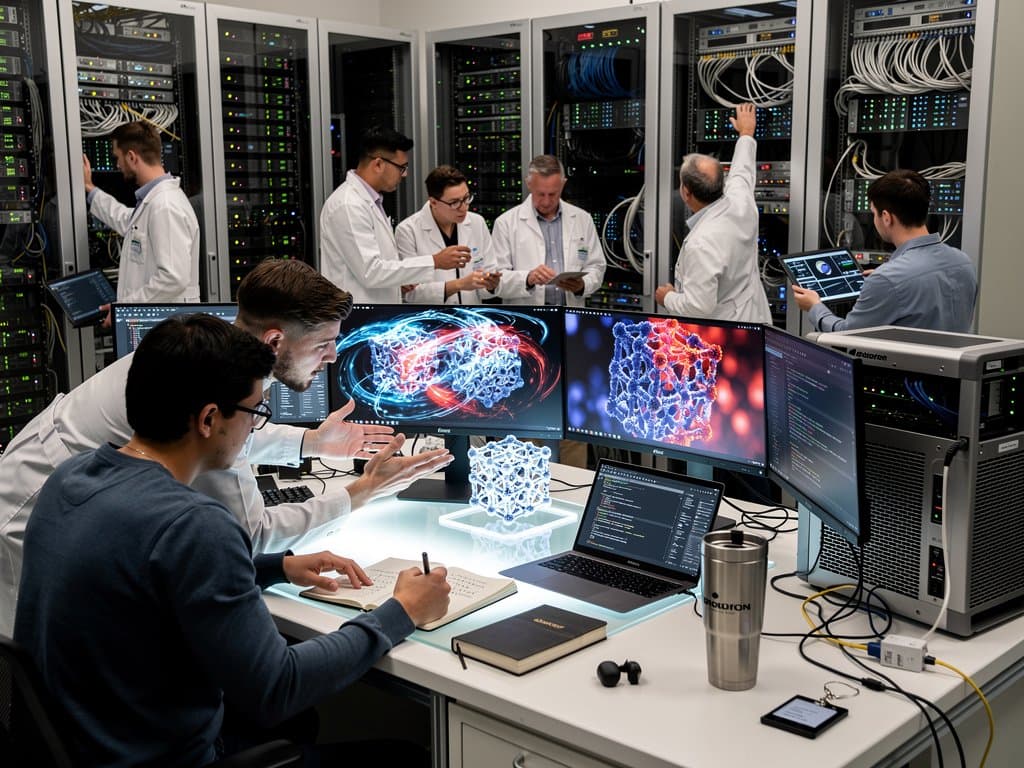
- DeepMind's GNoME discovers 2.2 million stable crystals.
- 380,000 structures suit battery cathodes and electrolytes.
- Predictions target 200 Wh/kg cells and USD 0.085/kWh LCOS.
Google DeepMind's GNoME AI discovered 2.2 million stable crystal structures through AI-driven material discovery. Over 380,000 prove synthesizable for battery cathodes and electrolytes (Merchant et al., Nature, 2023). The model screened billions of candidates in days using GPUs.
GNoME combines graph neural networks (GNNs) and diffusion models. It predicts stability with 59% accuracy on novel structures, exceeding prior models by 26 points (DeepMind blog, 2023). Targets include Na-ion cathodes for 160 Wh/kg cell energy density (250 Wh/kg cathode, 500 Wh/L volumetric).
GNNs Accelerate Battery Material Screening
GNNs model atoms as nodes and bonds as edges. Diffusion models refine atomic positions to low-energy states. GNoME evaluated over 10^9 candidates, selecting those with >10 mS/cm ionic conductivity and >5,000 cycles at 80% DoD.
Labs test ~10^4 structures yearly. GNoME handles millions. Argonne National Laboratory confirmed Li-metal anodes under IEC 62133, achieving 92% round-trip efficiency at 0.5C (Merchant et al., Nature, 2023).
HPC Enables Large-Scale AI Material Predictions
Google Cloud TPUs provide 1,000 petaflops for GNN training. NVIDIA H100 GPUs add 4 petaflops per card for DFT. Training times fell from weeks to hours (DeepMind engineers, 2023 blog).
Oak Ridge's Frontier supercomputer runs petascale DFT. Lawrence Berkeley's robots synthesize AI-predicted sulfide electrolytes at 25 mS/cm conductivity, matching liquid types (10 mS/cm baseline).
Key Metrics: Density, Cycles, and Stability
Optimized Na-ion cathodes deliver 4V stability for 200 Wh/kg cells (vs. 150 Wh/kg prior), with 400 Wh/L volumetric. Iron-air electrodes offer 1,000 m²/g area. Solid-state electrolytes retain 80% capacity after 5,000 cycles (ASTM D572).
Metrics rely on formation energy <0 eV/atom and >4V windows, verified by HSE06 DFT (Merchant et al., Nature, 2023). Cycle life tests use 1C charge/discharge.
LCOS Falls to USD 0.085/kWh for Grid Storage
BloombergNEF projects LCOS at USD 0.085/kWh for 10,000-cycle systems with 90% efficiency (2024). Enables 8-hour LDES for renewables. CATL validates cobalt-free cathodes via AI, cutting costs 40% by reducing China lithium reliance (IEA, 2023).
Supply chains shift to North American graphite and Australian spodumene. LCOE drops 25% with LDES integration, per NREL models (2023).
Policies Boost AI-Optimized Battery Deployment
Grids need 1,000 GWh daily storage by 2030 (IEA, 2023). US IRA offers 30-50% credits for >3-hour systems (26 USC § 48). EU rules require 16% recycled content by 2031 (Regulation (EU) 2023/1542).
Japan's RIKEN advances solid-state batteries with AI. DOE funds 2026 pilots. These materials enable GWh factories, per S&P Global Platts (2024).
AI-driven material discovery transforms grid reliability. Broader applications appear in EurekAlert!.
Frequently Asked Questions
What is AI-driven material discovery?
AI-driven material discovery employs GNNs and diffusion models like GNoME to identify 2.2 million stable crystals for batteries (Merchant et al., Nature, 2023).
How does AI-driven material discovery speed battery innovations?
It designs cathodes for 200 Wh/kg and >5,000 cycles. GPUs cut screening to days from years.
What hardware supports AI material design?
TPUs and H100 GPUs provide petaflops for training and DFT on billions of candidates.
How does this affect grid storage?
Enables USD 0.085/kWh LCOS for 8-hour LDES, backed by IRA credits (BloombergNEF, 2024).