- Moss Landing totals 400 MW / 1,600 MWh for CAISO grid services.
- GraphCast forecasts 10 days 6x faster than ECMWF on 90% metrics.
- AI cuts solar MAE 15% per NREL, boosting hybrid storage revenue.
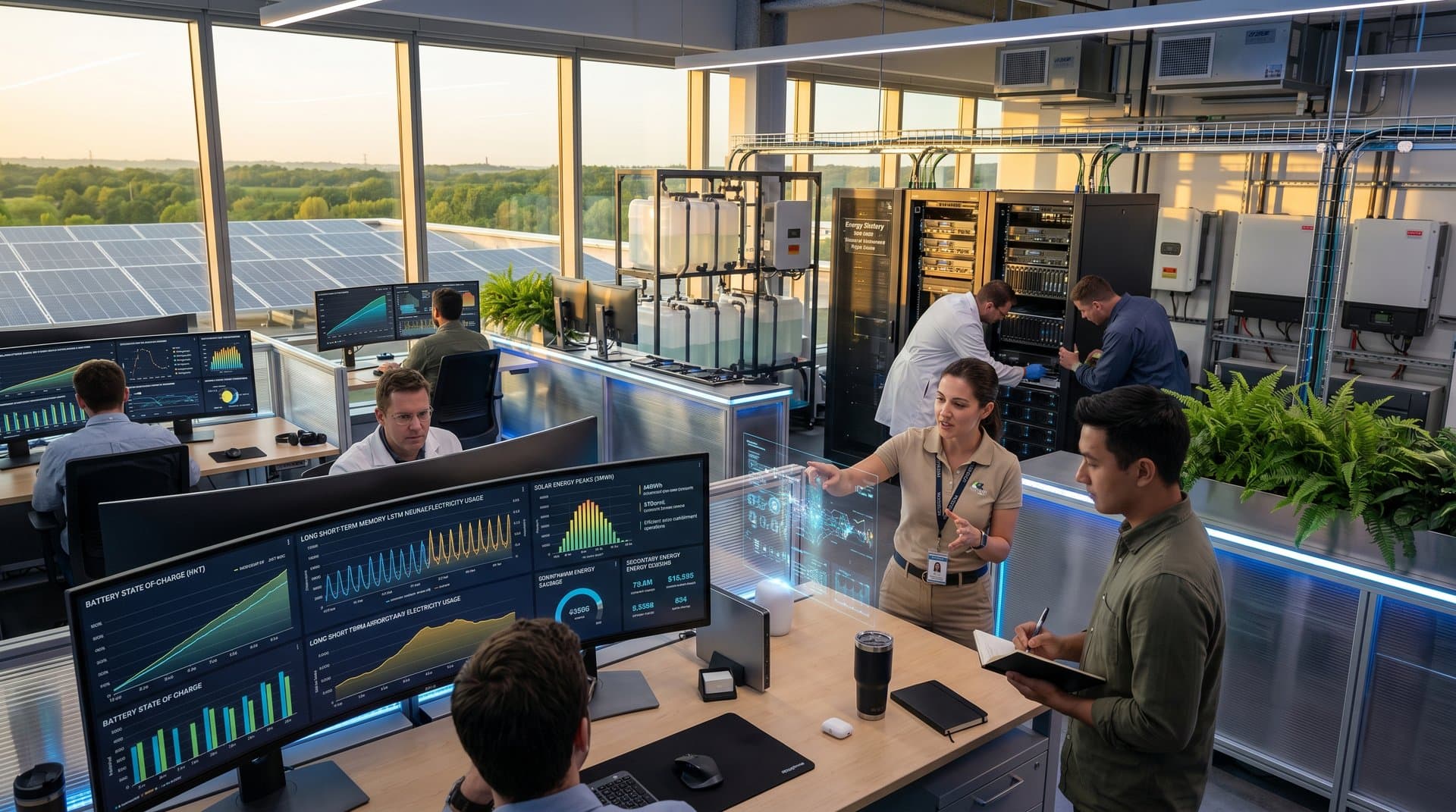
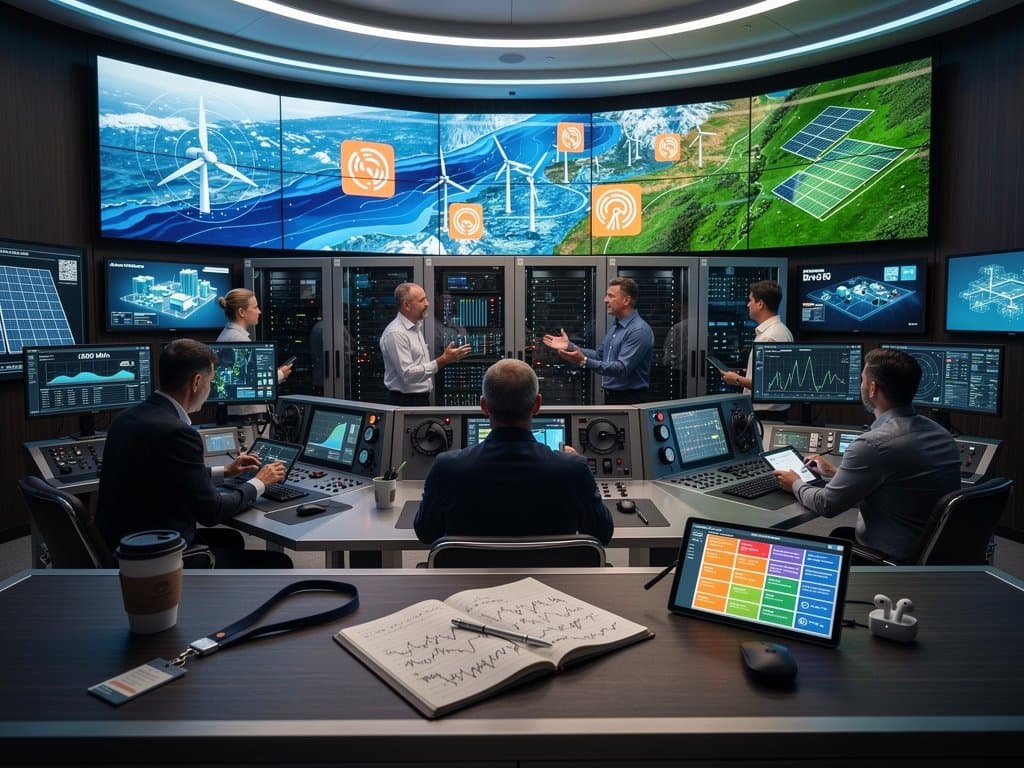
EurekAlert reported on April 17, 2024, that DeepMind's AI environmental predictions optimize dispatch at Vistra's 1,600 MWh Moss Landing battery. GraphCast machine learning models forecast weather six times faster than ECMWF with 20% lower errors on key metrics. These enable precise renewable integration for the 400 MW system.
Grid operators charge batteries during excess solar and wind. Moss Landing's lithium-ion packs, with 85% round-trip efficiency (RTE) at 0.25C per NREL data, dispatch power effectively.
GraphCast AI Outperforms Traditional Weather Models
DeepMind's GraphCast neural networks process satellite, radar, and sensor data. They outperform ECMWF on 90% of 138 targets, including tropical cyclone tracks and 0.25-degree wind speeds, per DeepMind benchmarks.
Traditional numerical weather prediction (NWP) models lag in chaotic atmospheres. GraphCast delivers 10-day forecasts in minutes.
NREL pilots show AI cuts solar forecasting mean absolute error (MAE) by 15%. Batteries charge at peak irradiance (1,000 W/m²) and discharge for evening peaks, per NREL's AI for the grid report.
Operators plan 24-48 hours ahead, maximizing energy arbitrage revenue.
Vistra Moss Landing Adopts AI for 400 MW Operations
Vistra's Moss Landing Phase 1 (300 MW / 1,200 MWh) commissioned in 2021 for PG&E. Phase 2 adds 100 MW / 400 MWh, totaling 1,600 MWh at 3.5-hour duration.
NREL data confirms lithium-ion RTE >85% at 0.25C, with >3,500 cycles at 80% depth of discharge (DoD). AI limits DoD during low prices, per NREL studies.
Australia's Hornsdale (150 MW / 193.5 MWh) used Tesla Autobidder AI for AUD 150 million first-year revenue, stabilizing the grid, Tesla reports.
AI Cuts LCOS and Curtailment in California
NREL estimates AI forecasting reduces levelized cost of storage (LCOS) by 10-15% via optimized dispatch. CAISO data shows 2023 curtailment wasted 2.5 million MWh renewables.
Moss Landing avoids USD 1 million/MW in transmission upgrades, per CAISO analyses. Vistra reports higher ancillary service revenues.
CAISO APIs integrate real-time data. Temperature forecasts limit degradation, extending 10-year warranties.
US Inflation Reduction Act tax credits favor 4-hour systems like Moss Landing colocated with 1 GW solar.
AI Enables Long-Duration Storage Scaling
Long-duration energy storage (LDES) needs multi-day forecasts. EurekAlert highlights AI modeling extremes for flow batteries and iron-air tech.
Europe's Gateway (250 MW / 1 GWh) tests AI dispatch, per National Grid ESO. US DOE invests USD 100 million in AI for grids, per DOE report.
AI optimizes lithium supply forecasts amid EU Battery Directive transparency rules.
Operators schedule maintenance proactively, simulating thermal cycles.
Outlook: AI Scales with 50% Renewables by 2030
Moss Landing demonstrates commercial-scale savings. CAISO and ERCOT API deployments follow. NREL projects 50% variable generation by 2030, strengthening grid reliability through AI dispatch.
Frequently Asked Questions
How do AI environmental predictions optimize grid storage?
AI forecasts renewable output precisely. Batteries charge in surplus, discharge at peaks. Moss Landing's 400 MW system dispatches efficiently, cutting costs.
What role does AI play in renewable integration?
AI cuts wind and solar forecast errors, reducing curtailment. Hornsdale's 150 MW reserve uses AI for markets. Hybrids benefit most.
Why is precise weather forecasting key for AI environmental predictions?
Neural networks outpace physics models on satellite data. GraphCast provides 10-day views six times faster. Storage operations improve.
How does AI impact long-duration energy storage?
AI models multi-day scenarios for flow batteries. It predicts degradation, optimizes dispatch. EurekAlert stresses LDES viability.