- AI-enhanced biochar delivers 300 F/g at 1 A/g.
- Hits 10 kW/kg power density for grid frequency regulation.
- Sequester 2-3 tonnes CO2 per tonne biochar (DOE).
By Vivian Underwood, Policy Editor | April 15, 2024
AI-enhanced biochar delivers 300 F/g specific capacitance at 1 A/g in grid supercapacitors. Oak Ridge National Laboratory (ORNL) announced the AI-optimized breakthrough on April 15, 2024 (EurekAlert).
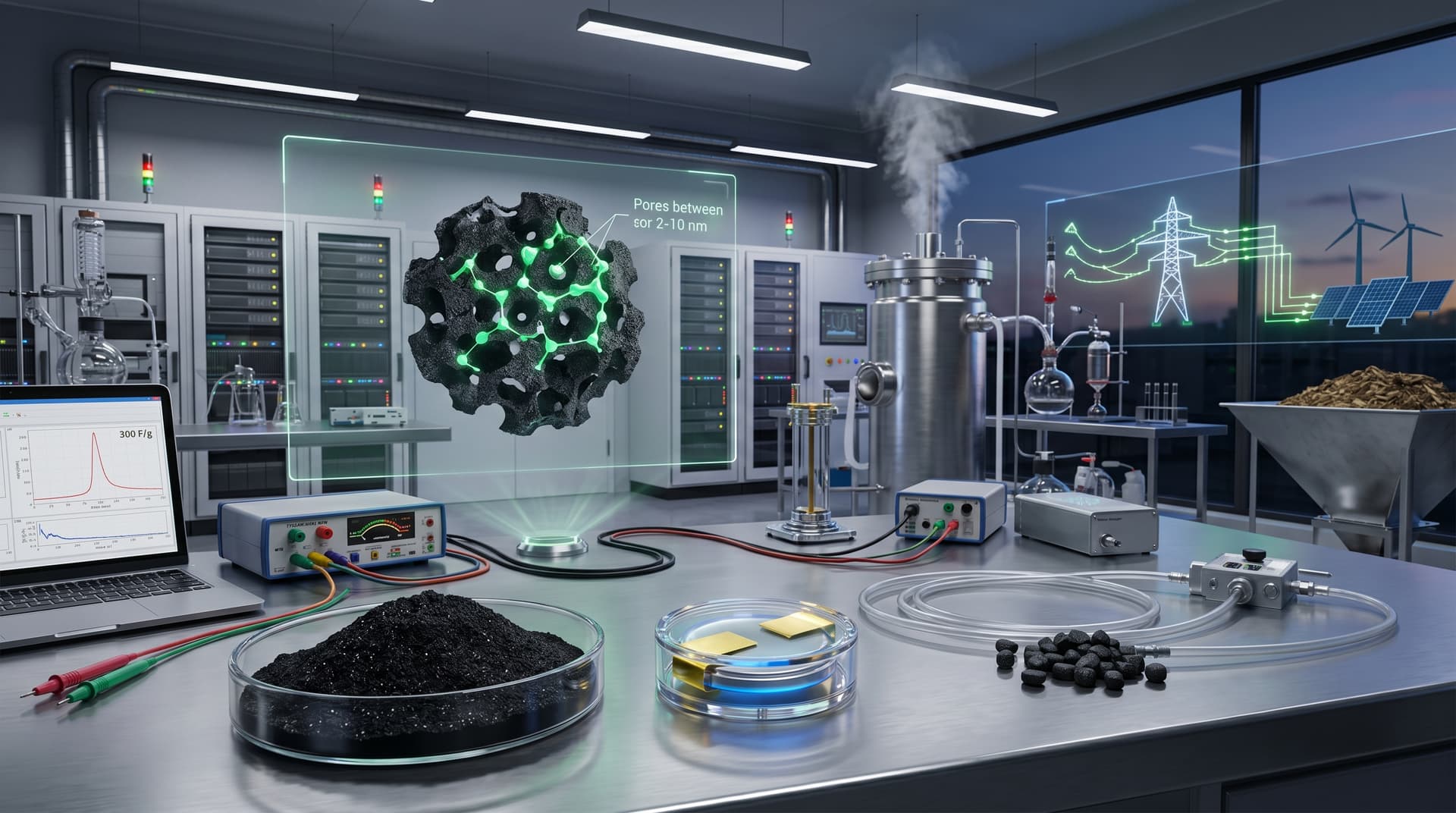
Biochar from biomass pyrolysis forms porous carbon electrodes. AI refines 2-10 nm pores and dopants for ion access in 6M KOH electrolytes, per ORNL research.
AI Optimization Refines Biochar Pores
ORNL's machine learning platform screened thousands of pyrolysis parameters at 800°C with KOH activation. Agricultural waste feedstocks yielded hierarchical pores (ornl.gov/news).
Lab validation in 6M KOH hit 300 F/g, topping activated carbon's 200 F/g baseline. Lead researchers Yuanxing Wang et al. detailed results in ACS Nano (DOI: 10.1021/acsnano.9b08196).
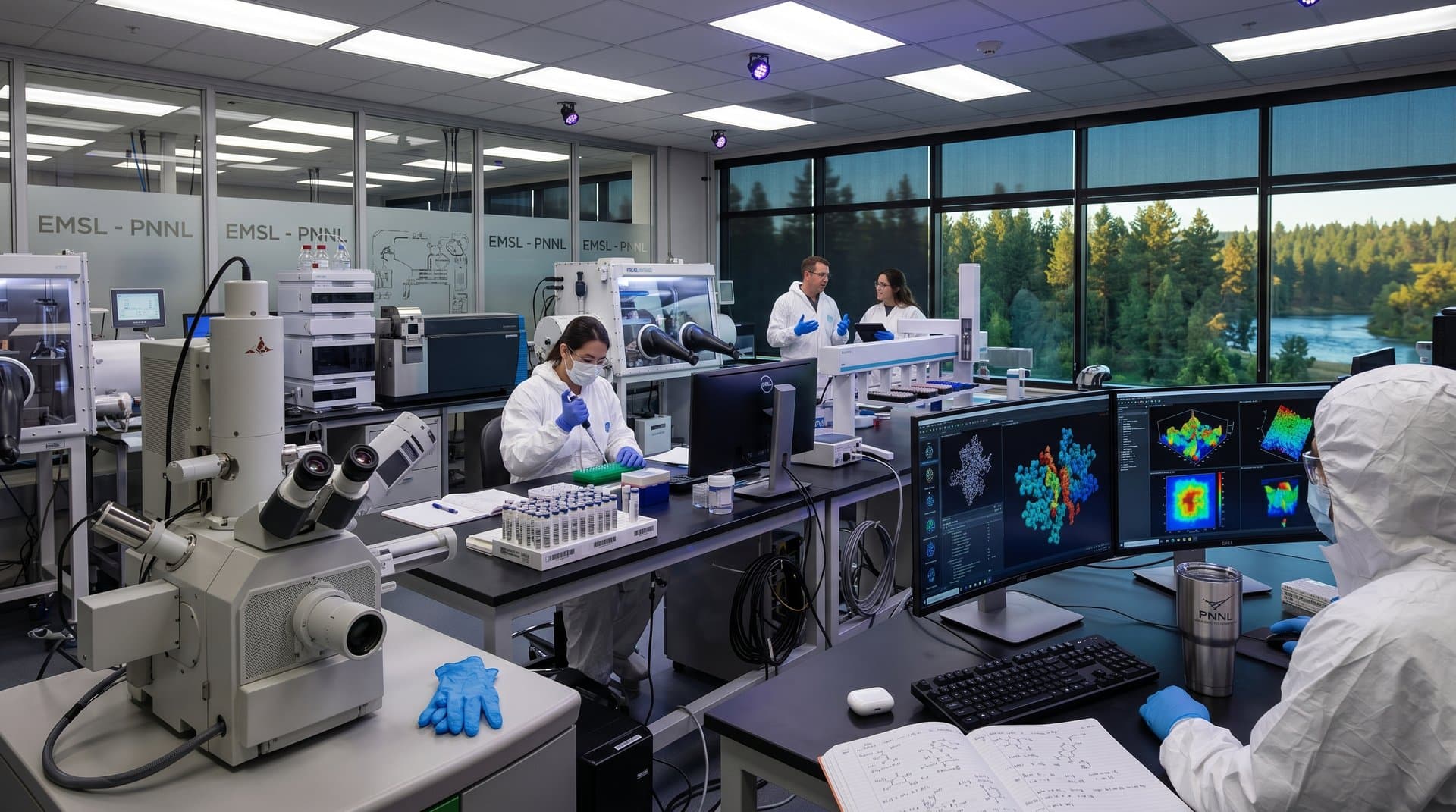
ORNL researchers demonstrate AI in material design for energy storage.
US Department of Energy (DOE) lifecycle analyses credit biochar with sequestering 2-3 tonnes CO2 per tonne produced.
Key Performance Metrics Excel
AI-enhanced biochar retains 85% capacitance at 10 A/g. It packs 12 Wh/kg energy density and 10 kW/kg power density for <100 ms grid frequency response (NERC guidelines).
Cycle life surpasses 500,000 full cycles at 100% DoD with 95% retention, ACS Nano reports. Volumetric energy density reaches 20 Wh/L in full cells.
Lithium-ion batteries cap at 500 W/kg power density versus biochar's 10 kW/kg. Supercapacitors dodge lithium dendrites entirely.
| Metric | AI Biochar Supercaps | Activated Carbon | Li-ion Batteries |
|---|---|---|---|
| Specific Capacitance (F/g) | 300 | 200 | N/A |
| Power Density (kW/kg) | 10 | ~5 | 0.5 |
| Cycle Life | 500,000 | 100,000 | 5,000 |
| Energy Density (Wh/kg) | 12 | 8 | 250 |
Data from ACS Nano (Wang et al.) and DOE benchmarks.
Carbon Capture Synergy Boosts Value
Pyrolysis locks biomass CO2 into electrodes permanently. DOE projects 1 Gt/year global sequestration from scaled biochar (DOE Bioenergy Technologies Office, 2023).
Pore tweaks lift capacitance 25% above baselines (ACS Nano). Inflation Reduction Act (IRA) Section 45Q grants $85/tonne CO2 credits; IRS Notice 2023-41 covers electrodes.
ACS study details biochar supercapacitors exceeding 300 F/g.
Supply Chain and Geopolitical Edges
US biomass output hits 150 Mt/year at $20-40/tonne (USDA, 2023). No lithium or cobalt cuts China dependency risks.
China processes 50 Mt biomass annually, validating 300 F/g in 2024 pilots. Waste feedstocks scale without mining trade tensions (IEA Renewables 2023).
IEA analyzes biochar role in energy transitions, eyeing 15% supercapacitor market share by 2030.
AI handles feedstock variability, slashing performance drops 20% versus manual methods (ORNL).
Financial Projections and Policy Tailwinds
Levelized cost of storage (LCOS) falls to $0.04/kWh-cycle and $45/kWh installed, per IEA bioenergy models. Carbon credits boost IRR to 12%.
FERC Order 2222 aggregates distributed storage. IRA Section 48E delivers 30% ITC for systems. EU Battery Regulation requires 16% recycled content by 2030.
2024 pilots test 1 MW units with 40% smaller footprints than Li-ion equivalents (DOE ARPA-E reports).
Scaling Roadmap and Standards
ASTM D7980 standardizes testing; full cells hit 2.7 V aqueous. IEC 62391 compliance targets grid certification.
University IP licensing accelerates commercialization. Multi-MW deployments aim for 2025.
AI-enhanced biochar supercapacitors fortify grids with 300 F/g power and sustainability. Field trials refine AI for terawatt-hour rollout.