AI data center storage jobs surged 40% year-over-year through April 2026, per Indeed Hiring Lab data. Technicians pivot from grid-scale batteries to hyperscale projects. This shift meets 15 GW US AI power demand. BloombergNEF noted Q1 2026 acceleration.
Surging AI Power Needs Fuel Storage Job Boom
AI data centers used 4% of US electricity in 2025, according to Electric Power Research Institute (EPRI). Projections show 8% by 2028. MWh-scale battery energy storage systems (BESS) relieve grid strain. These systems offer 500 MW power with 2-hour duration at 92% round-trip efficiency (RTE), tested per IEC 62619 standards.
Microsoft and Google awarded 3.2 GWh contracts to Fluence Energy and Tesla in March 2026. Projects use lithium-iron-phosphate (LFP) cells with 160 Wh/kg energy density and 6,000 cycles at 80% depth of discharge (DoD). Integrators achieved 92% RTE at 0.5C discharge rates.
Battery integrator job postings climbed 40% on Indeed. Listings require DC fast-charging expertise and string inverter commissioning skills.
Hyperscale Projects Demand Specialized Skills
Grid battery roles emphasized frequency regulation and peak shaving. Hyperscale data centers prioritize black-start capability and liquid thermal management for 24/7 AI compute loads. NextEra Energy introduced a certification program in January 2026, training on AI dispatch software like AutoGrid.
EPRI surveyed 1,200 technicians. Results show 60% successfully pivoted to hyperscale roles. Programs cost USD 5,000 per worker and cover liquid cooling systems rated for 50 kW/m² heat flux.
US Bureau of Labor Statistics (BLS) data lists hyperscale wages at USD 48/hour, up from USD 38/hour for grid work. PG&E unions negotiated AI-specific job protections in Q1 2026.
EV Second-Life Batteries and V2G Boost Data Centers
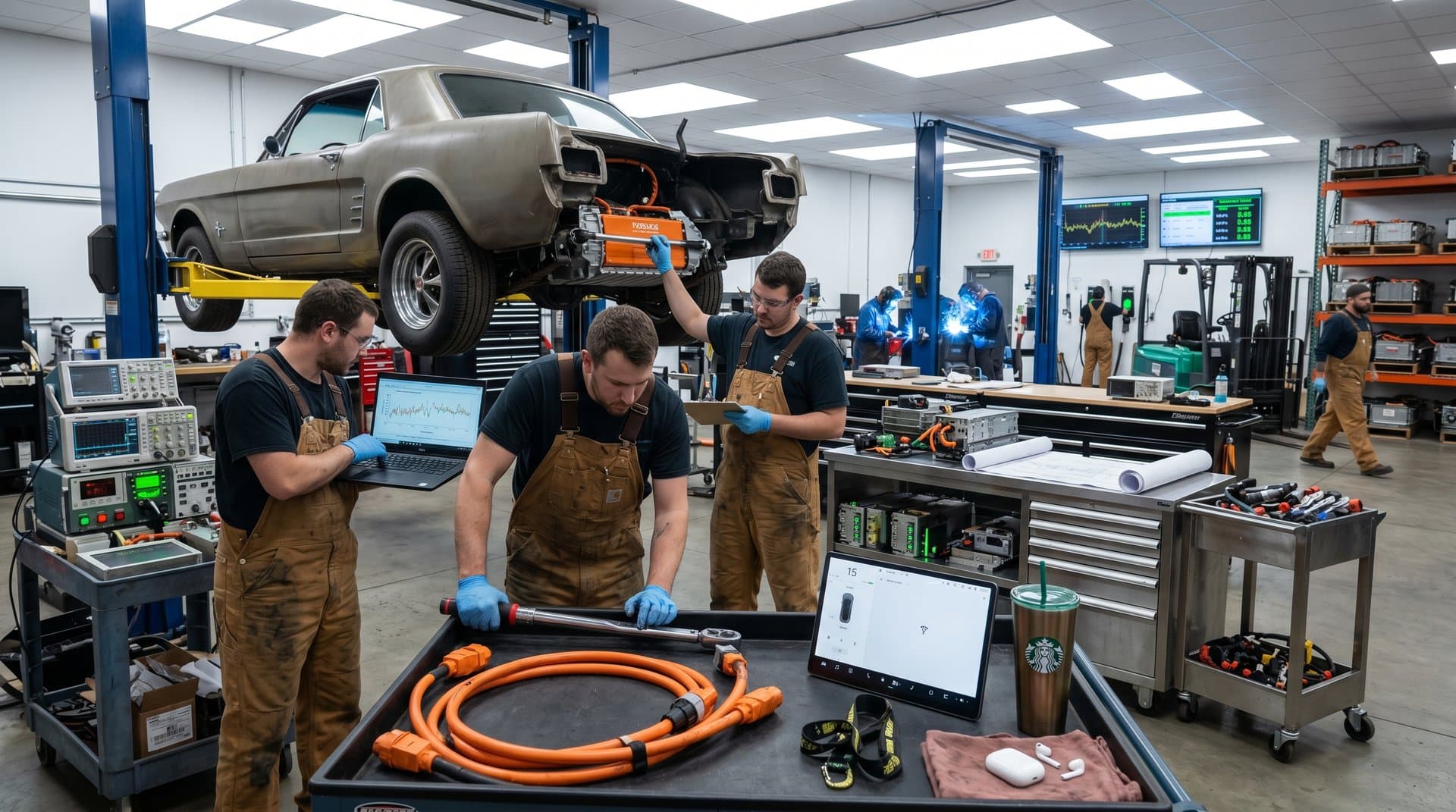
Electric vehicle (EV) fleets provide second-life batteries. Redwood Materials repurposed 120,000 packs into 800 MWh for Amazon Web Services (AWS) in Q1 2026. Packs retain 80% DoD capacity after 1,000 cycles, with 140 Wh/kg density.
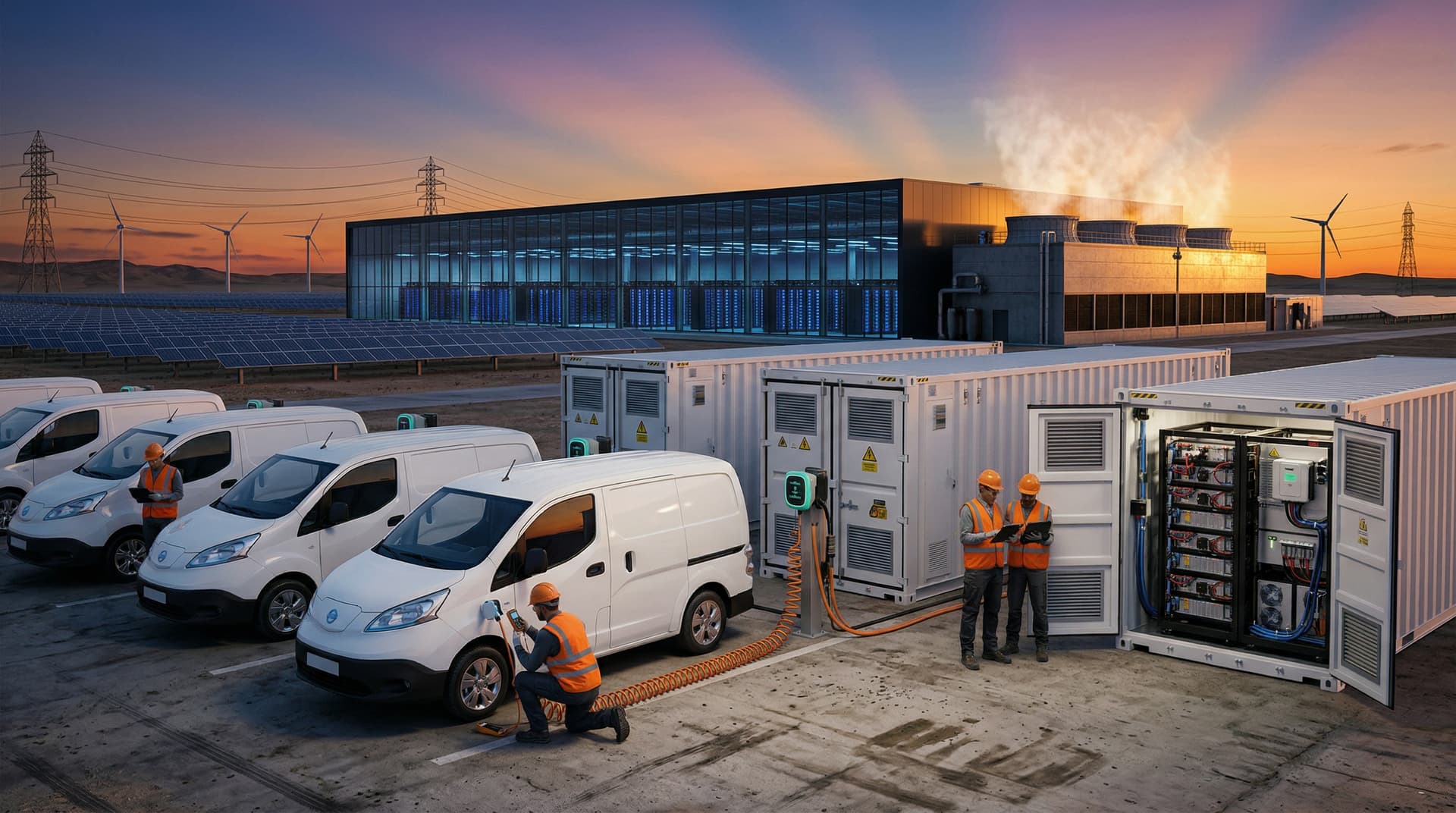
Vehicle-to-grid (V2G) pilots connect 5,000 EVs to Meta's Prineville, Oregon site. Wallbox chargers enable 50 MW discharge capacity, cutting levelized cost of storage (LCOS) by 30%, per Wood Mackenzie analysis.
Technicians install CCS2 bidirectional systems. Ford and NV Energy plan a 200 MW V2G hub for AI data centers, targeting USD 150/MWh arbitrage revenue from peak pricing.
Federal Incentives Drive Hyperscale Storage Adoption
Inflation Reduction Act (IRA) Section 45X provides 10% tax credits for LFP cell production. Data centers access USD 40/kWh investment tax credits (ITC) under Section 48. These total USD 1.2 billion for 2026 hyperscale projects.
National Renewable Energy Laboratory (NREL) April 2026 report calculates hyperscale LCOS at USD 120/MWh. Grid-scale LCOS hits USD 140/MWh. Subsidized V2G reaches USD 90/MWh.
Powin Energy secured USD 500 million financing for data center BESS. The firm targets 15% internal rate of return (IRR) via ancillary services like voltage support.
Supply Chain Shifts Open New Job Opportunities
Lithium carbonate prices fell 10% to USD 12,000/tonne in 2026, per Benchmark Mineral Intelligence. CATL plans 20 GWh sodium-ion production by 2027, offering 150 Wh/kg density for non-critical data center loads.
Ultium Cells hired 2,500 workers for US hyperscale battery lines. Asia-Pacific suppliers hold 70% market share. EU tariffs increase import costs by 5%.
Federal Energy Regulatory Commission (FERC) data shows 250 GW interconnection queues. Co-located BESS reduces queue times by 18 months.
Strong Forecasts for AI Data Center Storage Jobs
BloombergNEF projects 45 GW data center storage by 2030, with 12 GW added in 2026. EV second-life batteries supply 5 GWh annually.
California requires 3 GW new storage by 2028 under AB 2514. ERCOT registered 1.5 GW hyperscale interconnection bids in Q1.
AI Data Center Storage Jobs Reshape Workforce
AI data center storage jobs demand hyperscale and V2G expertise. Pivoting technicians earn USD 10,000 more annually. BLS forecasts 50,000 new roles by 2028. Developers secure USD 200/MWh firming contracts. These boost grid stability by 10%, per EPRI models.