- IEA forecasts 945 TWh data center demand by 2026.
- Lithium-ion offers 90-95% RTE at 150-250 Wh/kg.
- 100+ GW storage pipelines balance AI grid loads.
Globe and Mail warns AI battery storage must avert 'Silent Spring' grid crisis from 945 TWh data center surge.
A July 2024 Globe and Mail opinion piece likens AI power demands to Rachel Carson's 1962 DDT exposé. Global data centers hit 415 TWh in 2024, per IEA, doubling to 945 TWh by 2026. NREL data shows lithium-ion batteries enable peak shaving and 90-95% round-trip efficiency (RTE) at 0.25C rates.
'Silent Spring' Analogy Exposes AI Grid Risks
Carson's book revealed pesticides' stealthy harm. Globe and Mail claims AI training matches small nations' power use—US data centers alone consumed 200 TWh in 2024. Google targets 10 GW expansions by 2030.
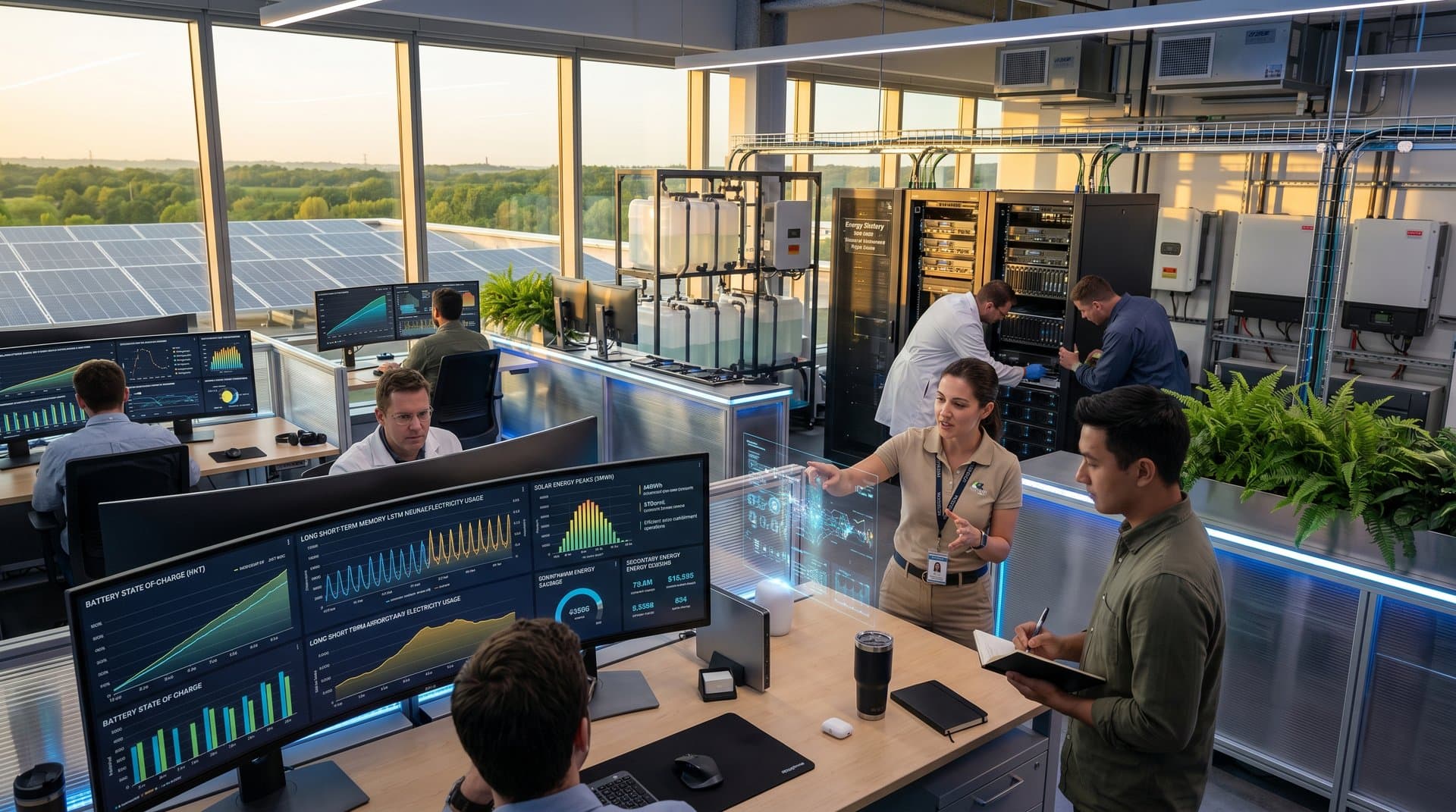
AI battery storage decouples renewables from steady AI loads. Batteries recharge off-peak and discharge at peaks with 90-95% RTE, per NREL lab tests (0.25C charge/discharge, 80% depth-of-discharge).
24/7 Data Center Loads Strain Grids
GPT-4 training needs constant 500-1,000 W per NVIDIA H100 GPU. DOE reports 20-50% interconnection delays for new sites.
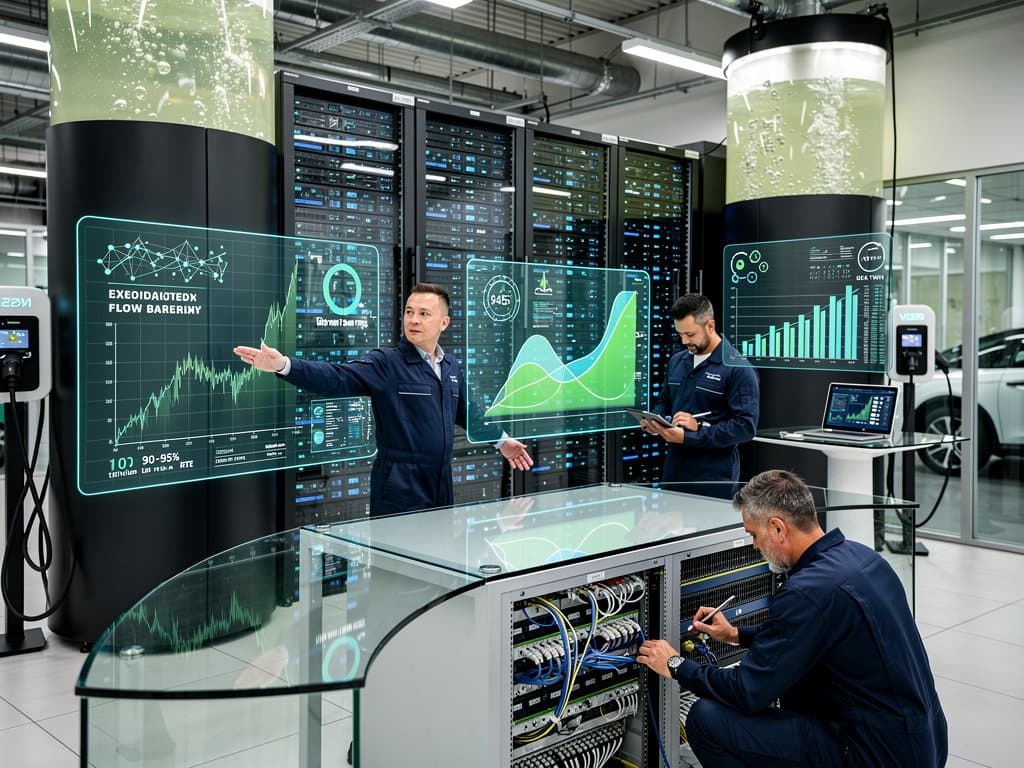
Solar-plus-storage co-location yields 4-hour firm power at 200-250 Wh/L volumetric density (Sandia Labs). Vanadium redox flow batteries offer 8-12 hours at 75-85% RTE over 10,000 cycles (80% SoC window), per Invinity Energy specs.
Utilities seek stacked revenues from arbitrage and services, hitting 8-12% IRRs with IRA tax credits.
Lithium-Ion Leads Short-Duration AI Support
Lithium-ion packs reach 150-250 Wh/kg and 400-650 Wh/L (Sandia 1C cycling, 80% DoD). Vistra's Moss Landing (1.2 GW/4.2 GWh, 3.5 hours) has operated commercially since 2021.
Behind-the-meter setups enable data center islanding. CATL's sodium-ion batteries target 160 Wh/kg, 20-30% lower costs via sodium abundance, with 2026 production.
NREL projects AI grabbing 4-9% US grid capacity by 2030, demanding fast storage rollout.
Long-Duration Batteries Handle AI Backup
Form Energy's iron-air batteries promise 100 hours at <$20/kWh LCOS (50% RTE, abundant iron). Invinity's vanadium flow hits 85% RTE for 10+ hours over 25 years.
DOE models show 1 million EVs via V2G supplying 5-10 GW. Virginia mandates 20% on-site storage for new data centers.
Policies Accelerate AI Battery Storage
US IRA offers 30-50% ITCs for >3-hour storage. California targets 5 GW via AB 2514 by 2026.
EU Regulation 2023/1542 secures lithium chains. FERC Order 2023 cuts hybrid project queues 50%.
Developers fund 100+ GW pipelines with 4-6% green bonds (S&P Global).
Grid Upgrades Match AI Expansion
Transmission lags at 10 GW/year vs. 50 GW data queues. Battery grid-forming inverters provide black-start inertia (IEEE 2800-2022).
IEA sees AI boosting global electricity 10% to 45,000 TWh by 2030. BloombergNEF forecasts $100/MWh storage LCOS.
Hyperscalers commit $10B+ clean power with dedicated storage.
AI Battery Storage Ensures Grid Resilience
Co-located projects cut curtailment 30%. Storage beats gas peakers' $150/MWh LCOE.
FERC capacity markets favor batteries. Pipelines aim for 1 TW/4-hour average by 2030, averting the crisis.
Frequently Asked Questions
What is the Silent Spring analogy for AI battery storage?
Globe and Mail compares AI's hidden grid strain to pesticide damage. AI battery storage balances peaks with 90%+ RTE per NREL.
How does AI battery storage support data centers?
Provides peak shaving and backup for 24/7 GPU loads. Lithium-ion hits 150-250 Wh/kg. IEA forecasts 945 TWh demand by 2026.
Can grid tech prevent AI energy crisis?
Storage plus renewables firm power for AI. IRA ITC boosts 30-50% projects. DOE emphasizes flexibility.
Why prioritize battery storage for AI growth?
Decouples intermittent renewables from firm AI demand. LCOS falls to $100/MWh. Global pipelines top 100 GW.