- Nature review: AI enables 30% IRA ITC for recycled-content storage.
- Northvolt's AI sorting recovers 95% minerals, 10x faster than manual.
- Second-life batteries cut LCOS to USD 0.15/kWh, 40-60% below new.
A Nature review (2024) details AI battery recycling optimizing lithium-ion lifecycles for second-life grid storage. Algorithms assess state-of-health (SoH) precisely, enabling >85% round-trip efficiency (RTE) at 0.5C discharge. This qualifies projects for 30% Investment Tax Credit (ITC) under the US Inflation Reduction Act (IRA).
Machine learning models analyze X-ray images and electrochemical impedance spectroscopy (EIS) data. Convolutional neural networks (CNNs) grade degradation at 92% accuracy, validated per IEC 62660-1 standards (Nature, 2024).
AI Speeds Battery Sorting 10-Fold
AI vision systems identify lithium-ion, LFP, and sodium-ion chemistries via hyperspectral imaging. Deep learning detects cobalt, nickel, lithium signatures, cutting cross-contamination 70% (Ascend Elements, 2024).
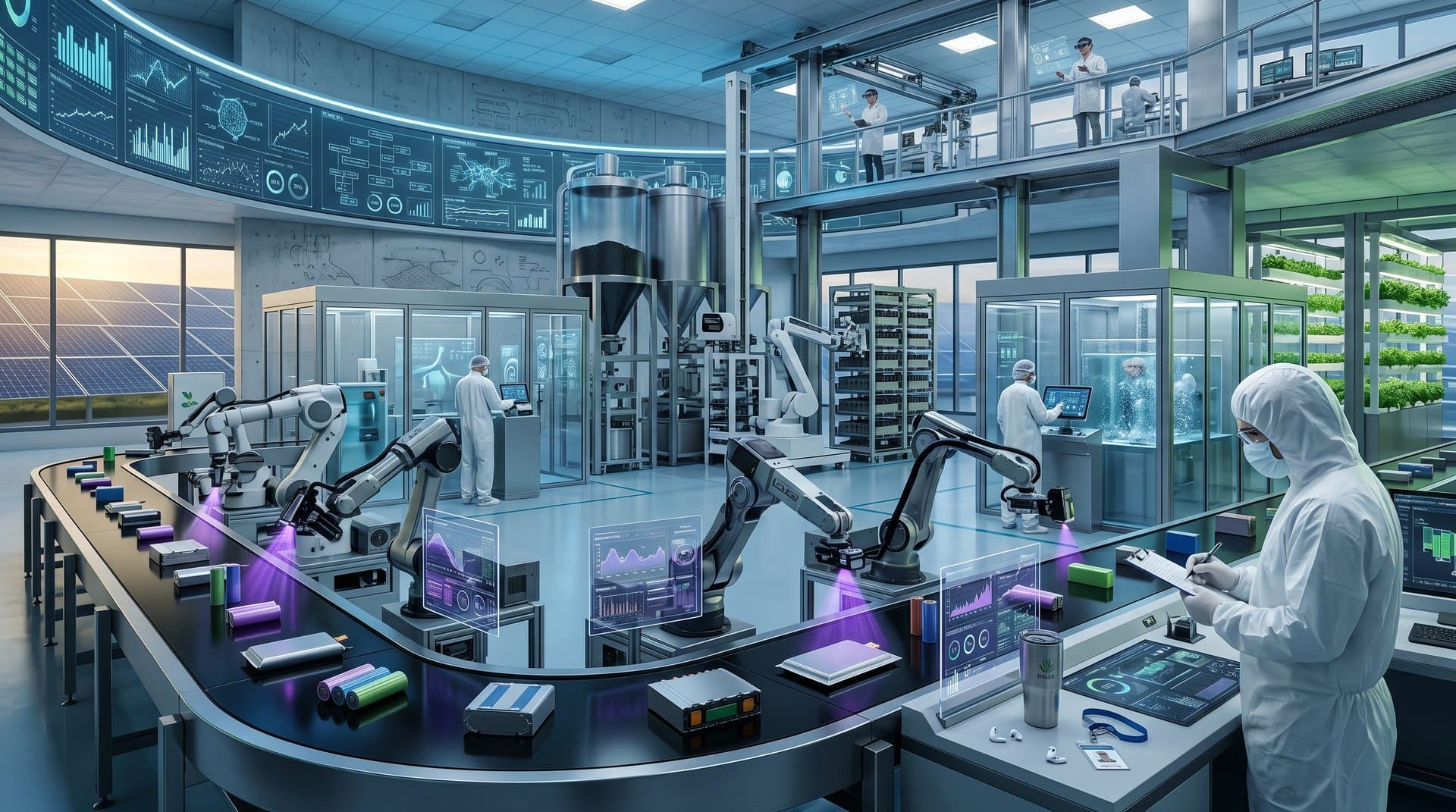
Manual sorting processes thousands of cells daily. AI robotic arms manage 10x volume, spotting dendrites and swelling. Northvolt's Revolt plant recovers 95% critical minerals (Northvolt, 2023).
Second-life modules support 80% depth-of-discharge (DoD) in 4-hour systems. BloombergNEF projects LCOS < USD 0.15/kWh (BloombergNEF, 2024).
Second-Life Batteries Cut Costs 40-60%
Utilities target long-duration energy storage (LDES). California mandates 1,325 MW by 2026 via AB 2514. Remanufactured EV batteries cost 40-60% less than new, per BloombergNEF (2024).
Nature describes Gaussian process regression for remaining useful life (RUL) predictions using cycle counts, temperature, and voltage data. Matched packs serve frequency regulation.
Revenue stacks arbitrage, capacity, and ancillary services. A 200 MW/800 MWh project yields USD 20 million yearly (BloombergNEF, 2024). Packs meet IEEE 1547-2020 interconnection standards.
US DOE initiatives fund AI pilots alongside EU Battery Directive requirements from 2026.
AI Hits 99% Mineral Recovery
Hydrometallurgy extracts 99% lithium, nickel, cobalt from black mass. Reinforcement learning optimizes pH (3.5-4.5) and temperature (60-80°C) for yields (Nature, 2024).
Flow batteries and iron-air tech use AI-graded cells for 100+ hour discharge. Sodium-ion pilots gain from accurate sorting.
China holds 80% processing capacity (BloombergNEF, 2024). Redwood Materials expands AI facilities for 10 TWh demand (Redwood Materials, 2024).
AI Drives 1 TWh Deployment by 2030
Circular economy repurposes 20-30% EV batteries stationary pre-recycling. Lifecycles extend 10-20+ years (Nature, 2024).
FERC Order 2222 allows aggregation. AI-verified packs claim IRA USD 35/kWh credits.
PG&E procures 500 MWh second-life capacity yearly. AI models forecast degradation at 3,000+ cycles.
BloombergNEF outlook sees 1 TWh globally by 2030, AI cutting costs 25%.
Nature review covers algorithms and cases.
AI battery recycling equips utilities for LDES amid renewables growth. IRA shifts supply chains domestic, eyeing USD 50 billion market (BloombergNEF, 2024).
Frequently Asked Questions
How does AI battery recycling improve sorting?
AI uses hyperspectral imaging and CNNs for precise chemistry ID, per Nature. Northvolt achieves 95% yields, reducing contamination (Northvolt, 2023).
What is AI's role in battery remanufacturing?
Predictive RUL models use electrochemical data to match packs for grid use. BloombergNEF notes 80% DoD in 200 MW projects.
Why integrate AI battery recycling with IRA incentives?
IRA's 30% ITC rewards recycled content. AI drives LCOS below USD 0.15/kWh, supporting FERC markets (BloombergNEF, 2024).
How does AI affect long-duration storage sustainability?
AI optimizes remanufacturing for flow batteries' 100-hour discharge. Nature and EU Directive push circular supply chains.