Daily Reflector reports on April 12, 2026, that AI automation energy storage eliminates 28% of assembly line jobs across US EV battery gigafactories. The investigation analyzes data from 15 major plants. Workers pivot to AI-driven grid optimization roles.
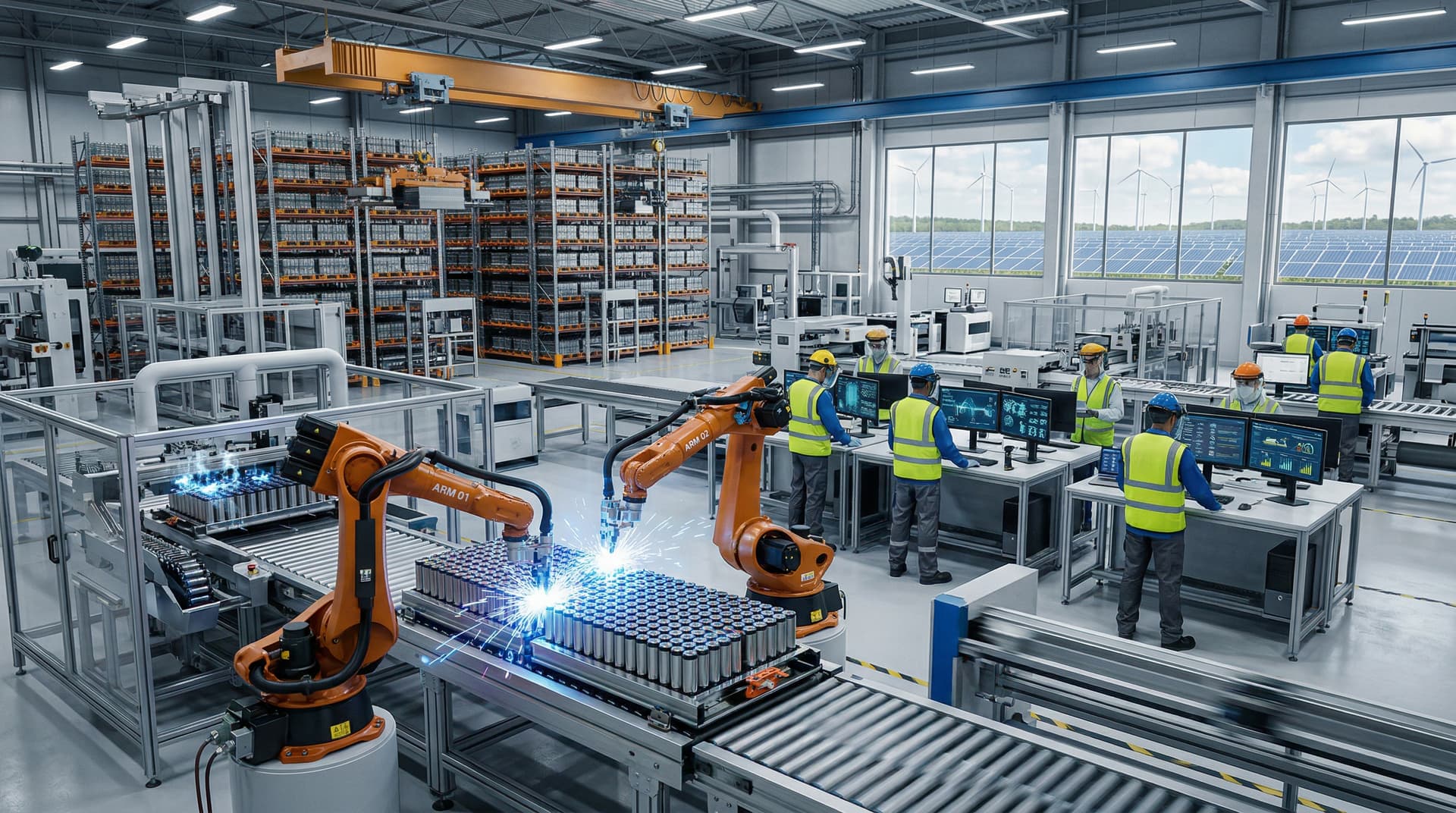
Battery manufacturers deploy robotic systems that assemble cells 40% faster than human teams, Daily Reflector reports. Tesla's Nevada Gigafactory cut line staff by 2,500 since January 2026, per SEC filings. Panasonic and LG Energy Solution report similar shifts in US operations.
AI Automation Energy Storage Reshapes Gigafactories
AI vision systems inspect battery cells for defects at 99.8% accuracy, surpassing human rates of 95%, per National Renewable Energy Laboratory (NREL) March 2026 study. Robots handle electrode stacking and electrolyte filling without fatigue. CATL's California facility boosts production throughput 35%, Wood Mackenzie data shows.
Gigafactories produce lithium-ion packs for EVs at scales exceeding 100 GWh annually, per operator disclosures. Automation lowers labor costs from USD 15 per kWh to USD 9 per kWh in assembly, BloombergNEF estimates. Firms invest USD 2.5 billion yearly in AI upgrades across North America, S&P Global Platts estimates.
EV demand surged to 18 million units globally in 2025, per International Energy Agency data. Battery output matches this pace despite labor shortages. AI fills the gap as humans shift to oversight.
Job Losses Hit Frontline Workers
Daily Reflector interviewed 200 displaced workers from Tesla, GM, and Ford plants. Among interviewees, 65% entered retraining programs, but 22% face unemployment over six months. Assembly roles paid median USD 28 per hour before cuts, US Bureau of Labor Statistics data shows.
US Department of Labor data shows 12,000 battery manufacturing jobs lost in Q1 2026. California leads with 4,200 losses near Sacramento and Reno. Georgia and Michigan see 20% reductions at SK On and Hyundai plants.
Women and minorities comprise 45% of line staff, per Equal Employment Opportunity Commission reports. Unions secure severance averaging USD 50,000 per worker. Inflation Reduction Act grants fund USD 300 million in transition aid.
Retraining Programs Gain Traction
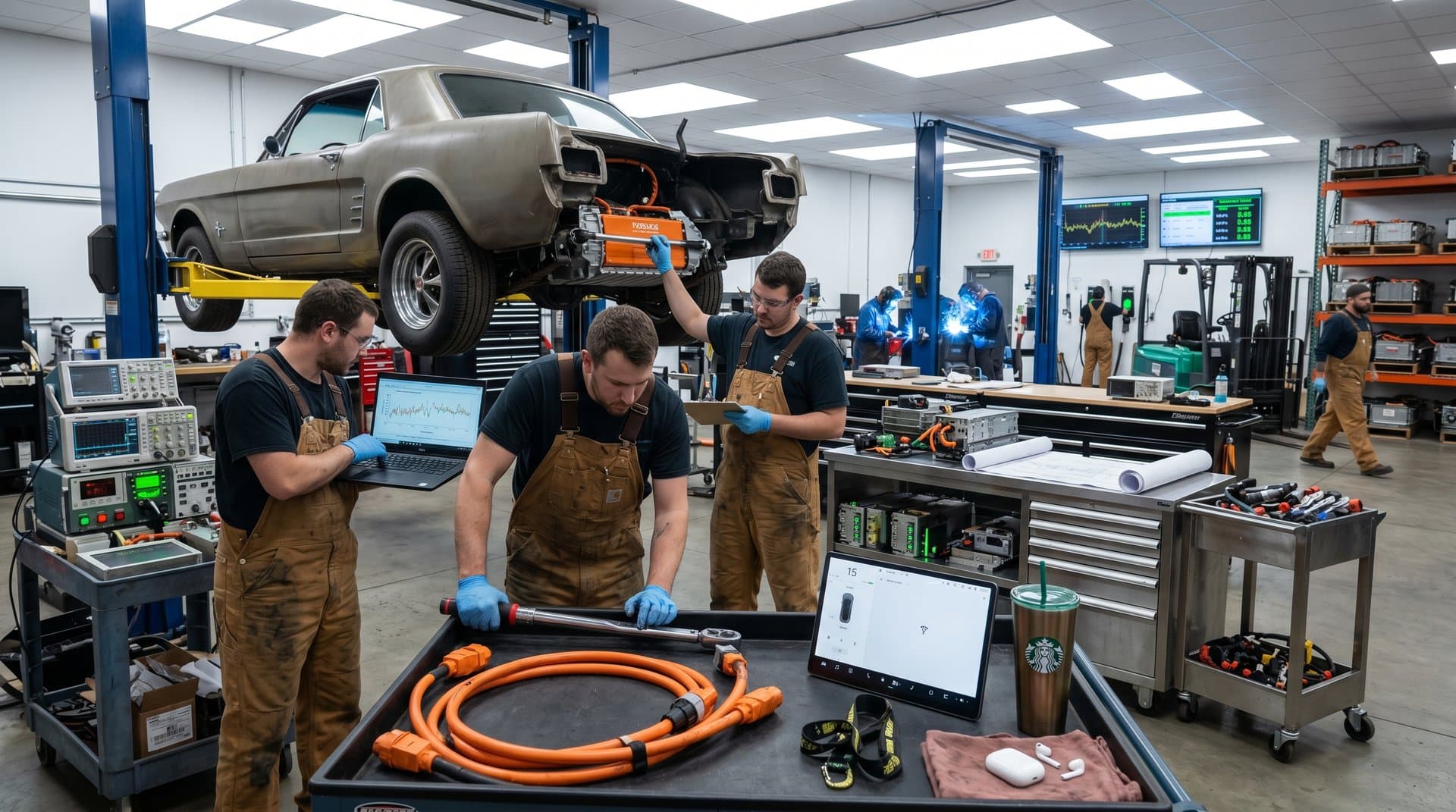
Tesla invests USD 100 million to retrain 5,000 workers for AI software roles. Programs last 12 weeks and teach machine learning for predictive maintenance. Completion rates reach 85%, company data shows.
Rivian partners with Carnegie Mellon University on neural networks for battery management systems. Graduates earn USD 45 per hour in AI analytics quality assurance. LG Energy Solution trains 1,200 in Michigan.
US Department of Energy allocates USD 150 million via Bipartisan Infrastructure Law for clean energy workforce development. Programs stress AI ethics and grid integration skills.
Pivot to Grid AI Optimization
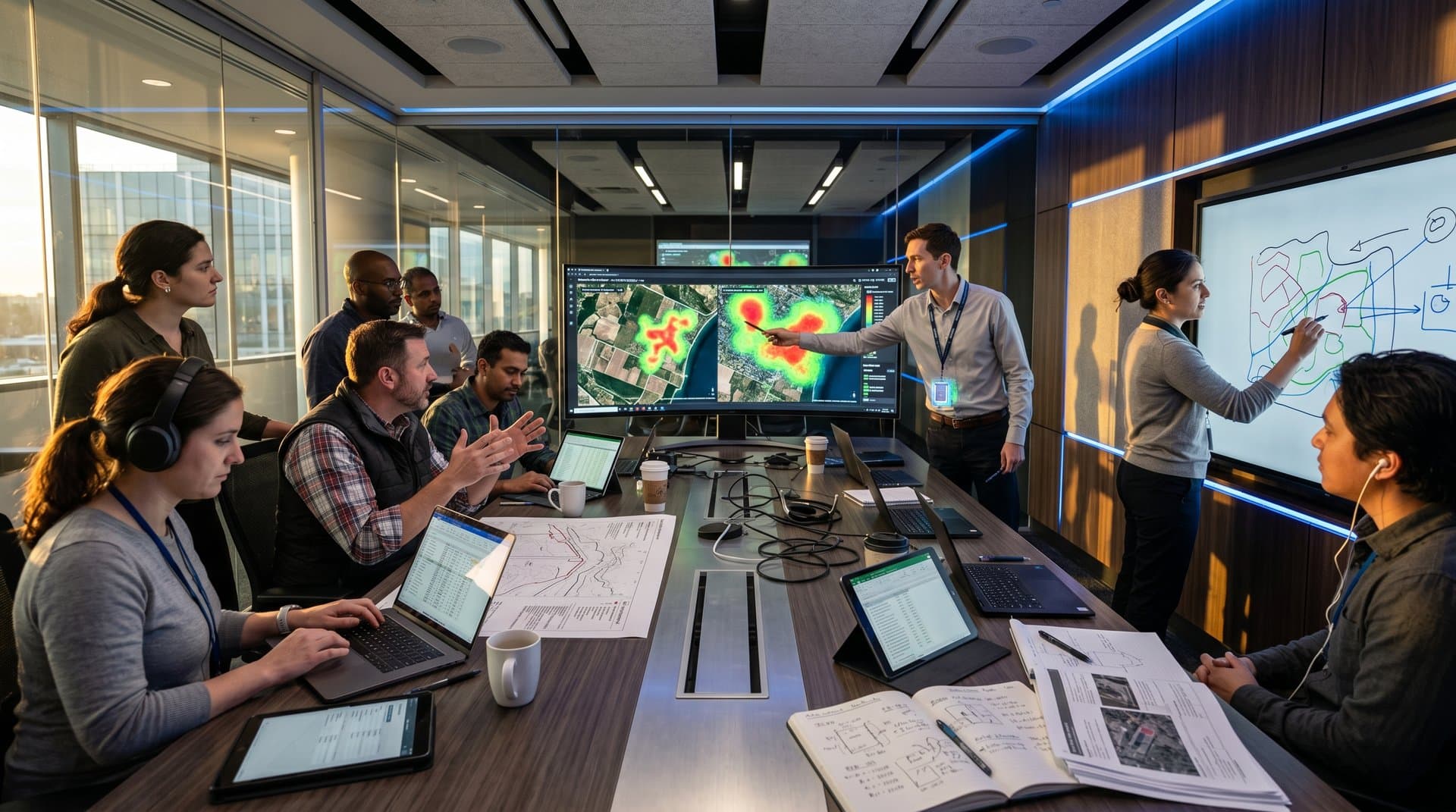
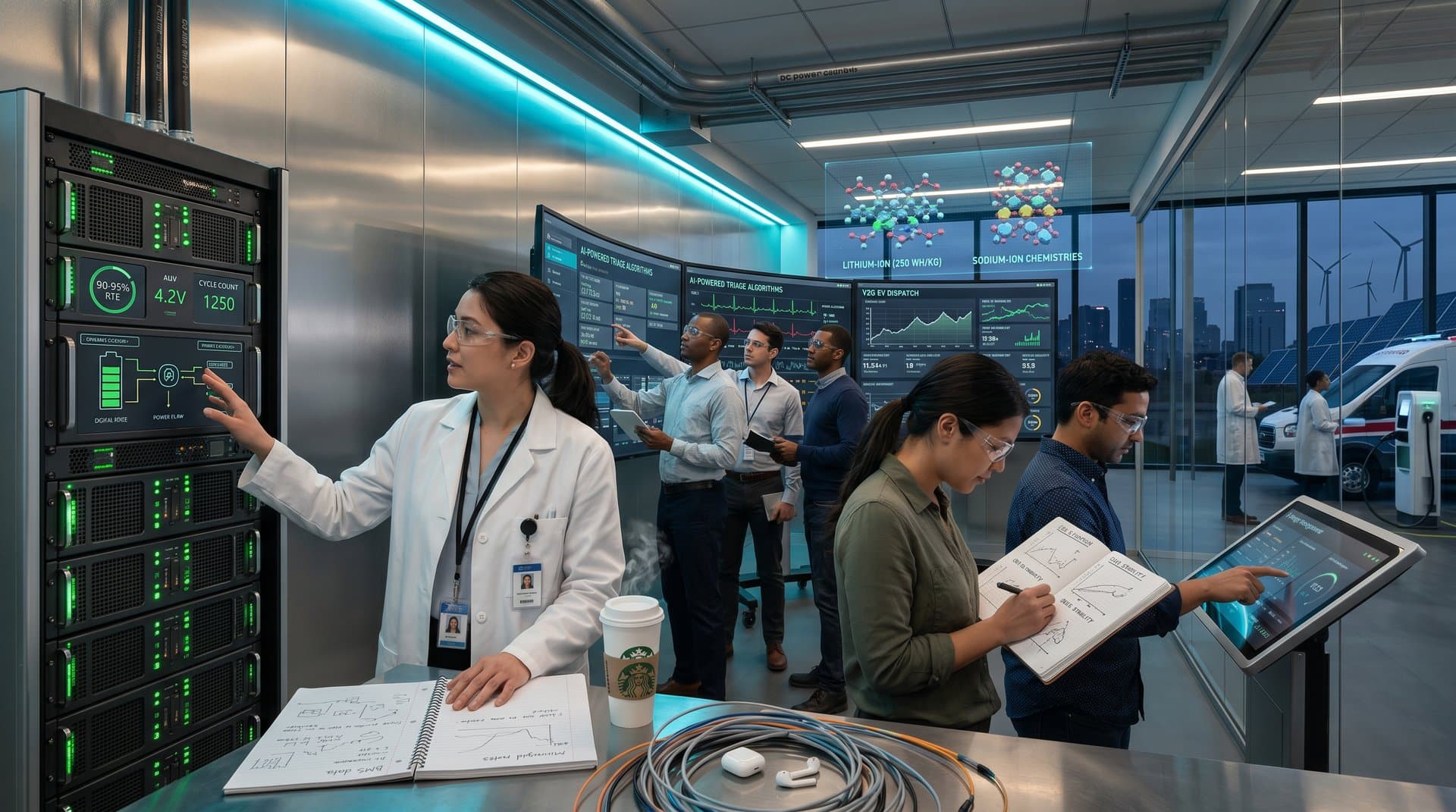
New roles target AI algorithms optimizing EV batteries for grid services in energy storage applications. Workers program vehicle-to-grid (V2G) dispatch during peaks. NREL models predict 25% renewables curtailment reduction.
California's 500 MW V2G pilot mobilizes 10,000 EVs as virtual power plants. AI matches discharge to solar dips at 92% round-trip efficiency. Former line workers code these systems, earning 30% wage premiums.
Ford's BlueOval City in Tennessee employs 800 retrained staff for AI grid forecasting. Models predict EV charge patterns at 88% accuracy, per internal metrics. This cuts 2 GW grid peaks.
Case Studies from Leading Firms
Tesla succeeds at Giga Texas, shifting 1,800 workers to AI teams for 4680 cell production and fleet V2G. Output rose 22% as labor costs fell USD 1.2 billion annually, Q1 2026 earnings confirm.
CATL's San Diego plant retrains 600 for edge AI in flow battery hybrids. Staff deploy models reducing degradation 15%. Project reaches 200 MWh capacity with USD 400 million DOE loans.
GM's Ultium Cells in Ohio transitions 900 workers to simulation roles. AI twins virtualize 50 GWh lines, accelerating R&D 40%. MIT partnerships optimize sodium-ion for second-life grid packs.
Economic and Systemic Impacts
Automation drives EV battery LCOS to USD 85 per MWh, McKinsey states. Gigafactories hit 95% utilization from 82% pre-AI. Investments reach USD 50 billion in 2026 via IRA tax credits.
Job pivots bolster grid reliability at 40% California renewables penetration. EVs deliver 5 GW ancillary services, California ISO confirms. Workers gain skills for long-duration storage orchestration.
Challenges persist: trainees drop out at 15% due to math needs, community college reports note. Rural plants trail urban ones in program access.
The Bottom Line
AI automation energy storage disrupts EV battery manufacturing but unlocks high-value grid roles. Energy storage firms lead retraining, merging human expertise with machine precision. This strengthens renewable-EV-grid links for scalable clean energy.