- Tennessee AI mental health crackdown fines unlicensed bots USD 1,000 per violation.
- AI data centers triple to 50 GW power demand by 2028 (BloombergNEF).
- Second-life EV batteries enable V2G at USD 50-80/kWh with 70% capacity retention.
Tennessee Governor Bill Lee signed Senate Bill 2346 on May 1, 2024, prohibiting unlicensed generative AI from diagnosing or treating mental health conditions. Violations incur USD 1,000 fines per incident, per the Tennessee General Assembly.
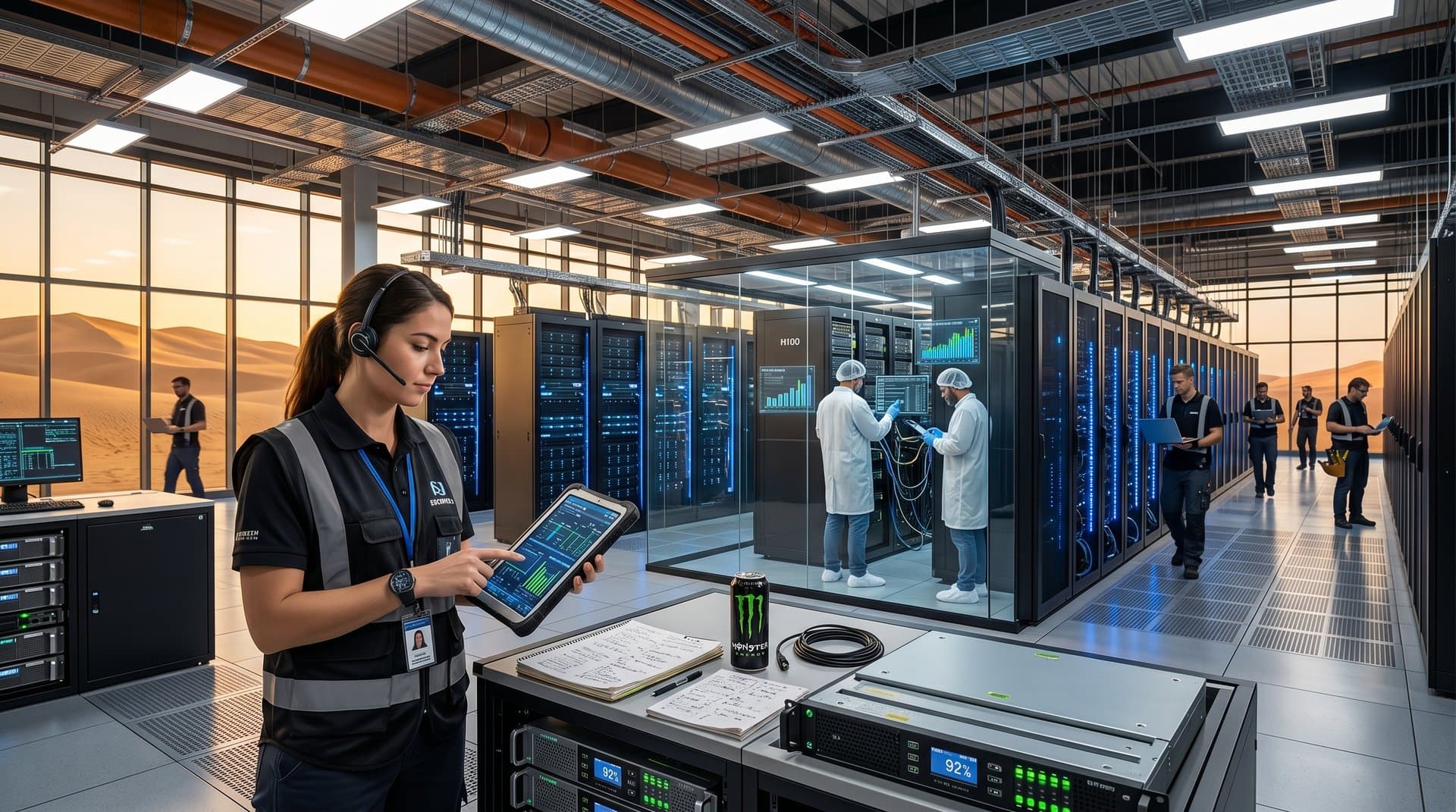
This Tennessee AI mental health crackdown spotlights risks in unregulated AI. It coincides with explosive AI data center growth, consuming power rivaling cities. Meta Platforms Inc. forecasts these facilities could use more electricity than small nations by 2030, per Reuters on September 20, 2024.
Grid storage counters these loads. Lithium-ion batteries deliver 85-90% round-trip efficiency (RTE) at 1C discharge, enabling peak shaving akin to EV surges, states the National Renewable Energy Laboratory (NREL) 2023 Battery Handbook.
Senate Bill 2346 Mandates Licensed AI Oversight
Senate Bill 2346 demands state-approved credentials for AI mental health tools. Platforms risk penalties for unchecked therapy-like outputs. The measure combats harms from faulty AI advice.
Developers add human-in-the-loop checks. This mirrors energy scrutiny of AI power use. Training one large language model exceeds 1,000 MWh—100 U.S. households' yearly consumption—per University of Massachusetts Amherst 2019 study, updated 2024.
Second-life EV batteries target USD 50-80/kWh costs. Packs hold 70-80% capacity post-200,000 km, offering 3,000-5,000 cycles at 80% depth-of-discharge (DoD), via NREL's 2024 Second-Use Battery Database.
AI Data Centers Triple Demand to 50 GW by 2028
Hyperscalers like Google and Microsoft build 100+ MW centers. BloombergNEF projects global AI power tripling to 50 GW by 2028 in its October 14, 2024, report.
Operators deploy storage for peaks. Utility-scale levelized cost of storage (LCOS) falls below USD 150/MWh. Form Energy's iron-air batteries offer 100-hour duration at USD 20/kWh capex and 50-60% RTE, validated by DOE ARPA-E 2024 specs.
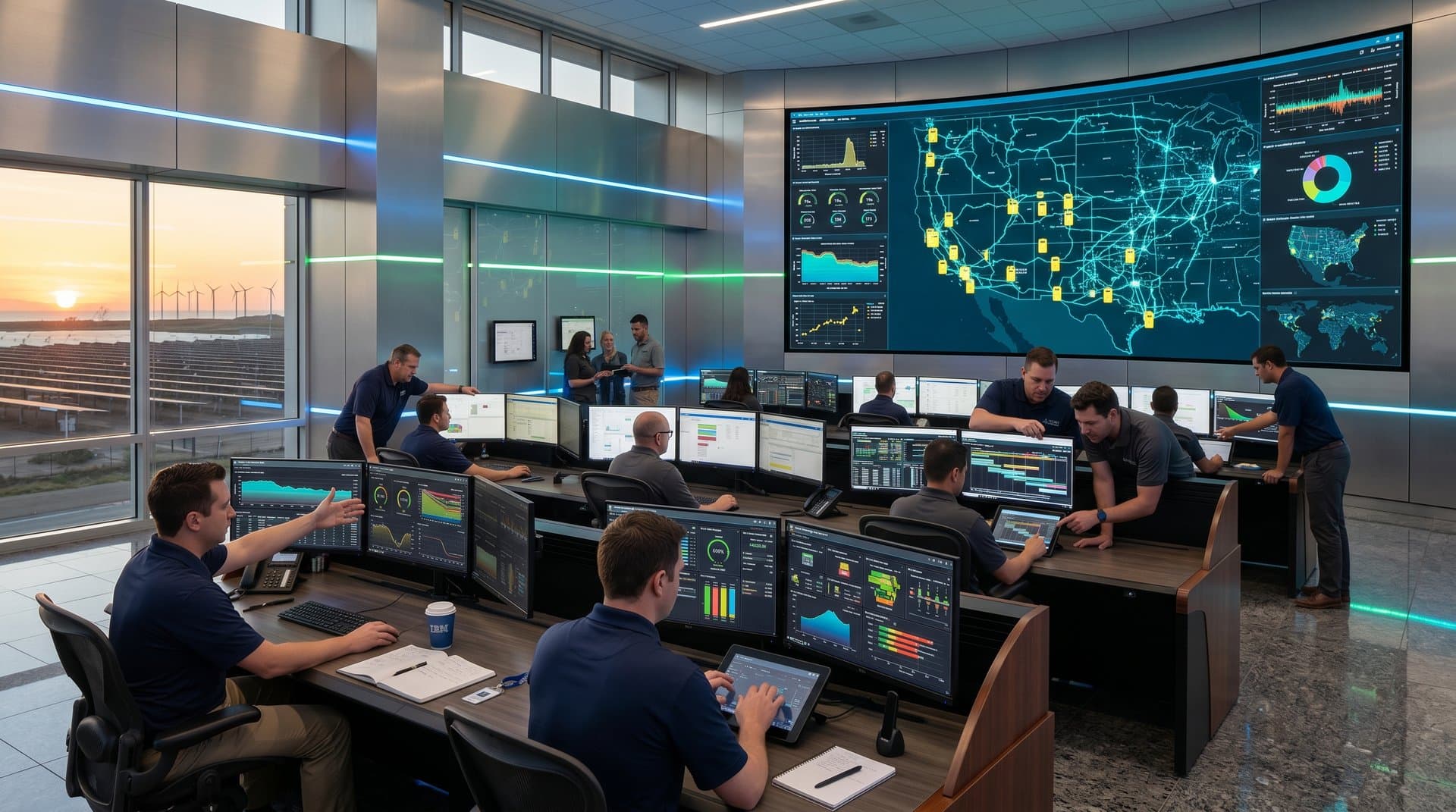
Vehicle-to-grid (V2G) pilots accelerate. Reuters covered Europe and U.S. efforts under FERC Order 2222 on April 25, 2024, for bidirectional EV balancing.
EV Batteries Bolster Data Center Resilience
Nissan Leaf and Chevy Bolt second-life packs retain 70% capacity. Fermata Energy chargers handle 50 kW discharge. Fluence Energy commissioned 100 MW/400 MWh in California 2023, with 4-hour duration at 90% RTE.
Inflation Reduction Act (IRA) grants USD 45/kWh tax credits, driving 10 GW U.S. storage yearly to 2030, per Wood Mackenzie Q3 2024.
Sodium-ion cuts lithium reliance. Faradion and CATL hit 160 Wh/kg and 190 Wh/L densities, 6,000 cycles at 80% retention, USD 40-60/kWh at scale, says IDTechEx 2024.
Supply Chain Pressures Drive Storage Innovation
Lithium carbonate rose 20% to USD 12,000/tonne in Q3 2024 on AI demand, per Benchmark Mineral Intelligence. NMC 811 cathode shortages boost iron-air and sodium-ion.
U.S. 25% tariffs on Chinese LFP favor local output. Albemarle scales Nevada lithium to 500,000 tonnes/year by 2027.
Congo supplies 70% cobalt; tensions lifted prices 15% year-over-year, per USGS 2024 Mineral Commodity Summaries.
Markets Signal Caution on AI Energy Boom
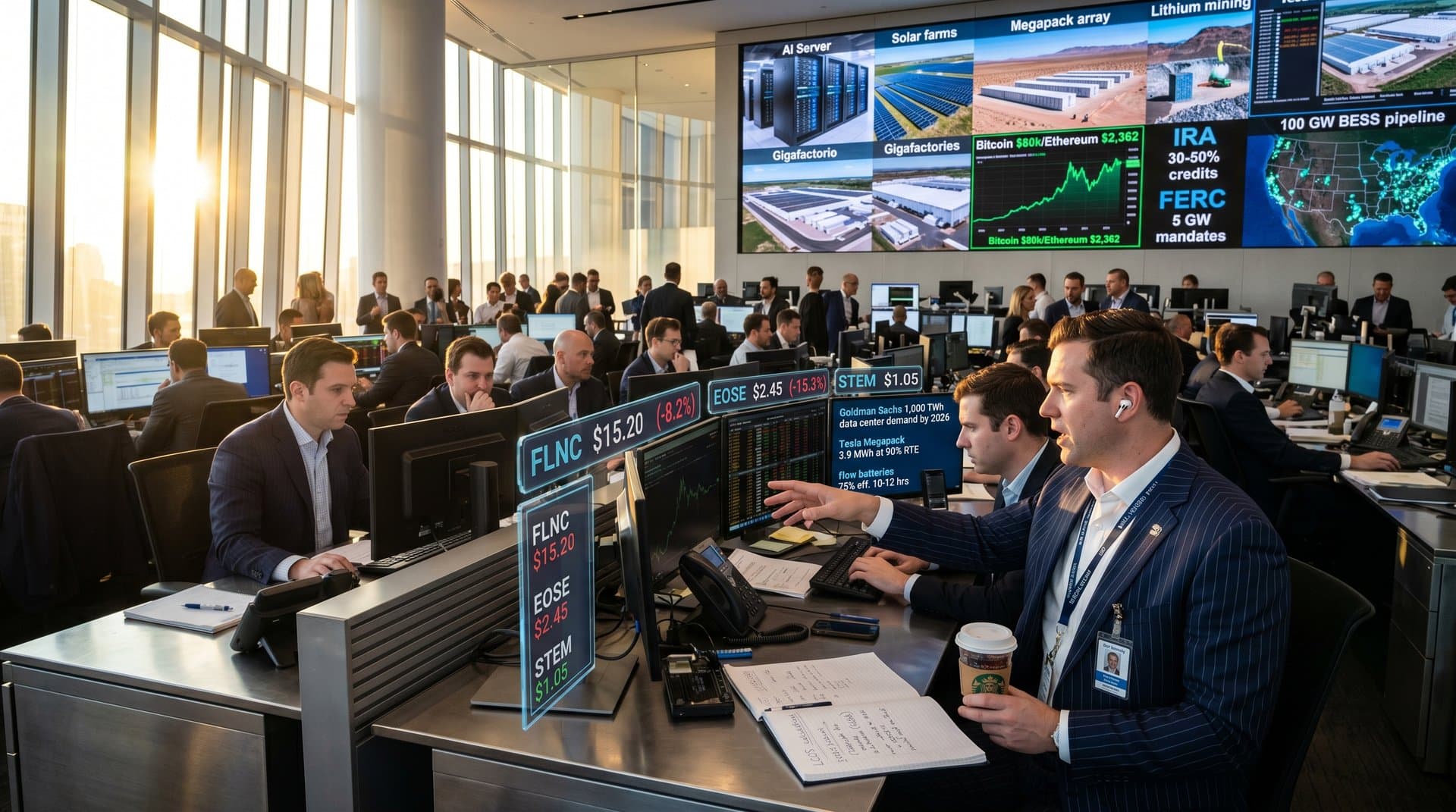
Crypto Fear & Greed Index hit 26 on October 15, 2024, via Alternative.me. Bitcoin reached USD 77,211; Ethereum USD 2,422.
EMEA storage auctions clear EUR 100/MWh. U.S. PJM awarded 2 GW/8 GWh at USD 120/MWh in 2024.
Tennessee's AI mental health crackdown sets precedent. Grid storage hits 50 GW by 2030 via IRA, backing AI and EVs. Developers eye sub-USD 100/MWh LCOS with lithium-iron hybrids.
Frequently Asked Questions
What does Tennessee Senate Bill 2346 prohibit?
Generative AI diagnosing or treating mental health without licensed oversight. Fines reach USD 1,000 per violation per Tennessee General Assembly records.
How do AI data centers impact grid storage?
They drive MW-scale peaks rivaling cities by 2030 (Meta/Reuters). Lithium-ion offers 85-90% RTE; LCOS under USD 150/MWh viable.
Why use EV batteries for data centers?
Second-life packs retain 70% capacity at USD 50-80/kWh. V2G via FERC 2222 enables discharge during AI loads.
What market signals tie to AI energy hype?
Fear & Greed at 26 tempers enthusiasm. Storage scales to 50 GW by 2030 amid IRA incentives.