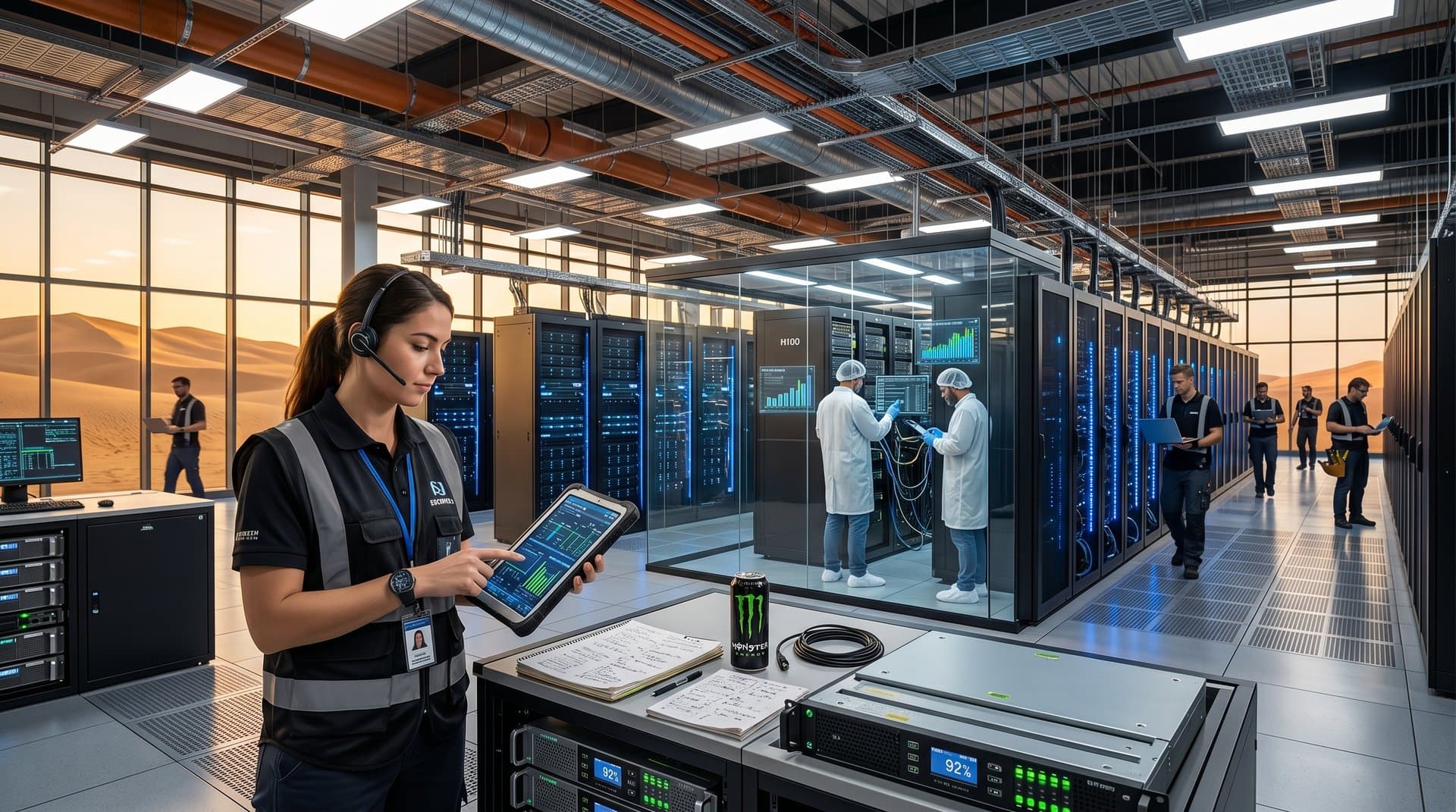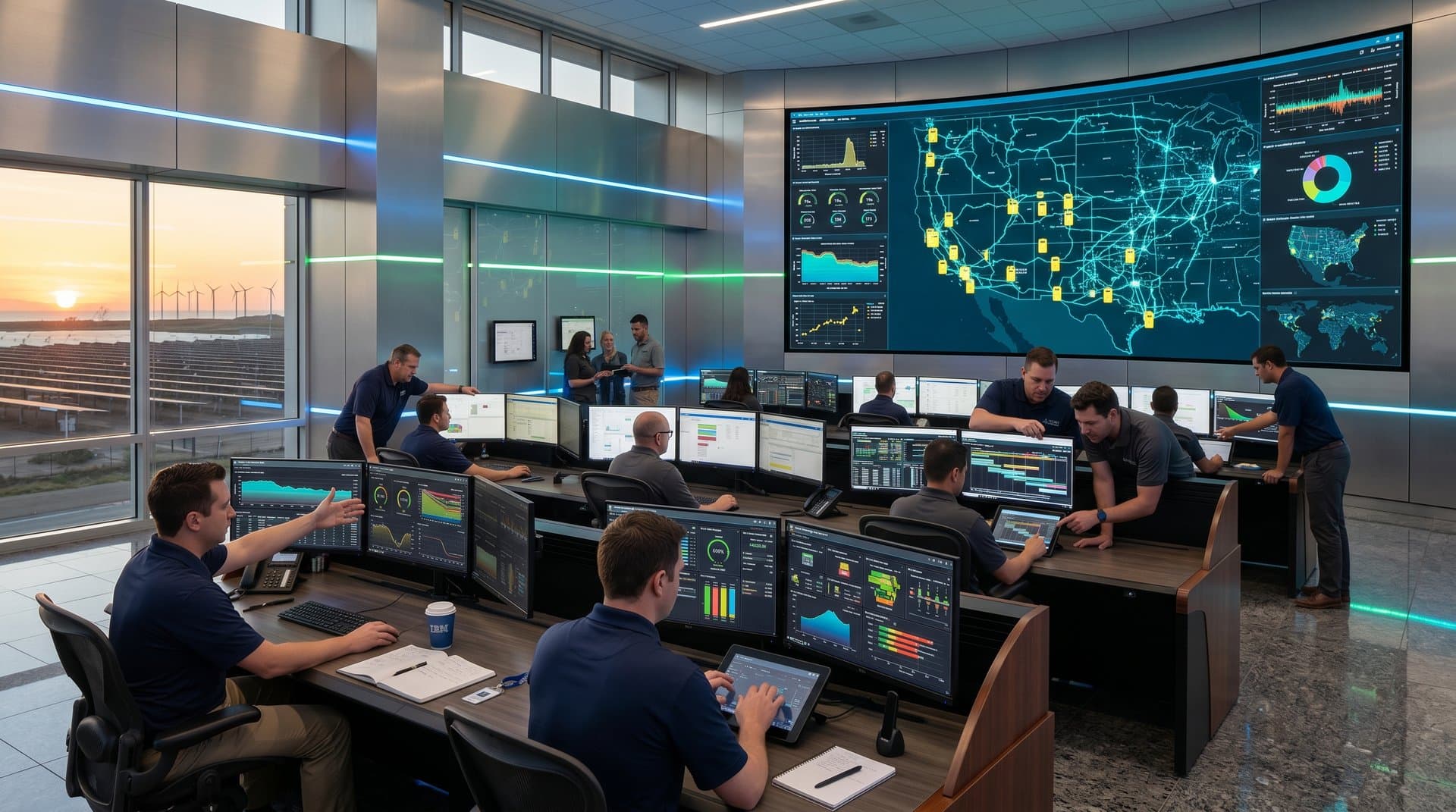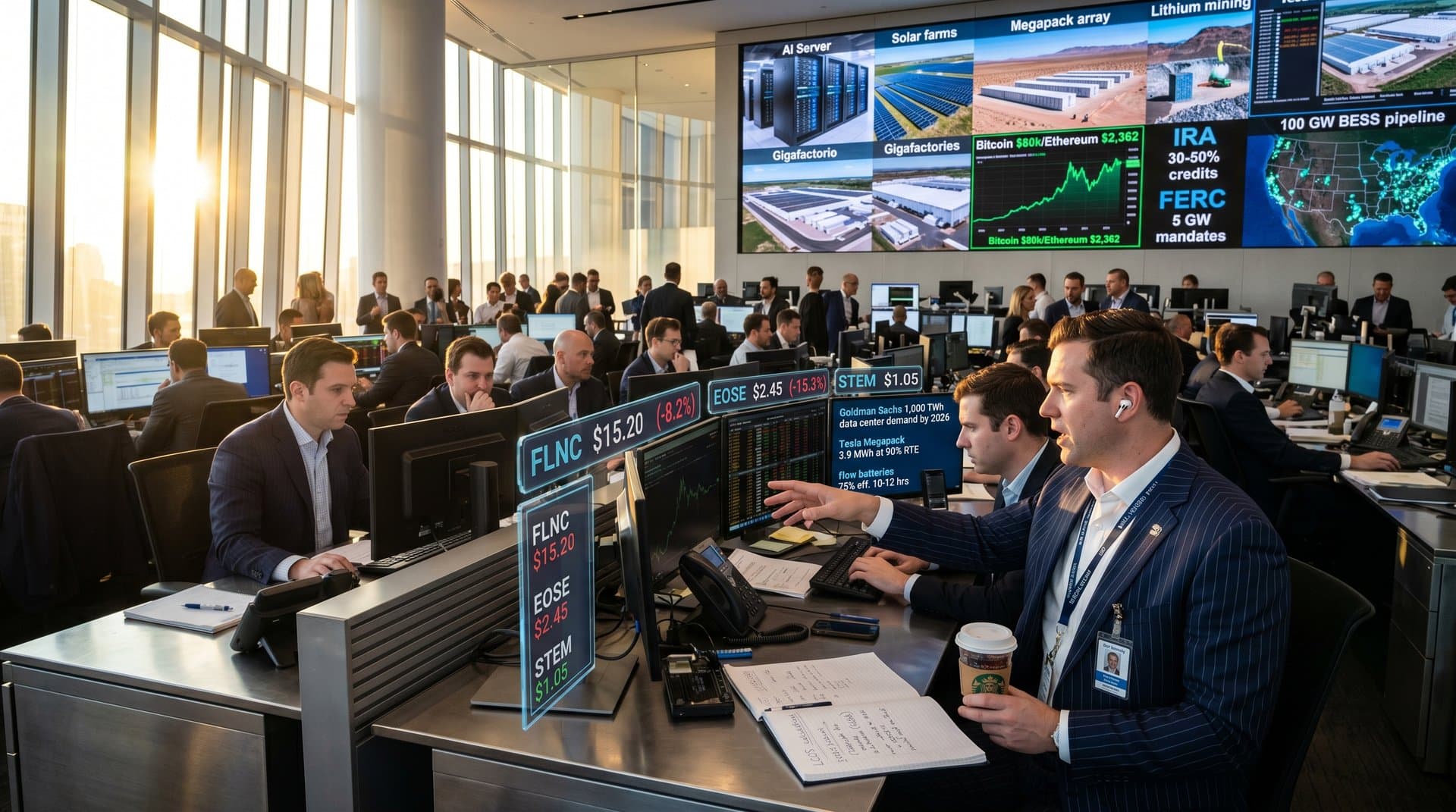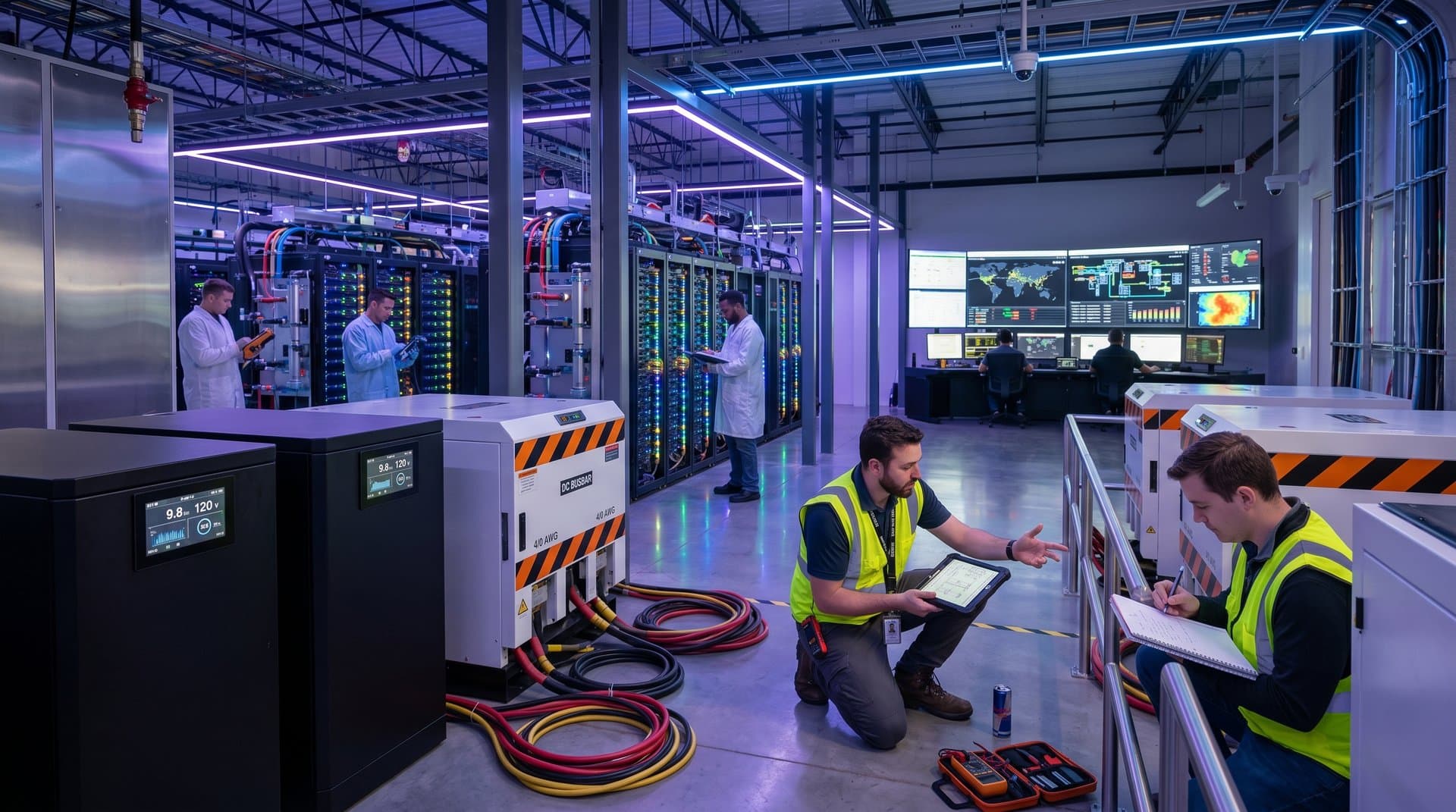
- AI doubles data center energy to 1,000 TWh by 2030 (Wood Mackenzie).
- California mandates 5 GW storage by 2026 (AB 2514).
- IRA ITC delivers 30-50% credits for 3+ hour batteries.
OpenAI-Microsoft split terminates exclusive Azure deployments for ChatGPT, effective October 22, 2024. Bloomberg reporter Akash Pasricha reports access now extends to AWS and Google Cloud. Multi-cloud strategies diversify AI data centers, straining grids and accelerating 5 GW+ grid-scale battery demand by 2028.
AI data centers draw 100 MW continuously per site, with training peaks at 500 MW. Grid-scale batteries provide 4-hour duration at 90% round-trip efficiency (RTE) to firm supply.
OpenAI-Microsoft Split Diversifies AI Data Center Power Loads
OpenAI formerly depended on Microsoft Azure clusters scaled to 1 GW+. Post-split, ChatGPT inference shifts to AWS Graviton processors and Google Cloud TPUs.
Geographic spread fragments loads across 10+ US grids. Utilities handle 20-50% variable peaks. Lithium iron phosphate (LFP) batteries offer 160 Wh/kg gravimetric density, 400 Wh/L volumetric density, and 6,000 cycles at 1C discharge, per Fluence Energy's Gridstack datasheet.
Diversification cuts single-region outage risks but lifts total power demand 30%, BloombergNEF analyst Colin Smith estimates.
Multi-Cloud AI Fuels 10 GW Grid-Scale Battery Pipeline
AI inference requires 100-300 MW continuously per hyperscale site. Pre-split Azure focus threatened Texas and Virginia grid overloads. After OpenAI-Microsoft split, developers project 5 GW+ online by 2028, doubling prior forecasts.
Co-location near fiber hubs targets secondary markets. Tesla Megapacks supply 3.9 MWh per unit at US$250/kWh installed (Q3 2024 pricing), 92% RTE at 0.25C. Fluence Cube platforms match 4-hour profiles with 175 Wh/kg cells.
Reuters cites Wood Mackenzie analyst Tom Flannery: AI doubles data center energy to 1,000 TWh globally by 2030.
Solar-plus-storage adds 20% firm capacity. Levelized cost of storage (LCOS) drops to US$0.10/kWh, per NREL 2024 benchmarks.
US Policies Accelerate Batteries for AI Data Centers
Inflation Reduction Act (IRA) grants 30-50% Investment Tax Credit (ITC) for standalone storage exceeding 3 hours. FERC Order No. 841 enables wholesale participation via 15-minute bids.
California's AB 2514 mandates 5 GW procurement by 2026. Texas ERCOT interconnects 2.5 GW behind-the-meter for AI loads, ERCOT CEO Pablo Vegas confirmed.
FERC rules treat storage as generators or loads, slashing barriers 40%, per FERC Commissioner Mark Christie.
Battery Supply Chain Supports Rapid AI Scaling
LFP cathode costs fell 20% year-over-year to US$80/kWh cell-level (BloombergNEF Q3 2024). Packs achieve 175 Wh/kg at 8,000 cycles, 80% depth-of-discharge (DoD).
Sodium-ion batteries reach 150 Wh/kg, 10,000 cycles for 6-hour duty. Flow batteries aim for 10-hour duration at US$200/kWh.
EV second-life packs cut costs 30-40%. DOE awarded US$50 million to Form Energy for iron-air long-duration storage prototypes: 100+ cycles at 10 hours, 45 Wh/kg.
US LFP gigafactories scale to 200 GWh annual output by 2026, CATL North America VP Li Liang stated.
Interconnection Queues Slow Battery Deployment Pace
FERC reports 2.3 TW in nationwide generation queues (2024 data). Storage permitting averages 18 months. LFP supply rebounds after 2024 shortages.
OpenAI launches multi-cloud in Q1 2025, Azure holding 70% share. Front-of-meter batteries deploy at 500 MW scale first.
Incentives phase down after 2032, fueling 15% CAGR through 2028.
Storage Boom Unlocks Opportunities for Developers
OpenAI-Microsoft split generates 10+ GW attachment points across US grids. Tech giants lock 10-year power purchase agreements (PPAs) at US$40/MWh.
Policies aim for 50 GW national storage by 2030. Multi-cloud AI propels grid-scale batteries, targeting 5 GW operational by 2027.
Frequently Asked Questions
What triggered the OpenAI-Microsoft split over Azure exclusivity?
OpenAI sought multi-cloud options for ChatGPT scalability. Bloomberg confirms AWS and Google Cloud access starts Q1 2025.
How does OpenAI-Microsoft split boost grid-scale batteries?
Multi-cloud diversifies 5 GW+ power loads across grids. 4-hour LFP systems buffer 20-50% peaks at 90% RTE.
Why more batteries for AI data centers post-split?
Site expansion strains grids. Reuters/Wood Mackenzie forecasts doubled demand to 1,000 TWh by 2030.
Which policies support AI battery storage?
IRA 30-50% ITC, FERC 841 markets, California 5 GW mandate by 2026.