- Marvell-Google AI chip deal covers 2 custom chips, lifts shares 7.3%.
- Drives 100-500 MWh BESS co-location at data centers.
- BESS LCOS drops to USD 150/MWh, beats gas USD 200/MWh.
By Philip Trask, Renewables Correspondent
The Marvell-Google AI chip deal advances. Marvell Technology negotiates two custom AI chips with Google, per Reuters reporter Yuvraj Joey Nair. Shares jumped 7.3%. Data center growth intensifies grid-scale battery energy storage system (BESS) demand for renewable integration. Reuters.
Google targets the chips for AI training and inference workloads. Marvell delivers high-performance networking application-specific integrated circuits (ASICs). Hyperscalers shift to custom silicon amid Nvidia GPU supply constraints.
AI clusters consume megawatts continuously. Google matches 100% of data center electricity with renewables, per its 2024 Environmental Report authored by sustainability head Kate Brandt. BESS stabilizes variable solar and wind output. Google.
Marvell-Google AI Chip Deal Accelerates Data Center Expansion
Custom chips cut latency compared to general-purpose GPUs. Google deploys tensor processing units (TPUs) across clusters. Marvell's ASICs enable networking fabrics with over 100 Gbps throughput.
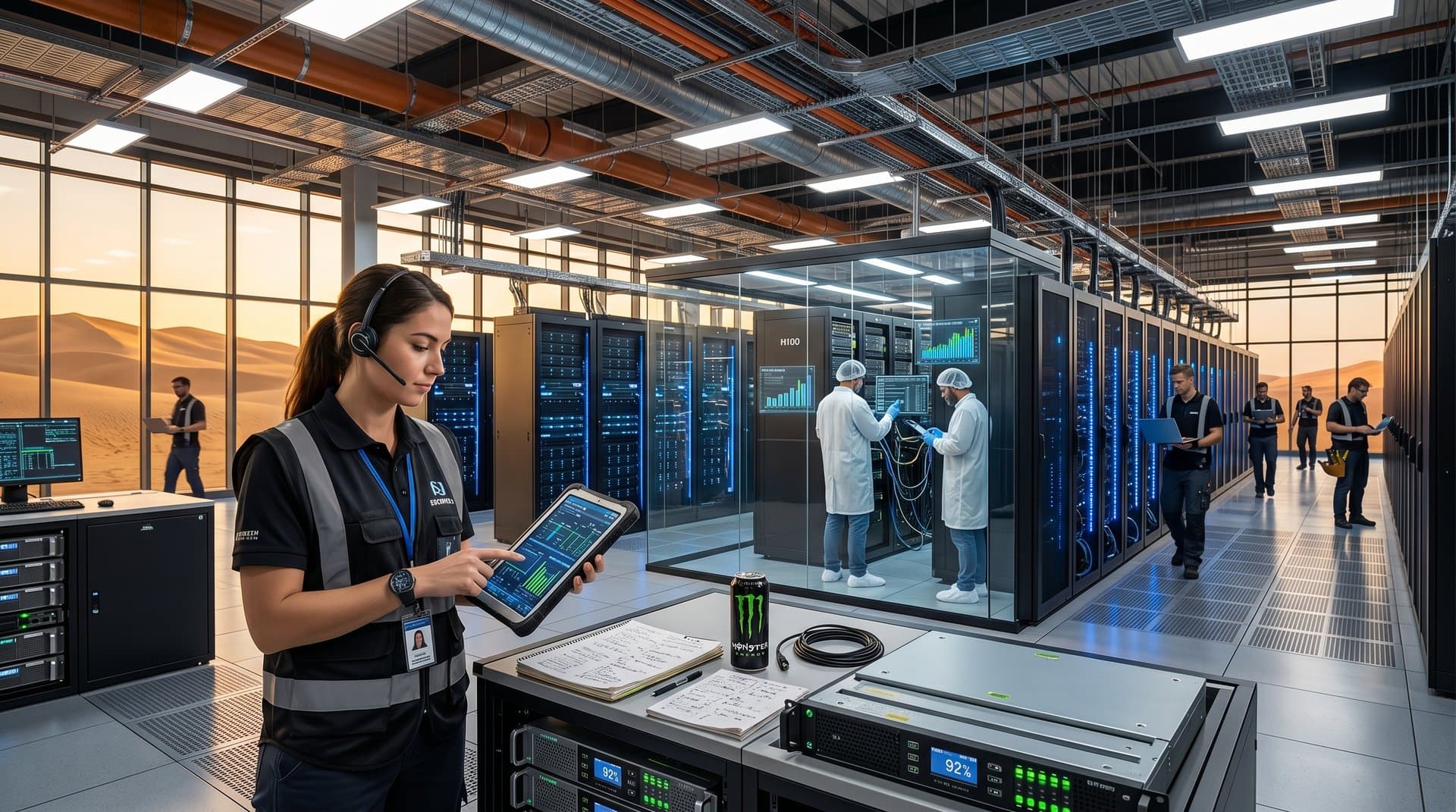
Data centers scale to thousands of racks drawing 50-100 MW each. Google constructs campuses in the solar-rich US Southwest. Onsite BESS provides 4-hour duration for daily cycling at 90% depth of discharge (DOD).
Hyperscalers co-locate 100-500 MWh lithium-ion systems. These deliver frequency regulation and peak shaving services. Corporate renewable purchase agreements (RPAs) favor hybrid solar-plus-storage configurations.
Lithium supply chains strain under demand. CATL and LG Energy Solution ramp cathode production, per S&P Global analyst William Moore. Domestic US factories qualify for IRA tax credits.
AI Power Demands Strain Renewables Without Grid-Scale BESS
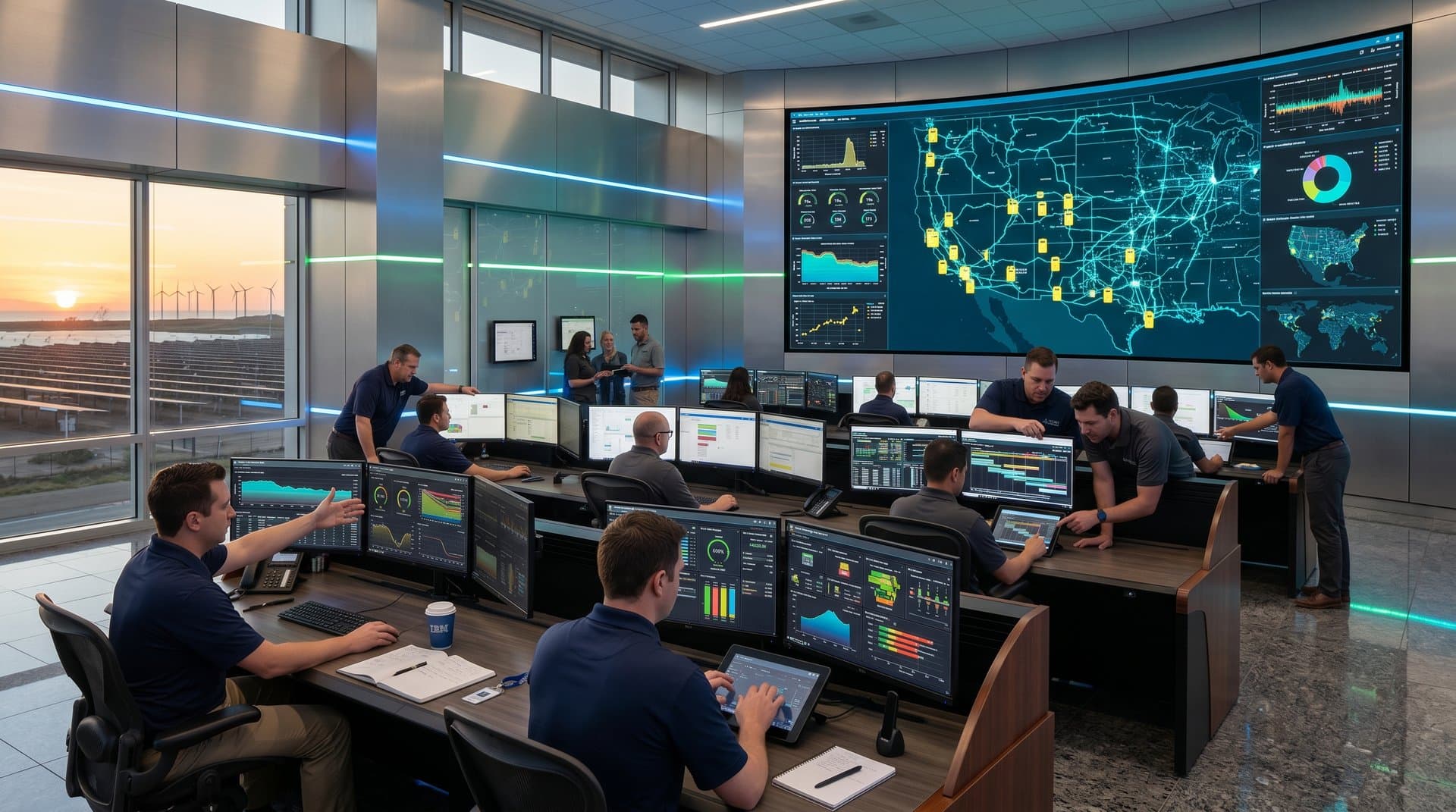
AI runs 24/7, mismatched against solar midday peaks. Wind output fluctuates hourly. BESS stores excess generation for evening peaks, reducing curtailment by 20-30%.
Lithium-ion BESS achieves 85-90% round-trip efficiency (RTE) at 0.25C discharge rates, per NREL's 2023 Battery Handbook compiled by senior engineer Ramanathan Vaidyanathan. Systems adhere to IEC 62619 safety standards.
FERC Order No. 1920 mandates cluster studies, accelerating hybrid project approvals. FERC. California solar curtailment hit 3.3 million MWh in 2023, per CAISO CEO Elliot Mainzer.
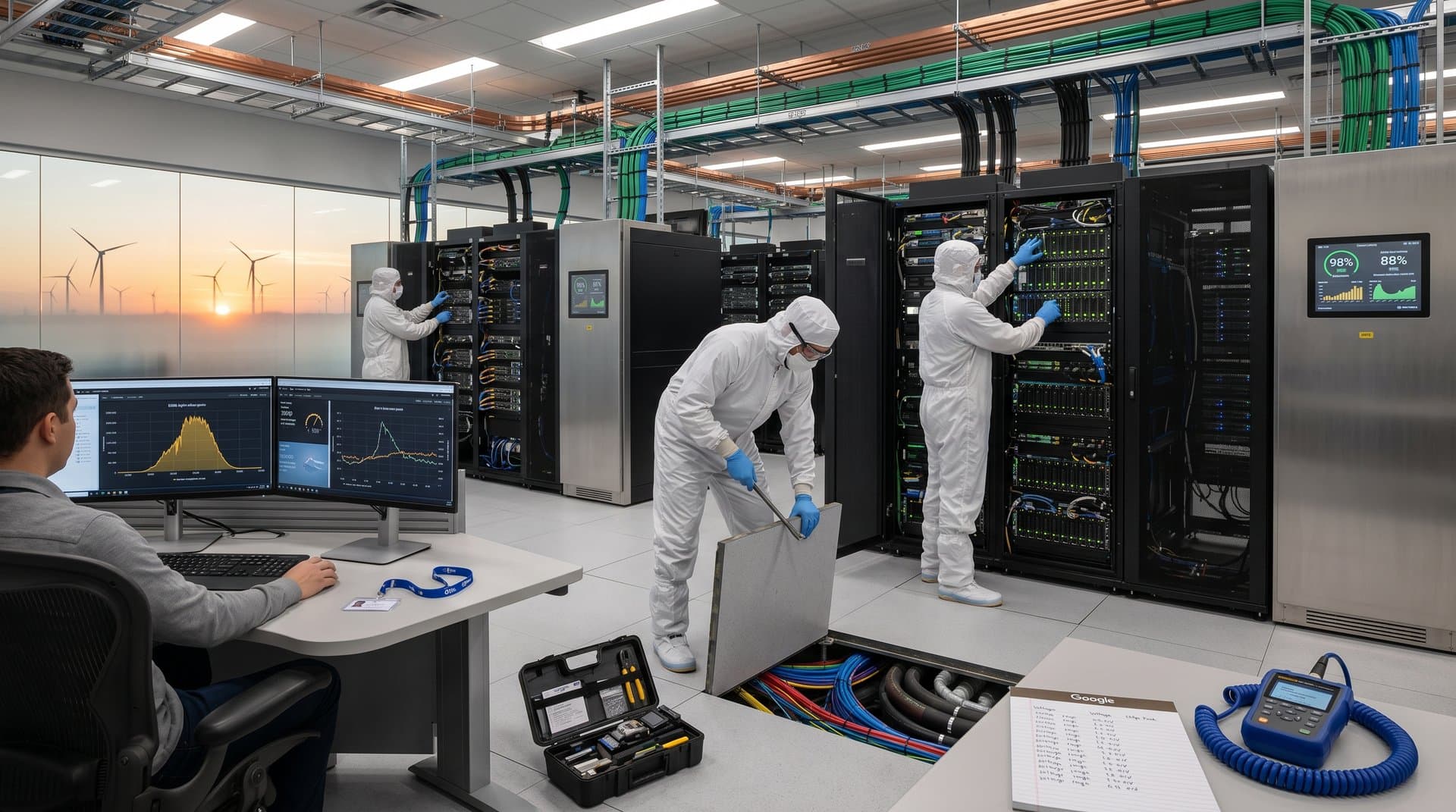
Google integrates Oklahoma wind farms with 200 MWh utility-scale BESS. Hybrids enable temporal power shifting, trimming transmission losses by 25%.
Grid-Scale BESS Economics Support AI Data Centers
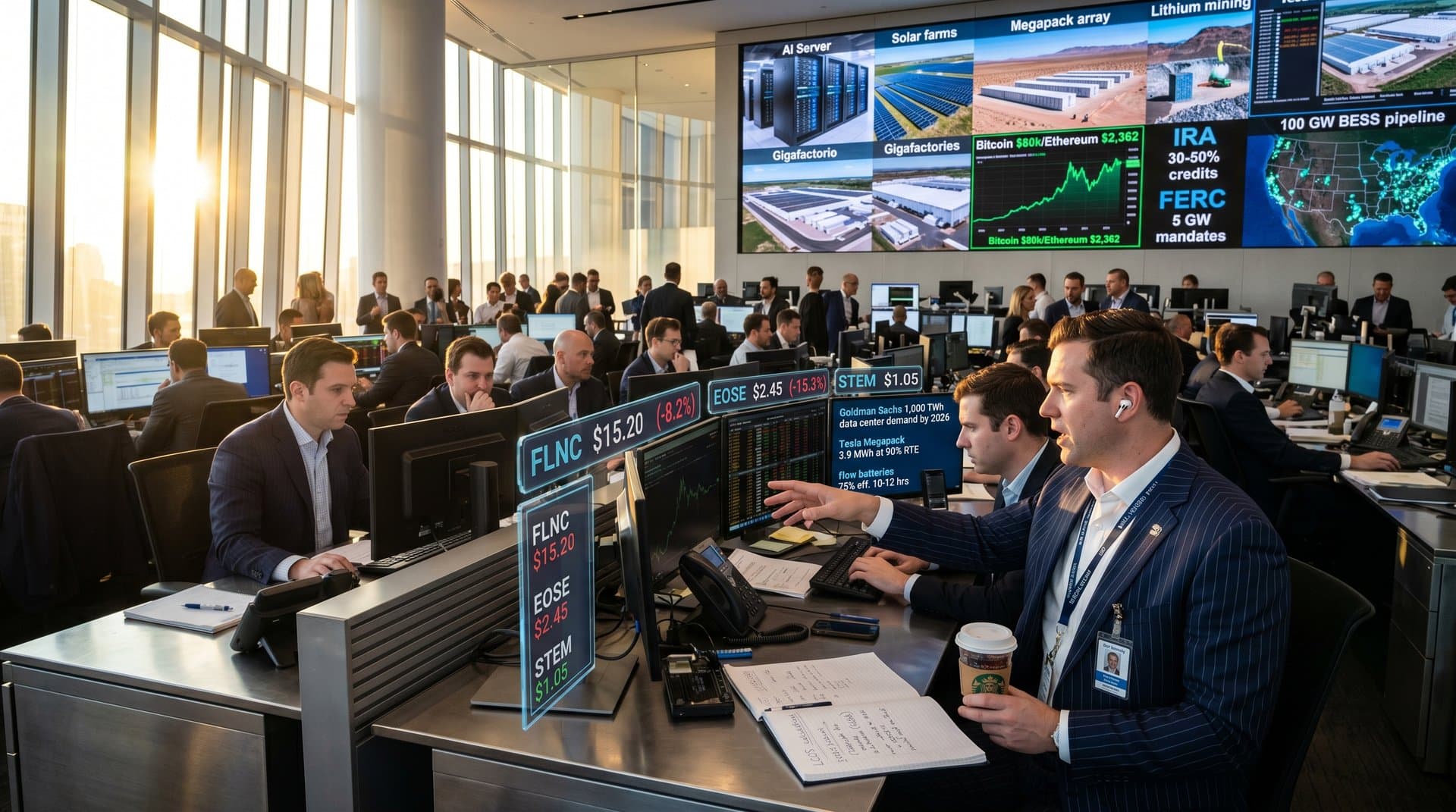
4-hour lithium-ion BESS bids reach USD 150/MWh levelized cost of storage (LCOS), beating gas peakers at USD 200/MWh, per BloombergNEF analyst Aatish Patel. BNEF.
Google procures multi-GWh projects via PG&E and ERCOT grids. Iron-air batteries target 100-hour duration for wind lulls, boasting 700 Wh/kg energy density. Sodium-ion options slash costs 20% without cobalt dependency.
Vehicle-to-grid (V2G) pilots repurpose EV batteries at 250 Wh/kg. Hybrids cut interconnection costs 20-30% through shared infrastructure. Texas BESS posted 95% availability during 2024 heatwaves, per ERCOT grid operator data.
Supply chain localization reduces risks. US IRA incentives boost Fluence and Tesla GWh-scale factories, per Energy Storage Association director Phil Baker.
Marvell-Google AI Chip Deal Reshapes Storage Markets
The Marvell-Google AI chip deal challenges Nvidia dominance. Revenue accelerates Marvell's semiconductor R&D. US Inflation Reduction Act (IRA) offers 30-50% investment tax credit (ITC) for domestic BESS manufacturing.
Fluence and Tesla scale GWh factories. EU Battery Regulation demands 95% recycling by 2030. FERC reforms shorten permitting to 2 years.
ERCOT and PJM tackle 50 GW renewable queues. The Marvell-Google AI chip deal speeds GW-scale BESS procurement. Hyperscalers balance 24/7 AI loads with falling LCOS and renewables.
Frequently Asked Questions
What is the Marvell-Google AI chip deal?
Reuters reports Marvell in talks with Google for two custom AI chips targeting training and inference. Shares rose 7.3% on the news.
How does the Marvell-Google AI chip deal impact grid-scale energy storage?
It accelerates data center expansion and 24/7 power needs. BESS firms renewables, with hyperscalers deploying 100-500 MWh onsite.
Why do AI data centers require grid-scale BESS?
Constant loads mismatch solar peaks. BESS achieves 85-90% RTE, storing excess for evening use and cutting curtailment 20-30%.
What challenges arise for renewable integration with AI growth?
Curtailment and queues delay projects. FERC Order 1920 speeds hybrids. LCOS under USD 150/MWh competes with gas.