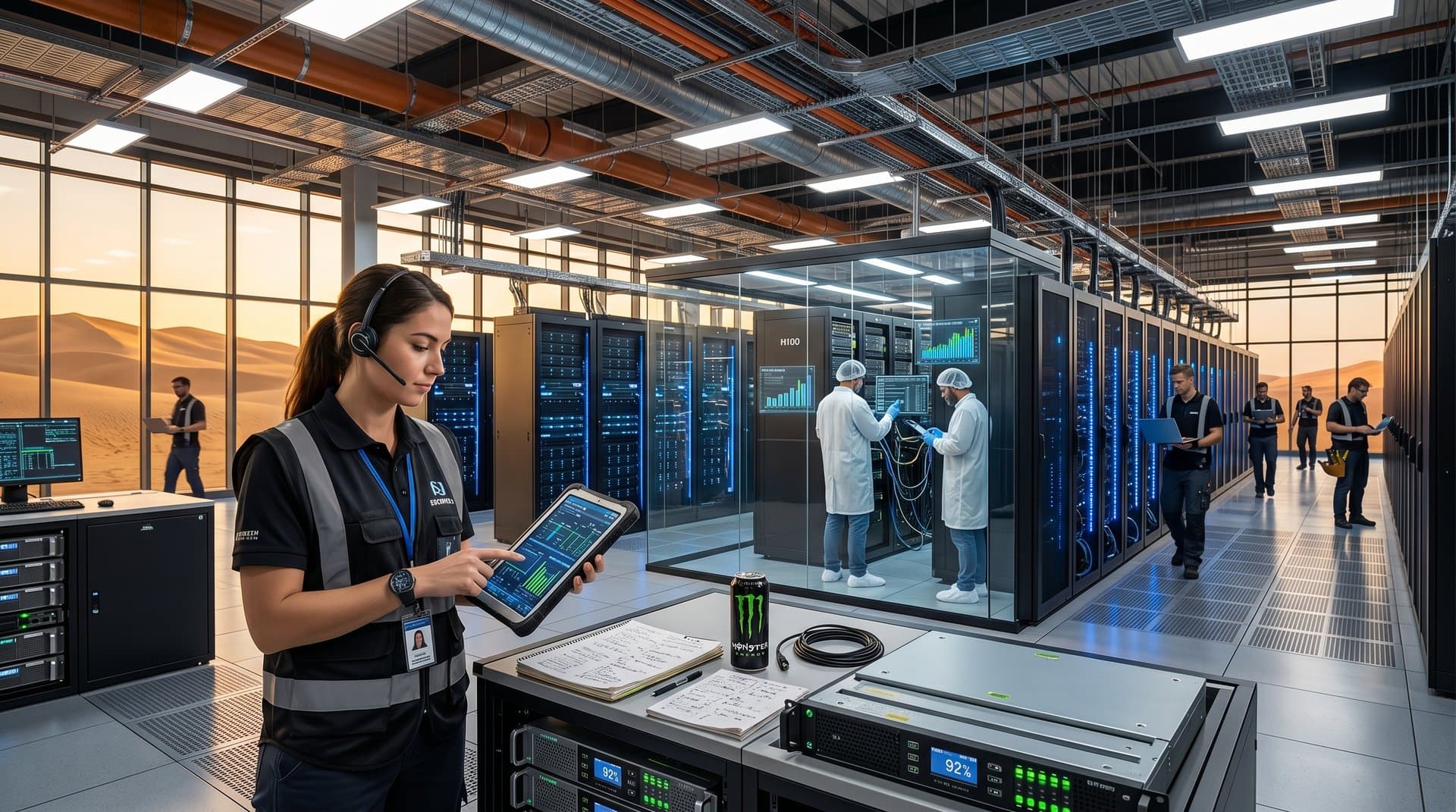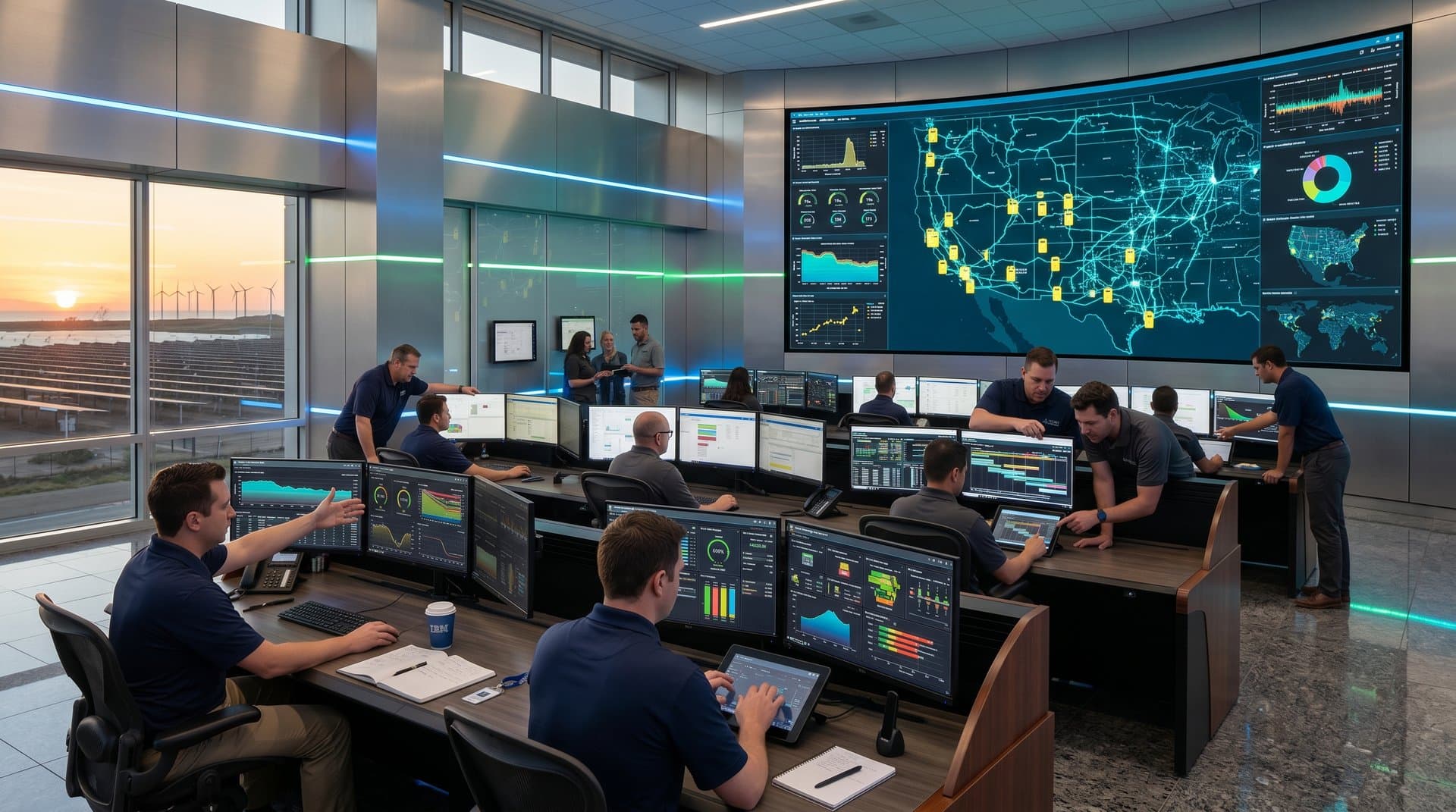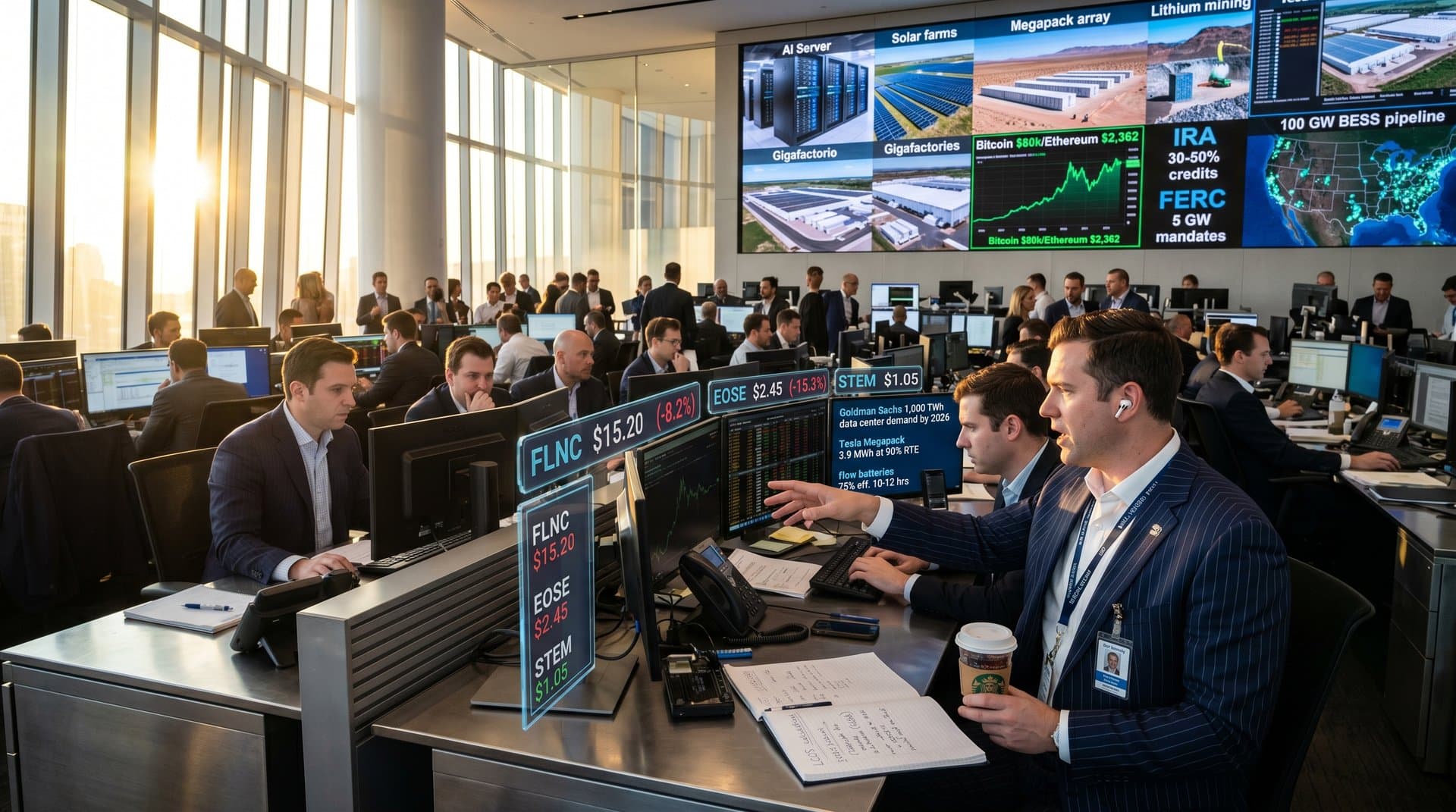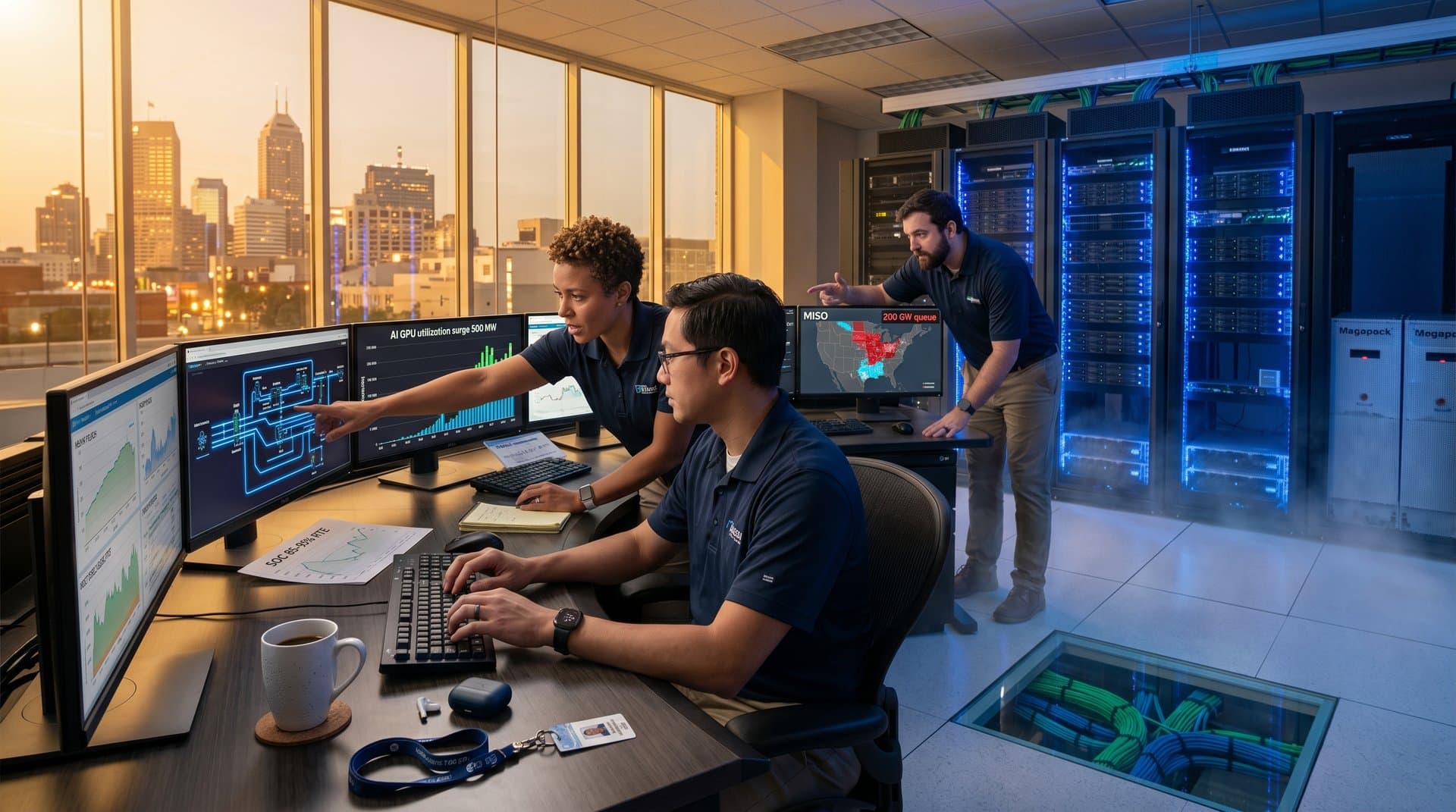
- Goldman Sachs forecasts 160% power demand growth from AI data centers by 2030.
- 30% federal ITC supports grid-scale storage projects exceeding 5 MW capacity.
- Lithium-ion batteries achieve 85-95% RTE with 250-300 Wh/kg energy density.
Sen. Mike Braun (R-IN) launched the Indiana Human-Centered AI Initiative on June 12, 2024.
The framework positions Indiana as an ethical AI leader. AI data centers demand massive power. Goldman Sachs analysts project 160% power demand growth by 2030 (Goldman Sachs, June 2024). Sites peak above 500 MW. Grid-scale batteries ensure reliability.
NextEra Energy and Fluence Energy eye Indiana sites. The Inflation Reduction Act (IRA) provides 30% Investment Tax Credit (ITC) for standalone storage over 5 MW. MISO faces 200 GW interconnection queue as of Q2 2024 (MISO, June 2024).
Human-Centered AI Principles Shape Indiana Growth
Sen. Braun prioritizes responsible AI. Fox 59 covered the launch on June 13, 2024, noting state-university-industry ties (Fox 59, June 13, 2024). Purdue University advances AI safety via model transparency and bias checks.
Principles demand ethical deployment. Google and Microsoft seek clear rules. Centers cluster near Indianapolis and Fort Wayne fiber hubs.
Incentives cut permitting to under 12 months. MISO rules speed storage interconnections.
Data Centers Strain Indiana Grid
AI models use small-city power levels. Hyperscalers need 100-500 MW baseload. DOE forecasts U.S. data center use doubling to 8% of electricity by 2030 (DOE, May 2024).
Coal-heavy Indiana grid struggles with renewables. Batteries bridge gaps. They offer blackstart for fast recovery.
Lithium-ion dispatches in under 100 ms for load swings.
Batteries Meet Surging Demand
Lithium-ion batteries hit 85-95% round-trip efficiency (RTE) for 4-hour profiles at C/4 rates. Sites deploy 200 MW / 800 MWh units (NREL, 2023).
Long-duration storage (LDES) exceeds 10 hours. Form Energy's iron-air and Inoxion's flow batteries reach LCOS below USD 100/MWh.
FERC Order 2023 enables storage in wholesale markets from July 2024 (FERC, November 2023).
Hyperscalers target net-zero by 2030. V2G pilots use EV fleets for peaks. ExxonMobil starts U.S. lithium processing in Arkansas Q4 2024.
- Technology: Lithium-ion · Wh/kg: 250-300 · Wh/L: 650-800 · Cycles: 3,000-6,000 · RTE (%): 85-95 · Duration (h): 2-4 · LCOS (USD/MWh): 120-180
- Technology: Flow · Wh/kg: 25-50 · Wh/L: 35-55 · Cycles: 10,000+ · RTE (%): 70-85 · Duration (h): 6-12 · LCOS (USD/MWh): 100-150
- Technology: Iron-Air · Wh/kg: 40-60 · Wh/L: 50-100 · Cycles: 5,000+ · RTE (%): 80-90 · Duration (h): 24-100 · LCOS (USD/MWh): 50-100
NREL Annual Technology Baseline 2023; IEC 62619/62133 tested.
Policies Boost Storage Economics
IRA offers 30% ITC through 2032 with additionality. Indiana adds USD 50/kWh rebates for local assembly.
Tesla Megapack (1.9 MW, 3.9 MWh/unit) and LG containers scale fast. IRA domestic bonuses hit 10%.
Utilities earn from frequency regulation. MISO capacity auctions run Q4 2024.
Challenges Persist
Permitting averages 18 months (Wood Mackenzie, 2024). Reviews cover land and water. Substations need USD 2-5 billion.
AES Indiana builds solar-plus-storage for AI. FERC Order 1920 prioritizes transmission.
U.S. Storage Boom Follows
Initiative sparks national races. Wood Mackenzie sees 20 GW annual additions to 2030. Midwest LCOS beats coasts by 20%. Batteries undercut gas. MISO December 2024 auction tests bids.
Purdue AI refines BMS, lifting RTE 2-3%. Primergy targets 1 GWh pilots by 2026.
Frequently Asked Questions
What is Indiana's Human-Centered AI Initiative?
Sen. Mike Braun's program promotes ethical AI via state-university-industry ties. It streamlines data center regulations with focus on transparency and bias mitigation.
How does the Indiana Human-Centered AI Initiative impact grid-scale battery storage?
Data centers spike peaks over 500 MW. Batteries stabilize via fast dispatch. 30% ITC improves economics in MISO.
Why do AI data centers boost grid-scale battery demand?
Sites require 100-500 MW continuous power. Storage shifts renewables to peaks with 85%+ RTE.
What federal policies aid storage for Indiana's AI growth?
IRA 30% ITC for standalone batteries. FERC Order 2023 enables markets. State rebates add USD 50/kWh.