- Marvell negotiates 2 custom AI chips with Google (Reuters, Jan 20, 2026).
- AI data centers reach 1 GW power peaks, doubling to 1,000 TWh (IEA).
- Global grid-scale batteries add 500 GW by 2030 (BNEF).
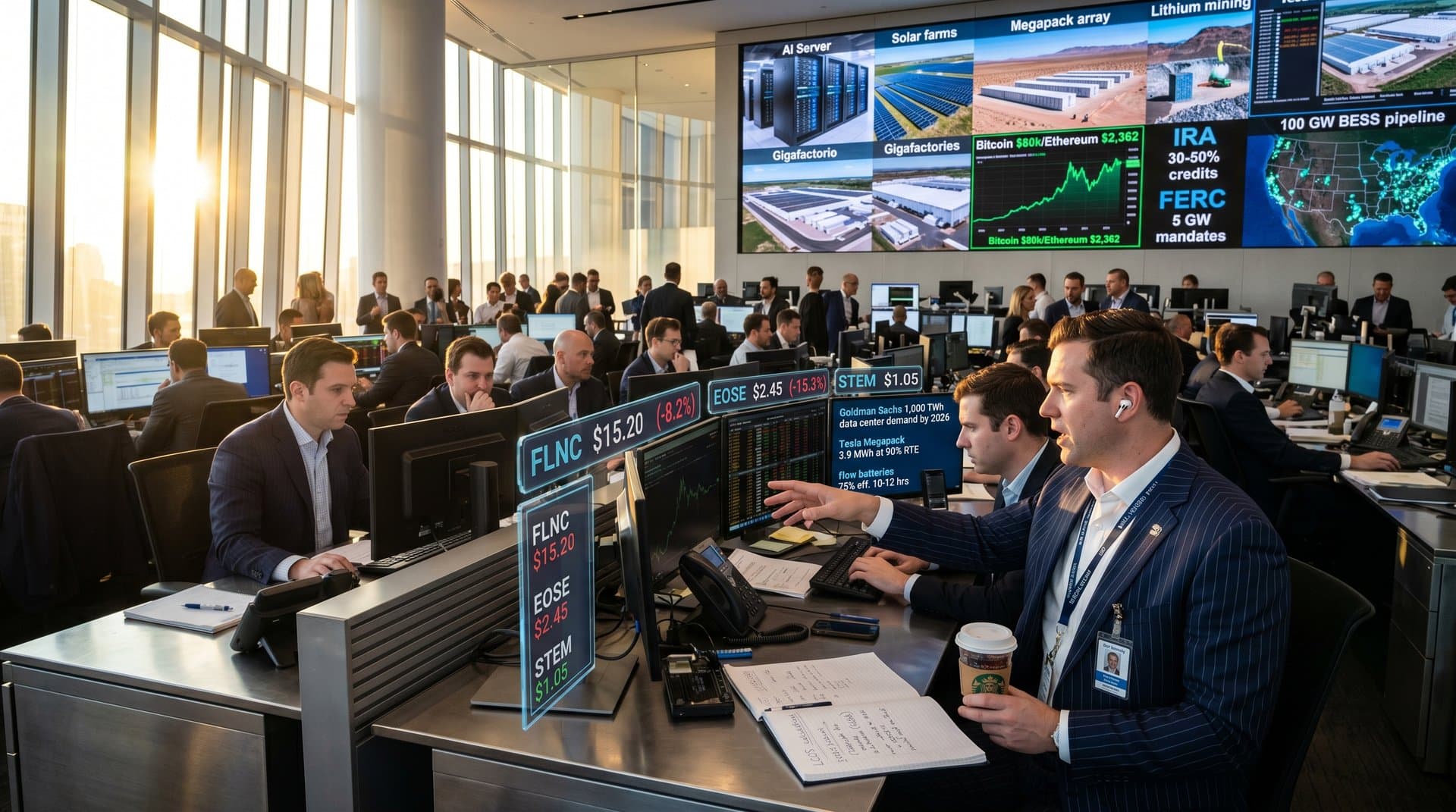
Grid-scale battery storage demand surged 8% after Reuters reported Marvell Technology's negotiations for two custom AI chips with Google on January 20, 2026. The chips target data center AI workloads. Power demands escalate rapidly.
Google already integrates Marvell's Ethernet switches and digital signal processors (DSPs) into its TPU pods. The new chips focus on AI acceleration and low-latency interconnects for trillion-parameter models.
Marvell AI Chips Fuel Data Center Expansion
Custom application-specific integrated circuits (ASICs) from Marvell reduce latency for large AI models. Google Cloud ramps up capacity for enterprise AI customers. Marvell strengthens its data center supply chain role, per Reuters (January 20, 2026).
Hyperscalers pour billions into AI hardware annually. Marvell's efficient chips pack more compute into denser racks. Yet power consumption rises sharply.
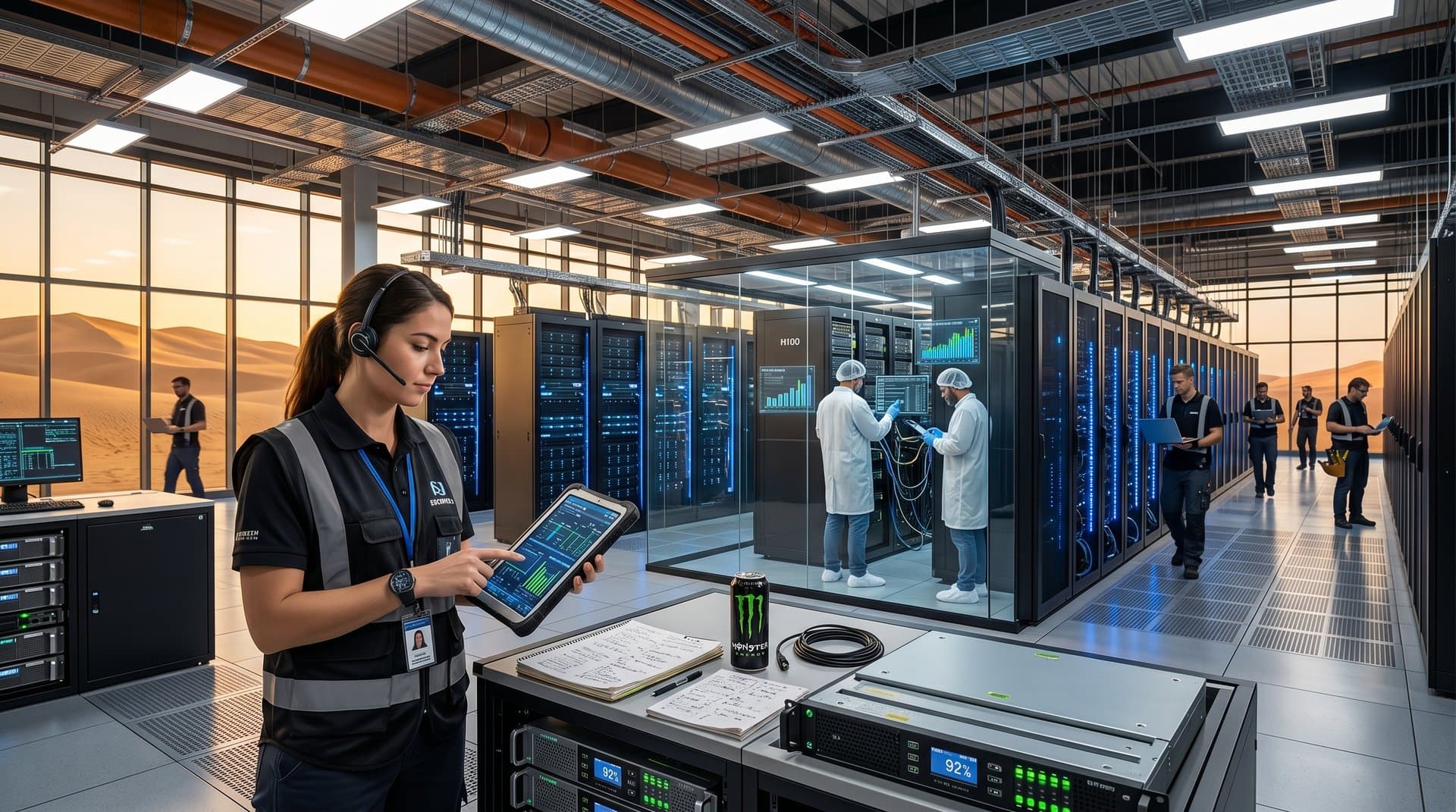
NVIDIA's H100 GPUs consume 700W each. A 1,000-GPU cluster hits 1 MW. Google aims for 1 GW campuses, according to International Energy Agency (IEA) projections.
Data Center Power Peaks Drive Grid-Scale Battery Storage
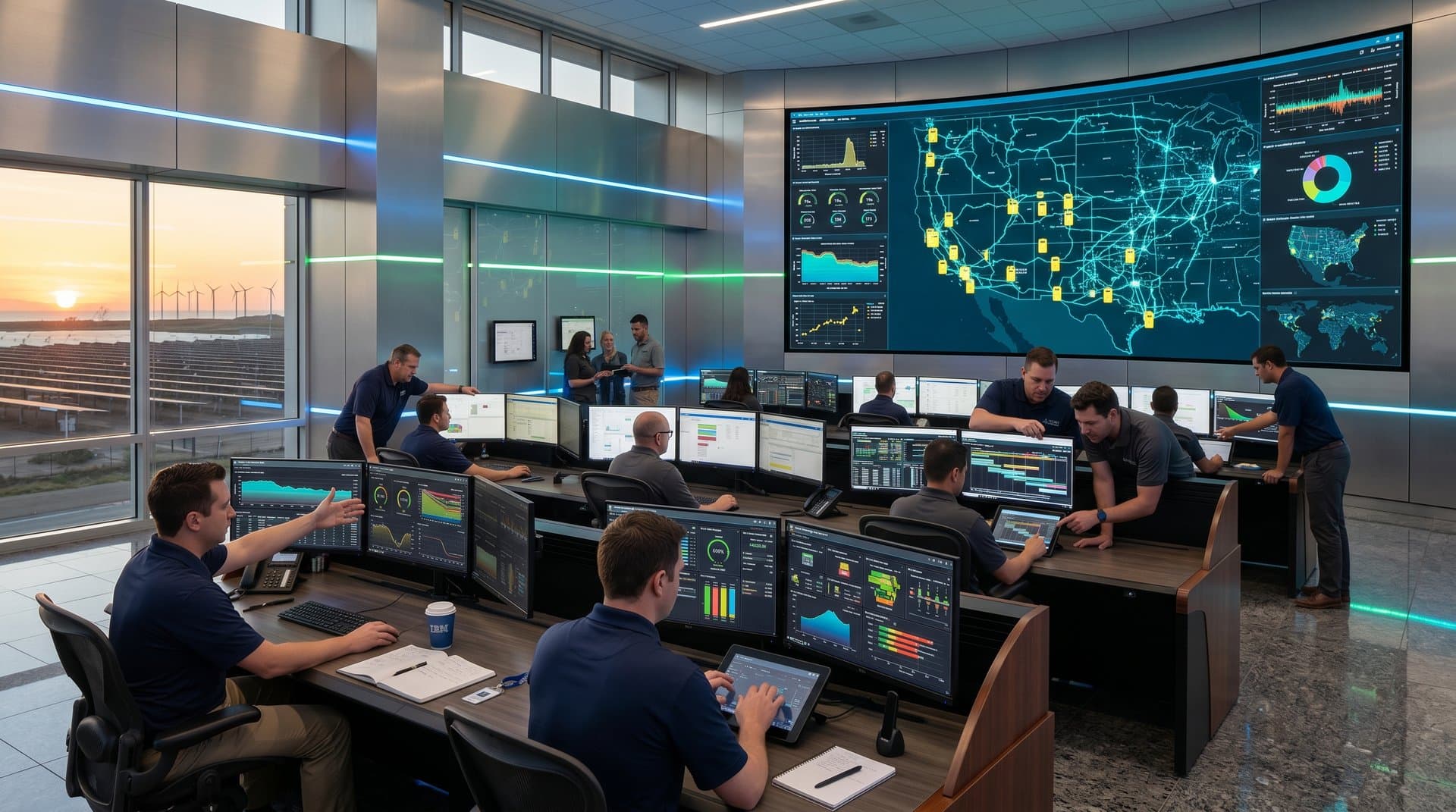
Utilities face data center load peaks. Renewables add intermittency. The IEA forecasts AI will double data center electricity to 1,000 TWh globally by 2026.
Grid-scale battery storage responds in seconds for frequency regulation. Systems store excess solar for evening peaks. Lithium-ion batteries deliver 85-90% round-trip efficiency at 0.5C discharge rates, per BloombergNEF (BNEF).
Developers install 100 MW / 400 MWh systems with four-hour duration. These configurations tackle duck curve issues in California and similar markets.
The U.S. Federal Energy Regulatory Commission (FERC) Order 2222 opens markets for capacity, energy arbitrage, and ancillary services. AI loads create fresh revenue for grid-scale battery storage.
LFP Leads Grid-Scale Battery Storage Technologies
Lithium iron phosphate (LFP) batteries lead with 160 Wh/kg gravimetric energy density, 6,000+ cycles at 90% depth-of-discharge, and USD 130/kWh installed costs, according to BNEF's 2026 Year-Ahead Storage Outlook.
Vanadium redox flow batteries provide 8-12 hour discharge at USD 200-250/kWh. BNEF projects LFP pack prices below USD 150/kWh by 2025.
Sodium-ion batteries hit 200 Wh/kg in lab pilots from CATL. Iron-air batteries target 100-hour long-duration energy storage (LDES) at <USD 50/kWh.
CATL expands LFP gigafactories to 500 GWh annual output. The U.S. Inflation Reduction Act (IRA) offers 30-50% tax credits, funding 10 GWh domestic projects by 2025, per U.S. Department of Energy data.
Electric vehicle (EV) vehicle-to-grid (V2G) and second-life batteries cut levelized cost of storage (LCOS) to USD 100/kWh. Google pilots bidirectional EV charging at data centers.
Grid-Scale Battery Storage Secures Hyperscaler Power
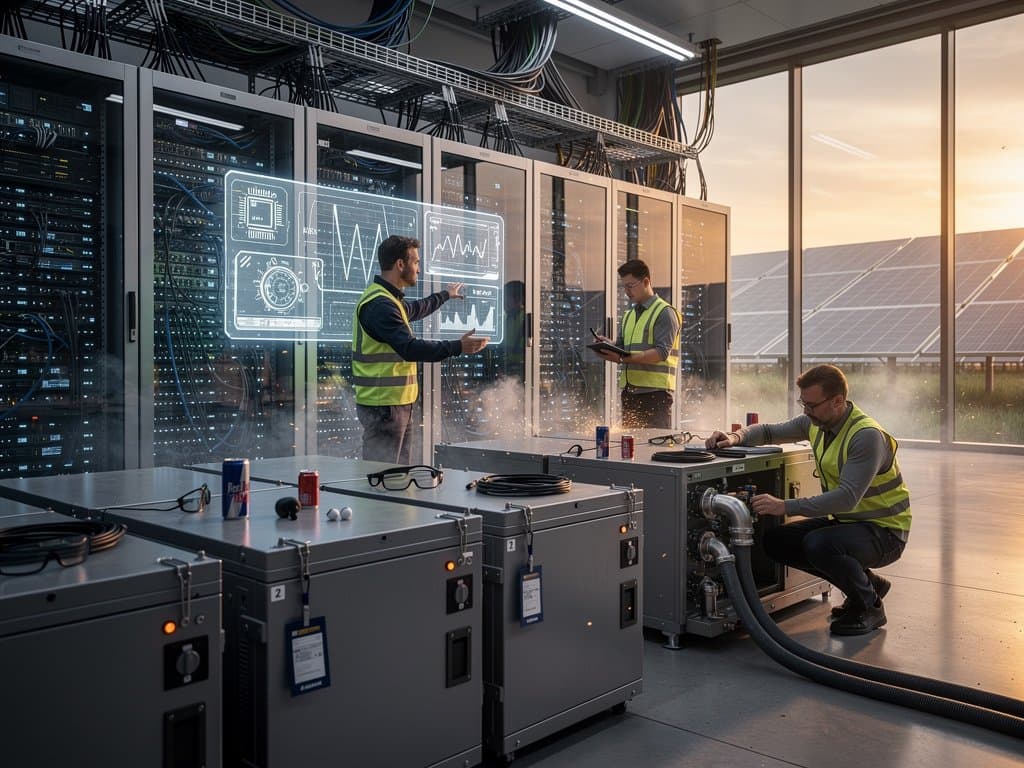
Data centers lock in 24/7 power purchase agreements (PPAs). Grid-scale battery storage fills gaps before small modular reactors (SMRs) arrive in 2030.
Hybrid solar-plus-storage plants firm output to 95% capacity factors. Independent system operators (ISOs) buy blackstart-capable units.
Microgrids protect AI training clusters from outages. The EU Battery Regulation requires 16% recycled content by 2030.
Lithium supply tightens amid EV demand. Recycling meets 20% of needs by 2028, per Benchmark Mineral Intelligence. Stationary grid-scale battery storage favors high-cycle packs over EV-grade cells.
Lithium-ion reaches Technology Readiness Level (TRL) 9 at commercial scale. Flow batteries deploy at 50 MW / 200 MWh sites.
BNEF forecasts system costs at USD 100/kWh by 2028. Google evaluates onsite grid-scale battery storage.
Virtual power plants (VPPs) pool distributed assets. Developers project 500 GW global grid-scale battery storage additions by 2030, per BNEF.
Marvell-Google chips launch in 2026. Grid-scale battery storage scales to balance AI power surges and renewables.
Frequently Asked Questions
How do Marvell-Google AI chip talks impact grid-scale battery storage?
Two chips expand data centers to 1 GW scales. Grid-scale battery storage shaves peaks and firms renewables at 85% efficiency (BNEF).
What battery tech supports data centers from Marvell-Google AI chips?
LFP delivers 160 Wh/kg, 6,000 cycles at USD 130/kWh (BNEF). Flow batteries offer 8-12 hours at USD 200/kWh.
Why does grid-scale battery storage demand rise with AI chip deals?
AI servers consume 700W/GPU in 1 MW clusters up to 1 GW campuses (IEA).
What policies boost grid-scale battery storage for AI power needs?
FERC Order 2222 opens markets. IRA tax credits fund 10 GWh U.S. projects (DOE).