- OpenAI CEO predicts 100,000+ jobs from energy storage data centers by 2030 (Forbes).
- Data centers boost power demand 160% (Goldman Sachs).
- Fear & Greed Index at 21 amid grid storage growth (CNN).
Energy Storage Data Centers Job Projections
- OpenAI CEO Sam Altman predicts 100,000+ jobs in energy storage data centers by 2030 (Forbes).
- Data centers drive 160% power demand surge (Goldman Sachs).
- Fear & Greed Index at 21 signals extreme fear amid storage boom (CNN).
OpenAI CEO Sam Altman predicts energy storage data centers will spark a 100,000+ job surge by 2030. He shared this with Forbes on April 17, 2026. Altman dismissed AI-driven job apocalypse fears. The CNN Fear & Greed Index sits at 21, indicating extreme market caution.
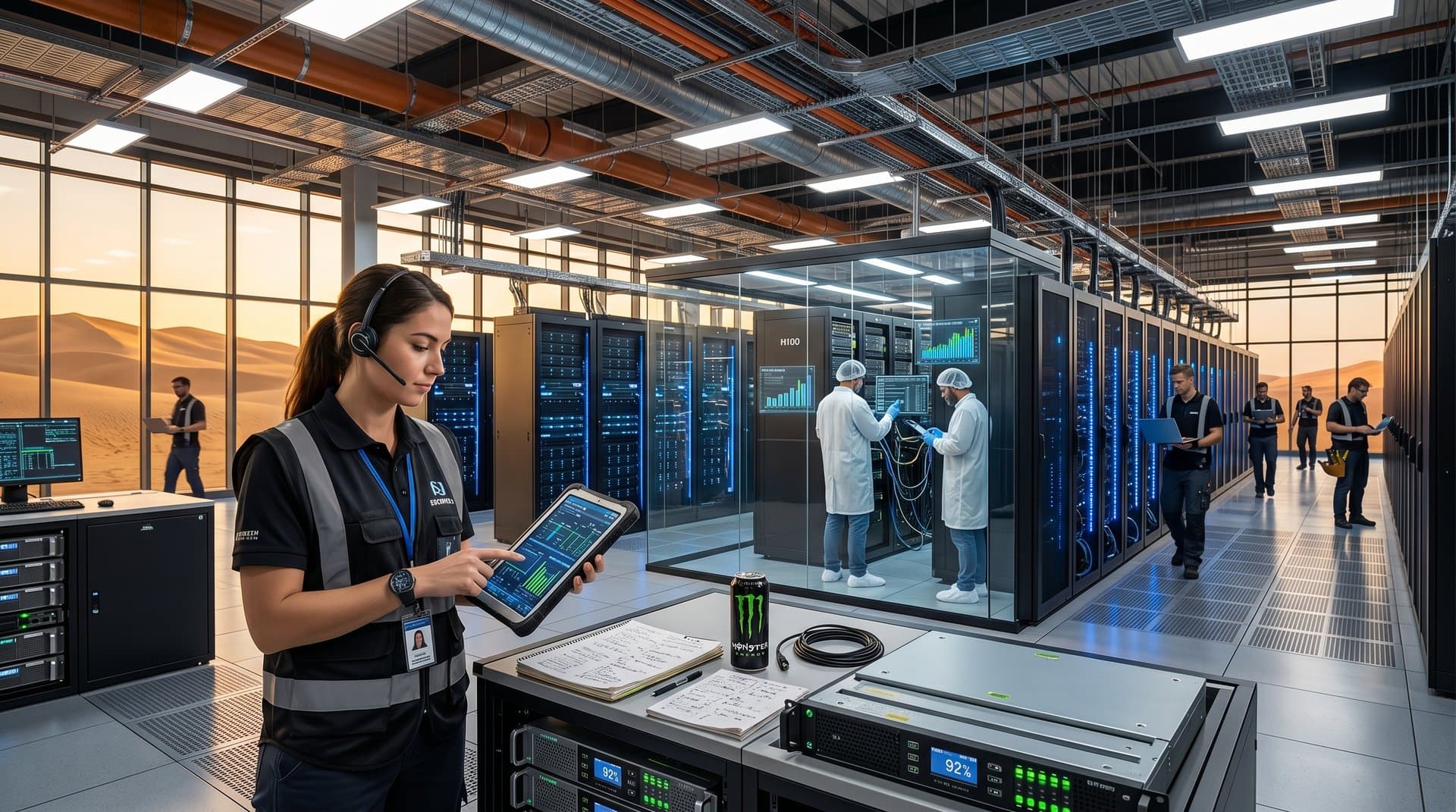
Energy storage data centers stabilize grids strained by AI electricity guzzlers. Batteries enable 24/7 renewable integration for nonstop operations.
AI Data Centers Ignite 160% Power Demand Surge
Hyperscale data centers train AI models around the clock. Inference peaks spike loads further.
The International Energy Agency (IEA) forecasts data centers will double electricity use to 1,000 TWh globally by 2026. AI accelerates this trend. Goldman Sachs projects a 160% U.S. power demand rise from data centers by 2030.
U.S. grids face 15% added load from these facilities, per Federal Energy Regulatory Commission (FERC) data.
Lithium-ion batteries deliver uninterruptible power supplies (UPS). They manage seconds-to-minutes outages at 10-20% depth of discharge. This approach preserves over 5,000 cycle life, according to National Renewable Energy Laboratory (NREL) tests.
Operators shift from diesel generators to battery stacks paired with renewables.
Battery Innovations Secure Data Center Reliability
Grid-scale energy storage data centers deploy 100+ MWh systems. Lithium-ion dominates with 92% round-trip efficiency at 1C discharge (NREL benchmarks). Tesla's 4680 cells achieve 250 Wh/kg gravimetric density and 700 Wh/L volumetric density at pack level.
Vanadium redox flow batteries offer 8+ hour duration. They deliver 25 Wh/kg and 40 Wh/L with 20,000+ cycles and under 1% annual degradation (Invinity Energy Systems data).
QuantumScape prototypes promise solid-state batteries at 400+ Wh/kg and 1,000 Wh/L. Commercial rollout lags 2-3 years behind lab results.
Form Energy's iron-air batteries target 100-hour discharge at US$20/kWh system cost. They suit long-duration needs with 160 Wh/kg density.
Tesla Megapacks integrate with solar at data centers. Fluence Cube platforms provide 4-hour modular storage.
Supply Chain Expansion Fuels 100,000+ Jobs
Gigafactories employ 5,000+ workers per site for cell giga-scale production. Humans oversee automated electrode coating and quality assurance.
Benchmark Mineral Intelligence forecasts 10,000 new lithium refining engineers needed globally by 2030.
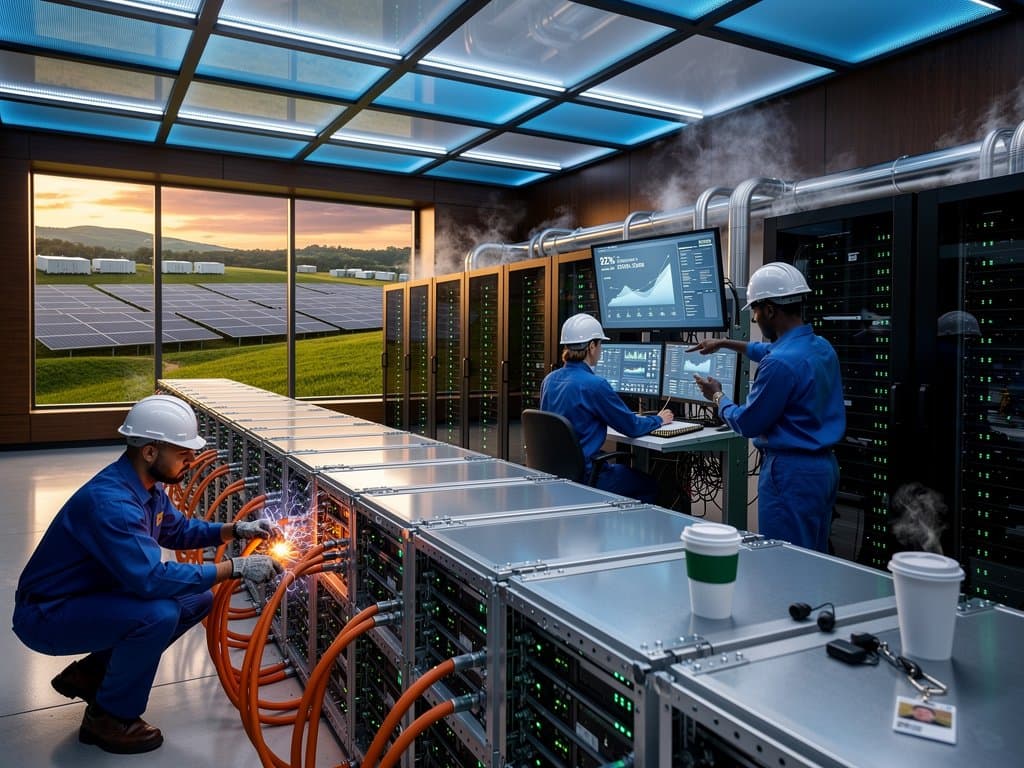
Installation teams handle MW-scale deployments. Electricians wire 1,000+ MWh utility interconnections.
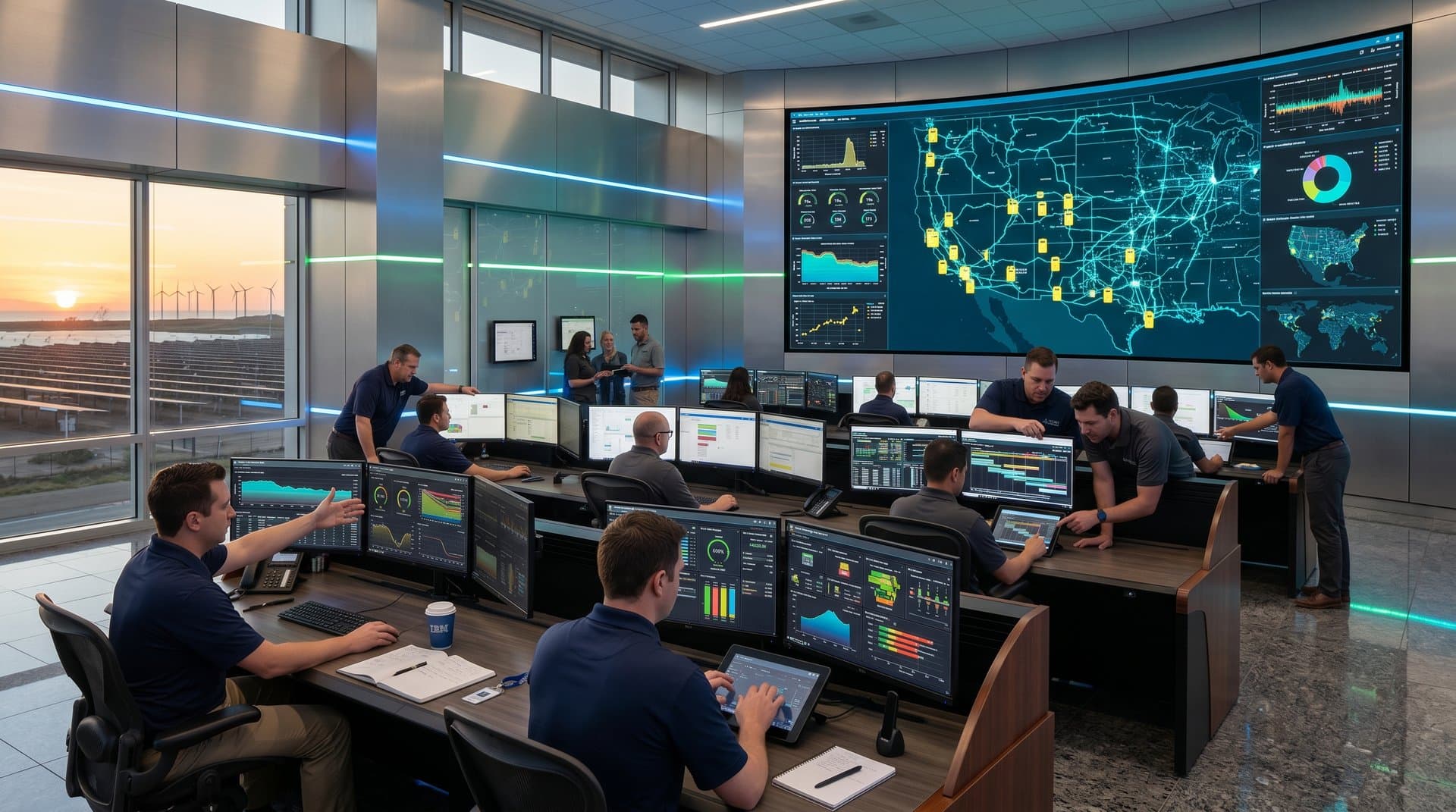
Operations and maintenance (O&M) roles surge. Data analysts ensure 99.9% uptime using AI monitoring software.
Goldman Sachs links this to the 160% power demand growth. Storage mitigates solar and wind intermittency.
Lithium sourcing from Australia and Chile ramps up. Cathode NMC prices fall 20% year-over-year to US$15/kg (Fastmarkets).
Market Caution Persists Despite Storage Momentum
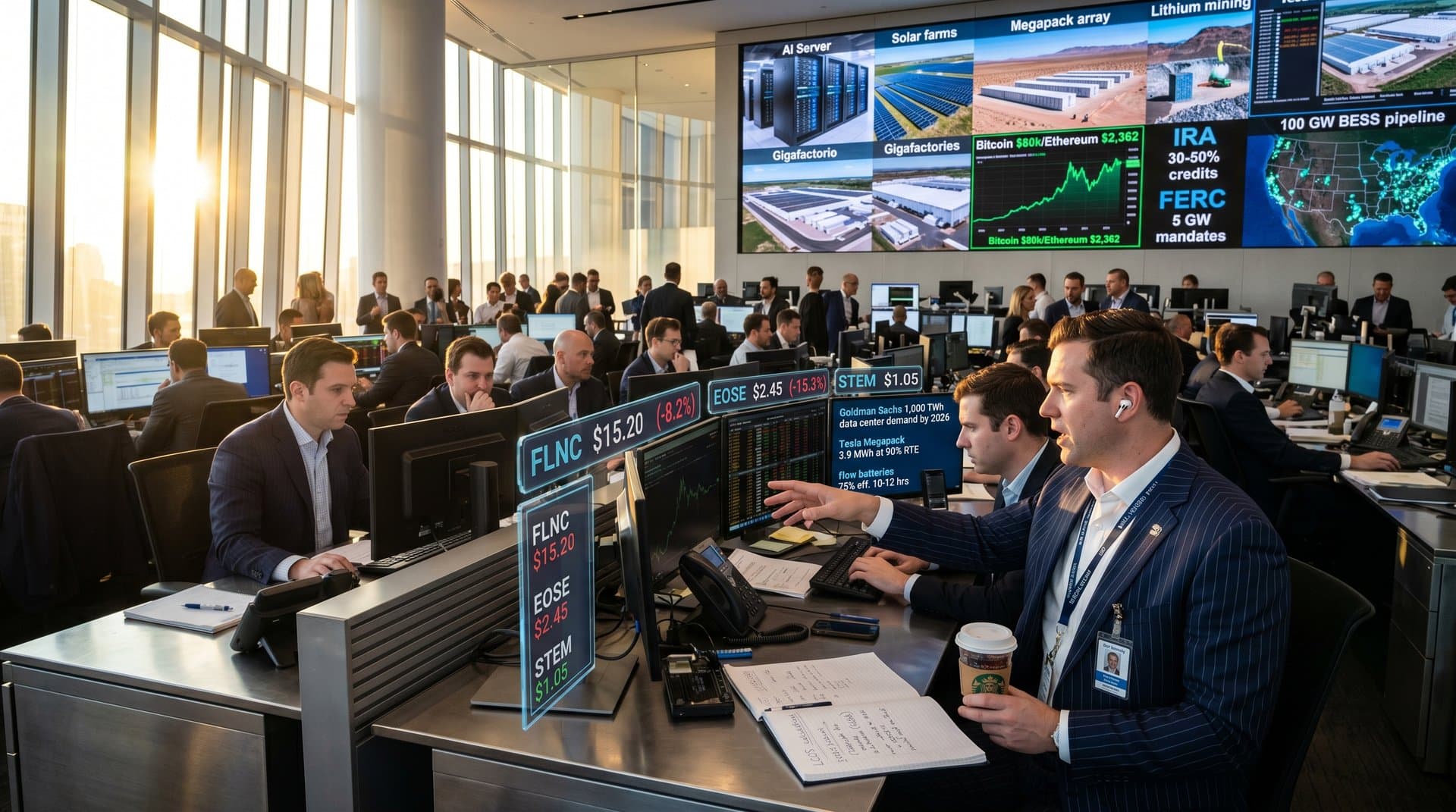
Crypto mining data centers mirror AI power strains. The Fear & Greed Index at 21 marks extreme fear. Bitcoin trades at US$74,663, down 0.4%.
Ethereum dips 1.2% to US$2,323.51. Both sectors demand grid-scale storage.
Investors flag U.S. grid bottlenecks. The Inflation Reduction Act (IRA) tax credits lift storage deployments 30%.
EU battery passports launch in 2027 to trace supply chains under the Battery Regulation (EU) 2023/1542.
Commercial Deployments Scale Rapidly
LFP cells mass-produce at 200 Wh/kg and 400 Wh/L. Safety prioritizes over density in stationary applications.
NMC cathodes retain 80% capacity after 5,000 cycles at 80% depth of discharge (Battery University tests).
CATL's sodium-ion batteries reach 160 Wh/kg at US$50/kWh system level in pilots.
Google deploys 100 MWh storage pilots. Microsoft signs Fluence contracts for 1 GWh+.
NREL data shows batteries reduce peak costs 40%. Levelized cost of storage (LCOS) falls below US$150/MWh.
Grid Challenges Demand On-Site Solutions
U.S. transmission queues exceed 2,000 GW. Data centers cluster in Texas and Virginia.
FERC Order 2020 accelerates interconnections. Co-located energy storage data centers bypass queues.
On-site batteries cut demand charges 40%. Virtual power plants (VPPs) aggregate 10 GW capacity.
California requires 15 GW storage by 2030 under AB 2514.
Outlook: Job Boom Scales with Deployments
Energy storage data centers propel job growth across tech and finance. AI power demand accelerates battery factories and grid upgrades. Monitor gigafactory announcements and FERC approvals for the full boom.