Reuters reported on October 15, 2024, that Chinese startup ShengShu raised $293 million USD for artificial general intelligence (AGI) amid booming AI data centers. Hillhouse Capital and Tencent Holdings invested. The round spotlights surging power needs and grid battery demand.
AI training guzzles gigawatt-hours. ShengShu's push means more facilities. Batteries counter renewables' intermittency.
AI Data Centers' Power Consumption Surges
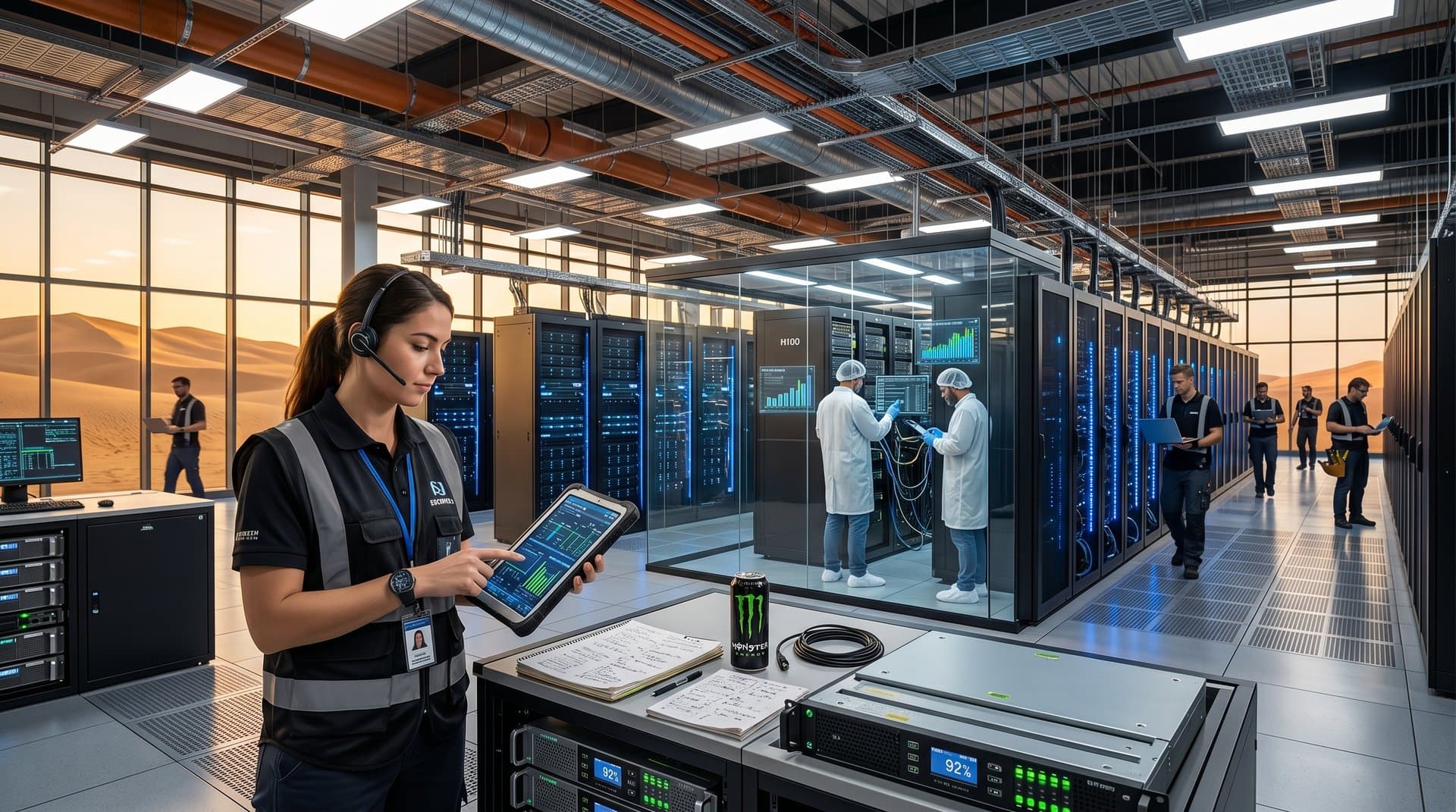
Global data centers consumed 460 TWh in 2022, International Energy Agency (IEA) data shows. AI workloads could triple demand to 1,000 TWh by 2026. Microsoft and Google plan 20 GW additions by 2030, Goldman Sachs forecasts.
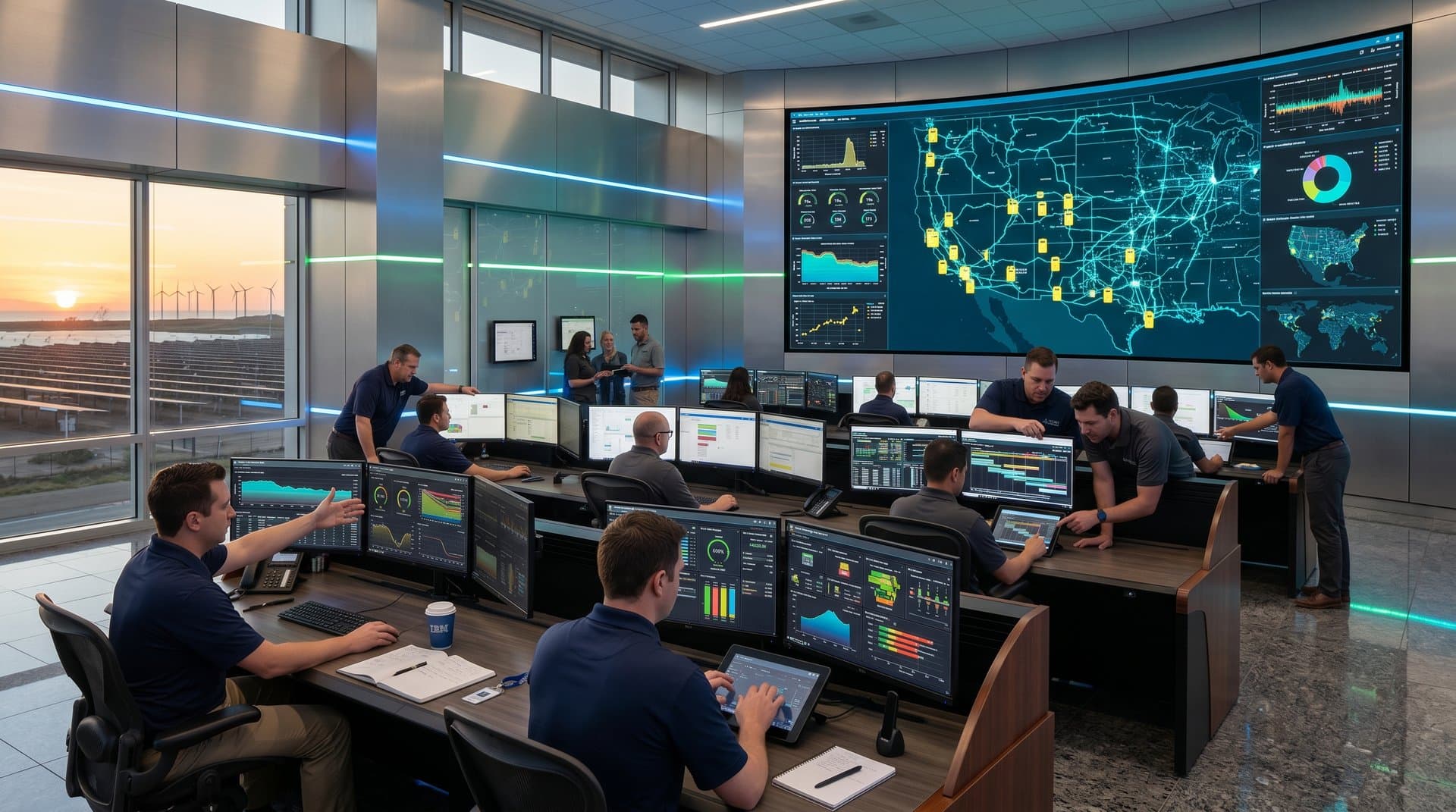
China's AI boom fuels ShengShu's raise. The nation hosts 10% of global data centers. Peak loads hit 1,300 GW in 2023, China Electricity Council reports.
Lithium-ion batteries prevent blackouts. They deliver 90% round-trip efficiency. Peak shifting cuts costs 20%, BloombergNEF states.
Grid Batteries Fill the Gap
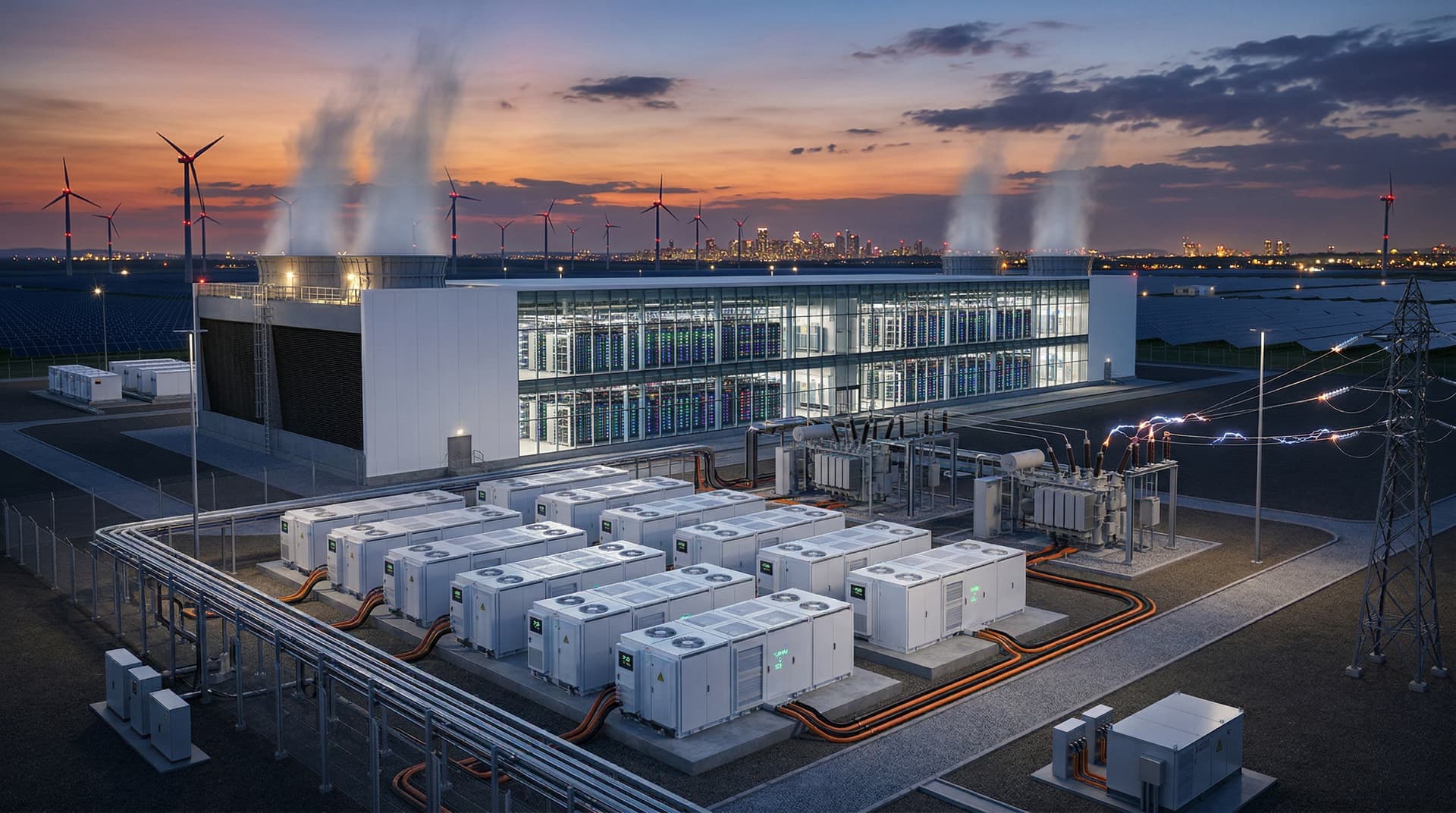
AI data centers demand stable megawatt-scale power. Renewables provide 40% of new capacity, but capacity factors average 30%. Batteries store excess solar and wind.
Tesla installed 100 MW / 400 MWh Megapacks at xAI's Memphis site in July 2024. Systems cycle 3,000 times at 80% depth of discharge. Costs dropped to $150/kWh in 2024, NREL benchmarks.
Chinese leaders dominate. CATL delivered 2.4 GWh to data centers in Q3 2024. BYD's 1 GWh Guangdong project backs Alibaba clouds with LFP at 160 Wh/kg.
Storage Tech Commercializes Rapidly
ShengShu's funding aligns with manufacturing ramps. Fluence Energy unveiled a 2 GW Utah factory on October 10, 2024. It targets $100/kWh by 2026.
Sodium-ion batteries gain traction. Faradion and CATL pilots hit 150 Wh/kg at $80/kWh. NatPower tests confirm 4,000 cycles at 80% retention. Lower fire risk fits data centers.
Flow batteries offer long duration. Invinity Energy's 5 MW / 10 MWh UK system serves data centers. Vanadium delivers 20,000 cycles, company specs state.
Explosive Market Growth Ahead
Global grid storage reaches 1 TWh by 2030, Wood Mackenzie predicts. Data centers claim 25% of demand. Installations grow at 40% CAGR to $25 billion USD in 2025.
China leads with 50% share. Policies require 30 GW by 2025. EU Net-Zero Industry Act targets 67 GW by 2030. US Inflation Reduction Act offers $40/kWh credits.
Costs fall 15% annually. LCOS drops to $0.08/kWh for 4-hour systems, Lazard's 2024 analysis shows. This beats gas peakers at $0.12/kWh.
Competition Intensifies
ShengShu rivals Baidu's Ernie and Alibaba's Qwen. Each uses 10,000-GPU clusters drawing over 5 MW continuously.
Battery makers compete fiercely. LG Energy Solution teams with Vertiv on 500 MW. Samsung SDI supplies NMC cells at 250 Wh/kg.
Second-life EV batteries slash costs 30%. Nissan redeploys 100 MWh for Tokyo data centers. Degradation stays below 10% after 200,000 km, IDTechEx reports.
Scaling Challenges Persist
Lithium supply chains constrain growth. Prices climbed 20% to $15,000/tonne in Q3 2024, Benchmark Mineral Intelligence data. Redwood Materials recovers 95% via recycling pilots.
Grid rules slow integration. FERC Order 2023 restricts co-location. California fast-tracks 5 GW permits.
Permitting takes 18 months on average. Batteries deploy in 12 months post-approval, SEIA states.
Why AI Data Centers Matter for Storage
ShengShu's $293 million raise reveals AI data centers' energy appetite. They could consume 8% of US power by 2030, IEA warns. Grid batteries support growth without fossils.
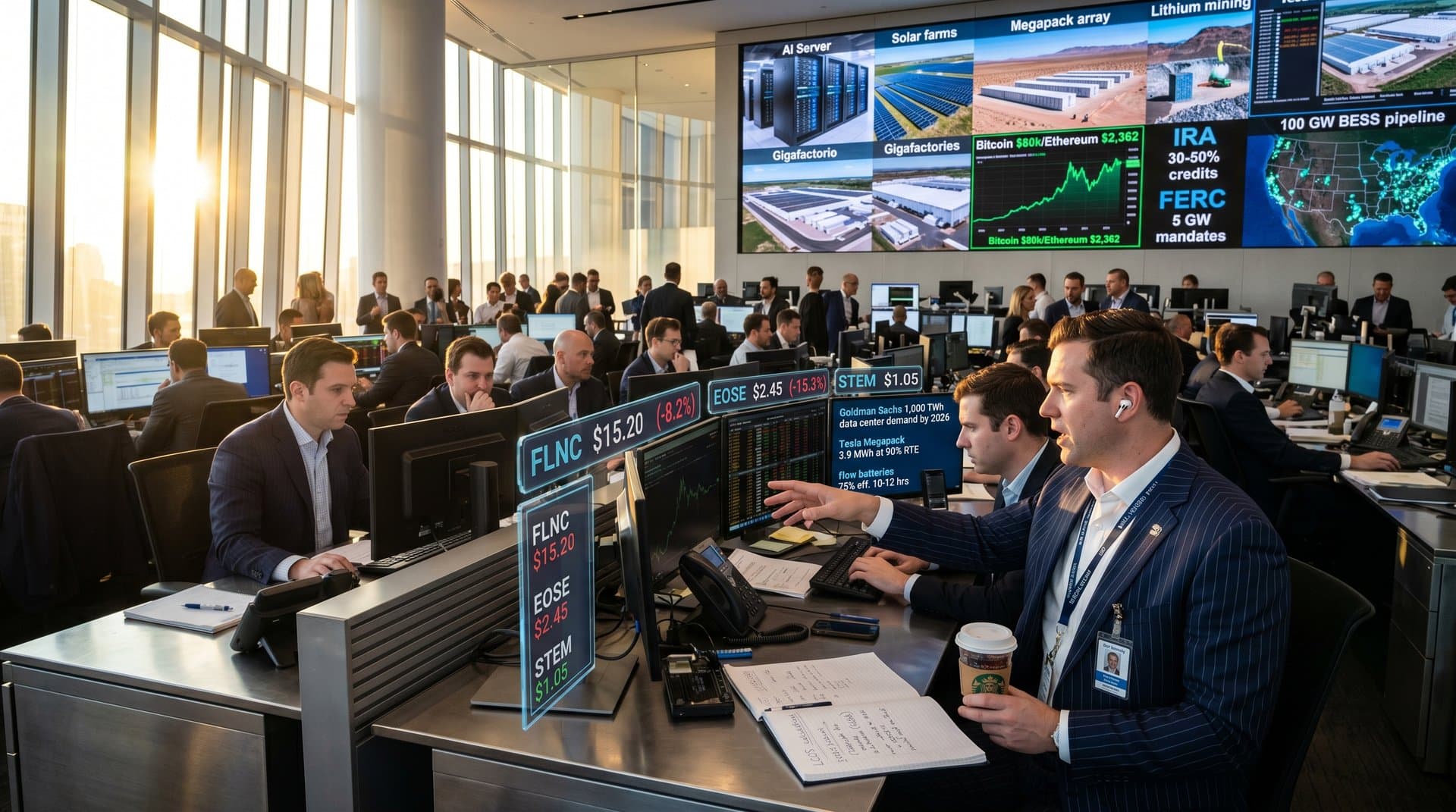
Investors target a $50 billion market. Track CATL sodium pilots and Fluence orders. Scaling decides if batteries conquer AI's power surge.