- Luke Farritor hits 99% precision decoding scrolls via CT and AI.
- PNNL AI predicts battery life at 95% accuracy from scans.
- Wood Mackenzie forecasts 1TWh grid storage by 2030.
Vesuvius Challenge winner Luke Farritor decoded a full Herculaneum scroll at 99% precision using CT scans and AI on February 5, 2024. CNN reported the non-destructive breakthrough. Energy storage firms now apply similar techniques to lithium-ion packs for 200MW grid projects.
Developers avoid million-dollar teardowns. Scans spot degradation while preserving modules.
Vesuvius Challenge Achieves Scroll Breakthrough
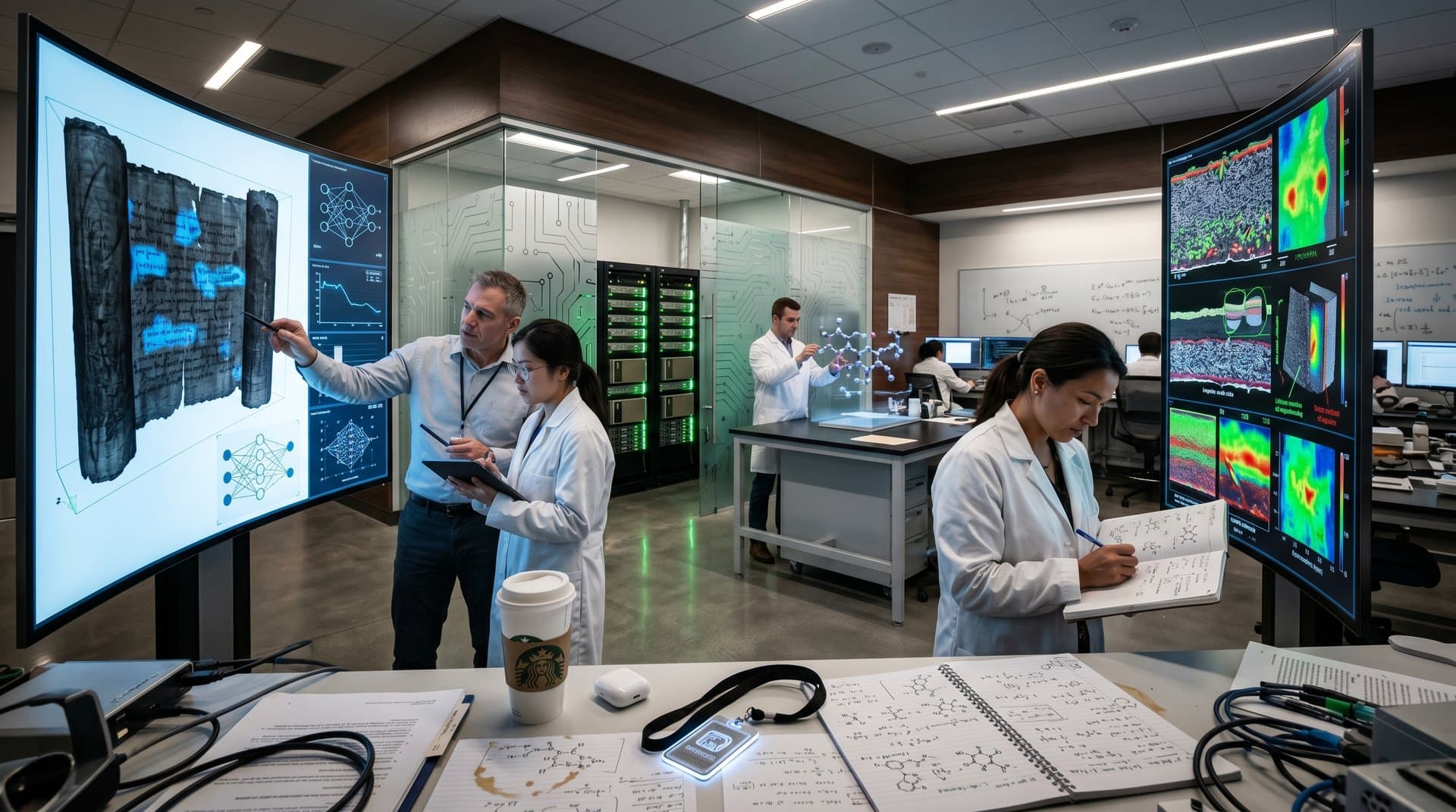
Luke Farritor and Youssef Nader trained neural networks on synthetic data. They segmented ink from carbonized papyrus at 99% precision, per the Scroll Prize Foundation's first letters announcement. Virtual unwrapping software processed 3D CT volumes from scanners resolving 2-5 micron features.
The Naples National Library stores thousands of scrolls. This unlocks ancient philosophy texts for scholars.
Battery parallels use micro-CT to map electrodes. North Star Imaging scans prismatic cells at 10-50 micron resolutions.
AI Parallels Advance Scroll and Battery Imaging
Micro-CT captures faint scroll ink. Machine learning denoises images and predicts text. Farritor verified outputs manually.
Battery scans reveal lithium plating and SEI layer growth. Convolutional neural networks quantify defects in 18650 cells without disassembly.
PNNL researcher Svitlana Pylypenko integrates AI with X-ray tomography. Models predict cycle life from early scans at 95% accuracy under IEC 62660-1 standards.
Scaling Diagnostics Cuts Battery Analysis Time
Teardowns destroy tested cells. AI analyzes CT data and voltage curves to forecast state-of-health. PNNL reports 70% time reduction.
Flow batteries use ultrasound for membrane checks. Iron-air systems detect corrosion at 0.1 mm depths non-invasively.
CATL's sodium-ion batteries reach 160 Wh/kg density and 4,000 cycles at 80% retention, per CATL's 2023 technical datasheet. Non-destructive tools lower costs versus lithium-ion.
200MW Grid Projects Demand Verified Performance
Developers deploy 200MW/800MWh projects with 20-year warranties under 20% degradation. Commissioning timelines hit 18 months.
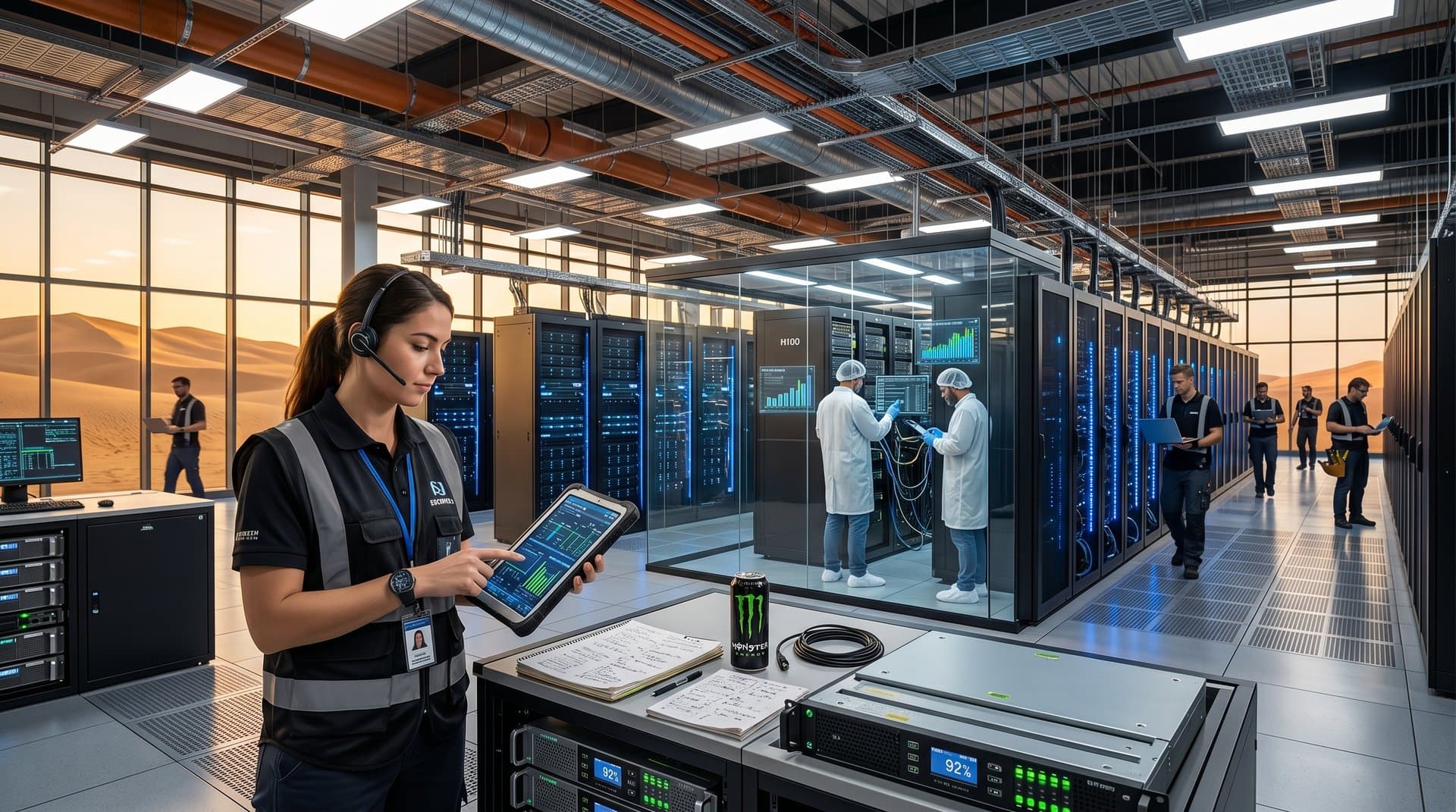
AI scans full arrays of 1,000+ modules. Ultrasound drones pair with fixed CT stations. Round-trip efficiency reaches 92% at 0.5C, per IEC 62619.
Data centers require certified packs. Wood Mackenzie analyst Julia Selch forecasts 1TWh annual grid additions by 2030 in the Global Energy Storage Outlook 2024.
Policies Mandate Non-Destructive Verification
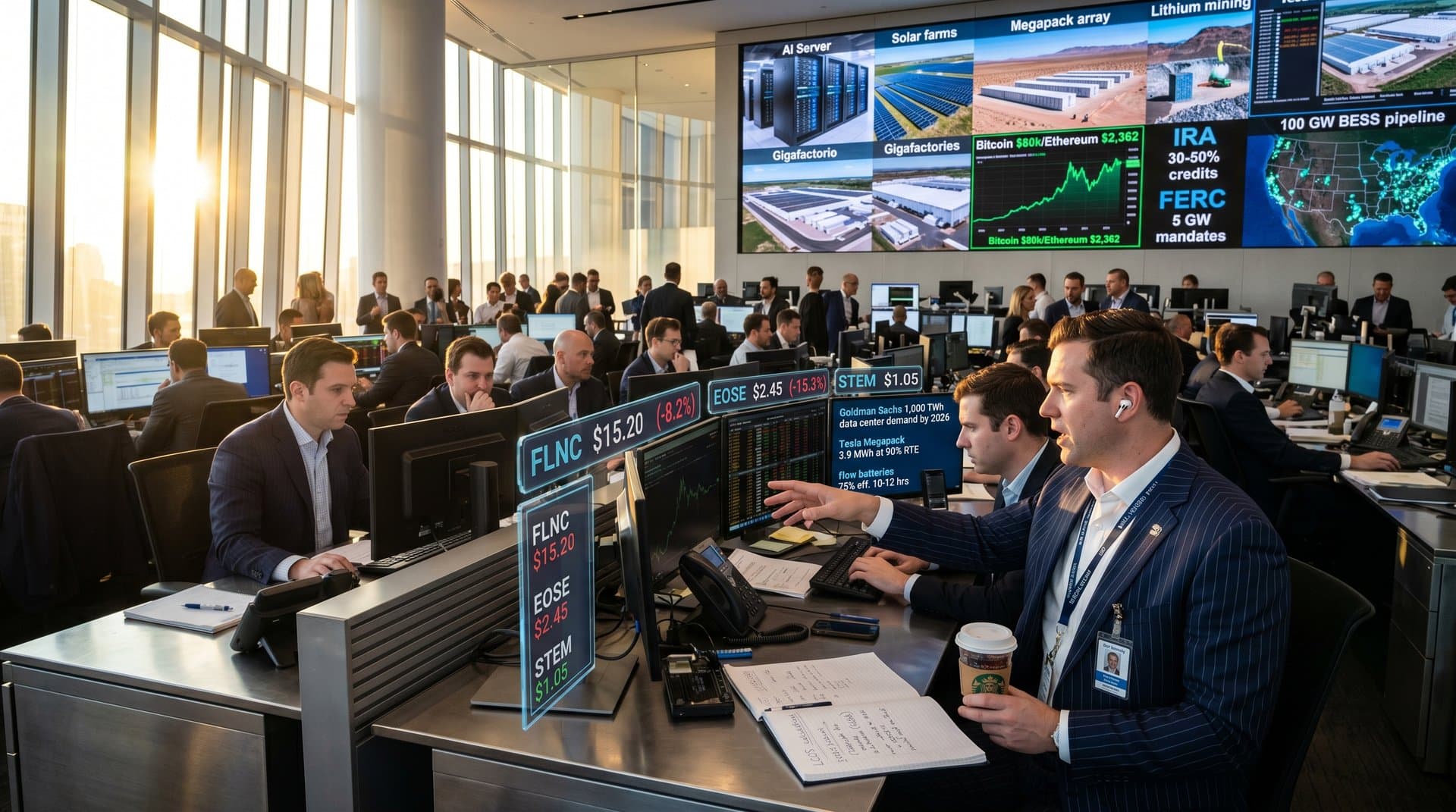
The US Inflation Reduction Act (IRA) grants 30-50% tax credits for verified storage performance. FERC Order 1920 requires long-duration planning.
EU Battery Regulation 2023/1542 demands digital health passports by 2027.
- Jurisdiction: US (IRA) · Incentive: 30-50% Tax Credit · Diagnostics Role: Degradation Verification
- Jurisdiction: EU (2023/1542) · Incentive: Digital Passport · Diagnostics Role: SOH Tracking
- Jurisdiction: China · Incentive: Subsidies · Diagnostics Role: Scale Deployment
Utilities aim for LCOS below $0.10/kWh. CATL uses AI scans for warranty optimization.
AI Drives Long-Duration Storage Growth
Non-destructive tools cut fleet monitoring costs 50%. Second-life EV batteries join grids with proven SOH.
Developers track IRA updates. Techniques scale LDES to TWh by 2030, per Wood Mackenzie.
Frequently Asked Questions
What is non-destructive battery diagnostics?
CT scans and AI assess battery health without disassembly. Techniques detect lithium plating and capacity fade in grid packs, preserving modules.
How does Vesuvius AI improve battery diagnostics?
Scroll-reading AI denoises CT data like battery imaging. Enables 99% precision defect detection for 200MW projects, cutting IRA verification costs.
What policies support these diagnostics?
IRA offers 30-50% tax credits with performance data. EU 2023/1542 mandates battery passports. AI provides scalable compliance.
How does it scale to grid storage?
Scans 1,000+ modules in 200MW/800MWh arrays. Predicts 20-year warranties at IEC standards, targeting LCOS under $0.10/kWh.