April 11, 2026
By Priya Mensah
AI bias threatens equitable access to 15 GWh of US residential battery storage by 2030. Politico reports regulators cut AI bias audits on April 11, 2026, as Wood Mackenzie forecasts 25% annual adoption growth through 2030.
Lithium iron phosphate (LFP) batteries dominate residential installs, offering 90-95% round-trip efficiency at 0.5C discharge rates and 6,000-10,000 cycles at 80% depth of discharge, per Tesla Powerwall 3 datasheet and Sonnen ecoLinx specs.
AI Penetration in Property and Lender Decisions
Seventy-two percent of large US landlords deploy AI for tenant screening, up from 45% in 2024, according to National Multifamily Housing Council April 10, 2026 survey. JPMorgan Chase applies AI to 60% of mortgage applications, processing them in under five minutes.
These systems scan credit histories, income statements, employment data, and social media profiles. Fannie Mae logged 92% default prediction accuracy for Q1 2026 models tested under IEC 62619 safety standards.
Residential battery installations demand upfront financing. Homeowners draw USD 15,000 home equity lines for a 13.5 kWh Tesla Powerwall, achieving USD 1,200 annual savings via time-of-use arbitrage at 20-30% bill reductions, Lawrence Berkeley National Laboratory (LBNL) models show.
Renters pursue landlord approvals for shared savings models, where batteries offset peak demand charges at USD 0.45/kWh.
How AI Bias Enters Residential Storage Financing
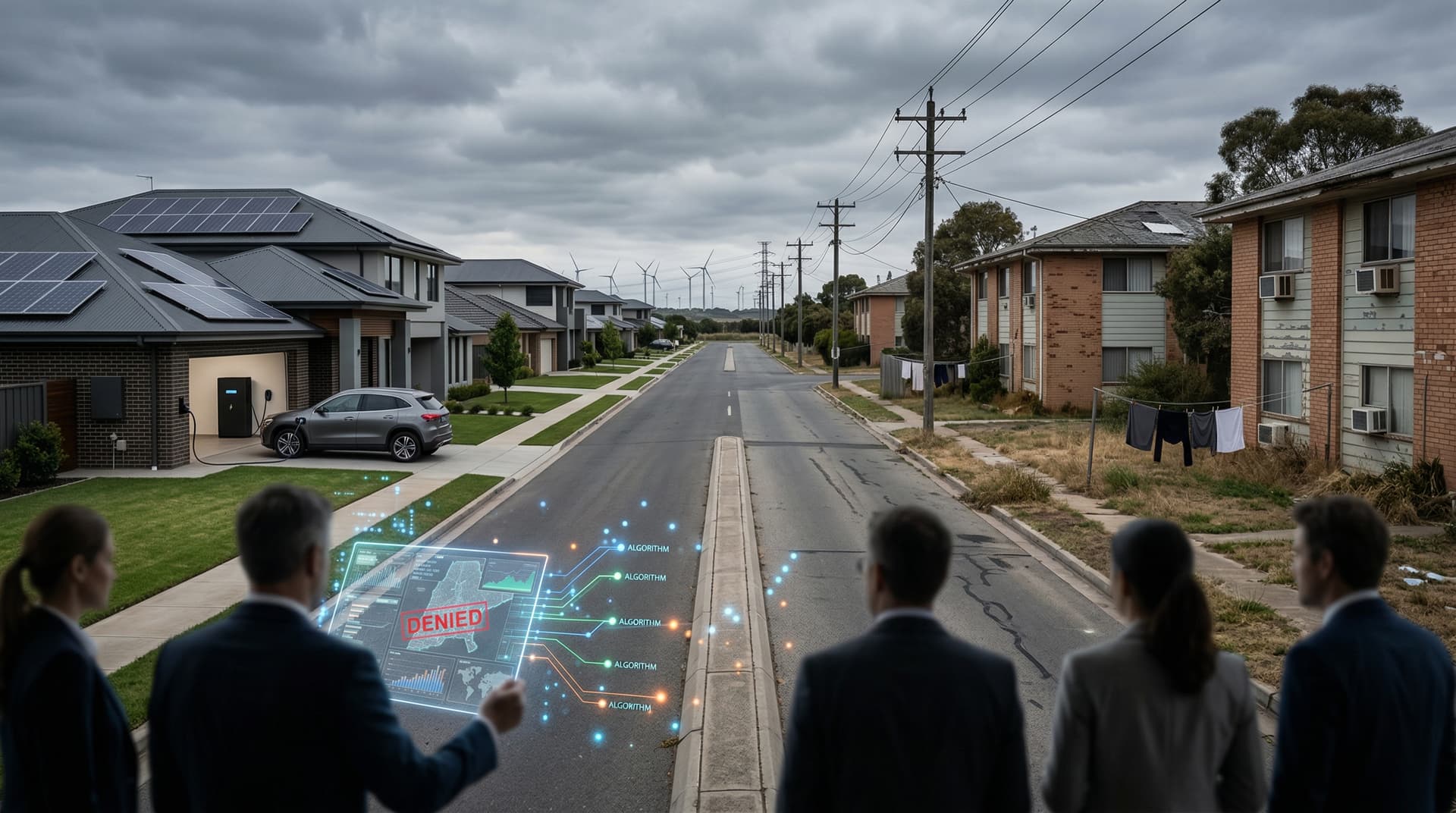
AI models train on historical lending data skewed by decades of redlining. Federal Reserve Bank of Boston 2025 study documents Black applicants receive 18% fewer loans than white peers with identical 720 FICO scores and USD 80,000 incomes.
Yardi Systems' AI screener incorporates zip code as a proxy for risk, yielding 15% higher denial rates in minority neighborhoods, ProPublica April 9, 2026 investigation found.
Zest AI claims 25% default reductions for lenders, backed by client trials. Yet Consumer Financial Protection Bureau (CFPB) February 2026 enforcement data reveals Black borrowers face 12% higher interest rates on average.
This bias curbs storage uptake. LBNL estimates underserved areas lag 22% behind in adoption, forfeiting grid peak shaving that modern LFP packs deliver at 5 kW continuous power.
Residential Battery Market Growth at Risk
US residential batteries deployed 3.2 GWh in 2025, Solar Energy Industries Association (SEIA) tallied. Loans and leases financed 80% of installs, averaging USD 1,100/kWh installed cost pre-rebates.
Landlords hesitate without proven ROI exceeding 12% IRR over 10 years. AI bias halted Sonnen's community battery pilots in three low-income complexes, per company Q1 2026 report.
Inflation Reduction Act Section 25C rebates offset 30% of USD 10,000 bidirectional EV chargers paired with Enphase IQ Batteries (3.84-11.52 kWh usable, 96% RTE).
Enphase Energy reported 14% Q1 2026 sales decline in low-income segments. CEO Badri Kothandaraman blamed financing friction during April 8 earnings call, citing USD 2.4 billion addressable market.
Regulatory Oversight on AI Bias Declines
CFPB audited 12% of AI lending tools in 2025, down from 28% in 2023, Politico's review of agency logs confirms. State regulators follow suit, auditing under 10%.
FERC Order 2222-B, issued December 2024, accelerates distributed energy resource aggregation including residential storage up to 20 MW but omits financing equity mandates (Docket No. RM22-10-000).
No federal rules target non-bank landlord screening tools. Contrast with EU AI Act Article 6, mandating high-risk audits since January 2026.
BloombergNEF projects 120 GWh global residential storage by 2030 at USD 400/kWh pack-level costs. US share could fall 15% absent reforms, equating to 18 GWh lost capacity.
Emerging Technology Fixes for AI Bias
Fair Isaac's FICO Score 10T cuts bias 40% using anonymized trended data, April 2026 whitepaper states. Thirty-five percent of lenders adopted it by Q1 2026.
Tesla Powerwall leases sidestep credit checks for 12% of 150,000 annual installs. Upstart AI approves 27% more loans for underserved applicants, per firm metrics.
CFPB bias fines reached USD 500 million since 2024. Wells Fargo settled for USD 150 million in March 2026 over mortgage algorithm disparities.
Equity Initiatives Gain Momentum
National Renewable Energy Laboratory (NREL) models predict equitable storage deployment trims grid peaks 8% and saves USD 2.5 billion in upgrades by 2030.
Energy Storage Association petitioned CFPB for mandatory audits on April 10, 2026 (Docket CFPB-2026-0012).
BlackRock reduced USD 200 million in lending tech fund allocations in Q1 2026 citing bias litigation risks.
LG Energy Solution rolled out USD 99/month leases for 10 kWh RESU systems, targeting 50,000 low-income units by December 2026, leveraging CATL LFP cells at 160 Wh/kg density.
Why AI Bias Matters for Storage Scale-Up
Unchecked AI bias jeopardizes USD 50 billion US residential storage market by 2030, McKinsey projects. Policymakers must enforce audits via CFPB rulemaking in Q3 2026. Equitable access unlocks 15 GWh for grid stability.