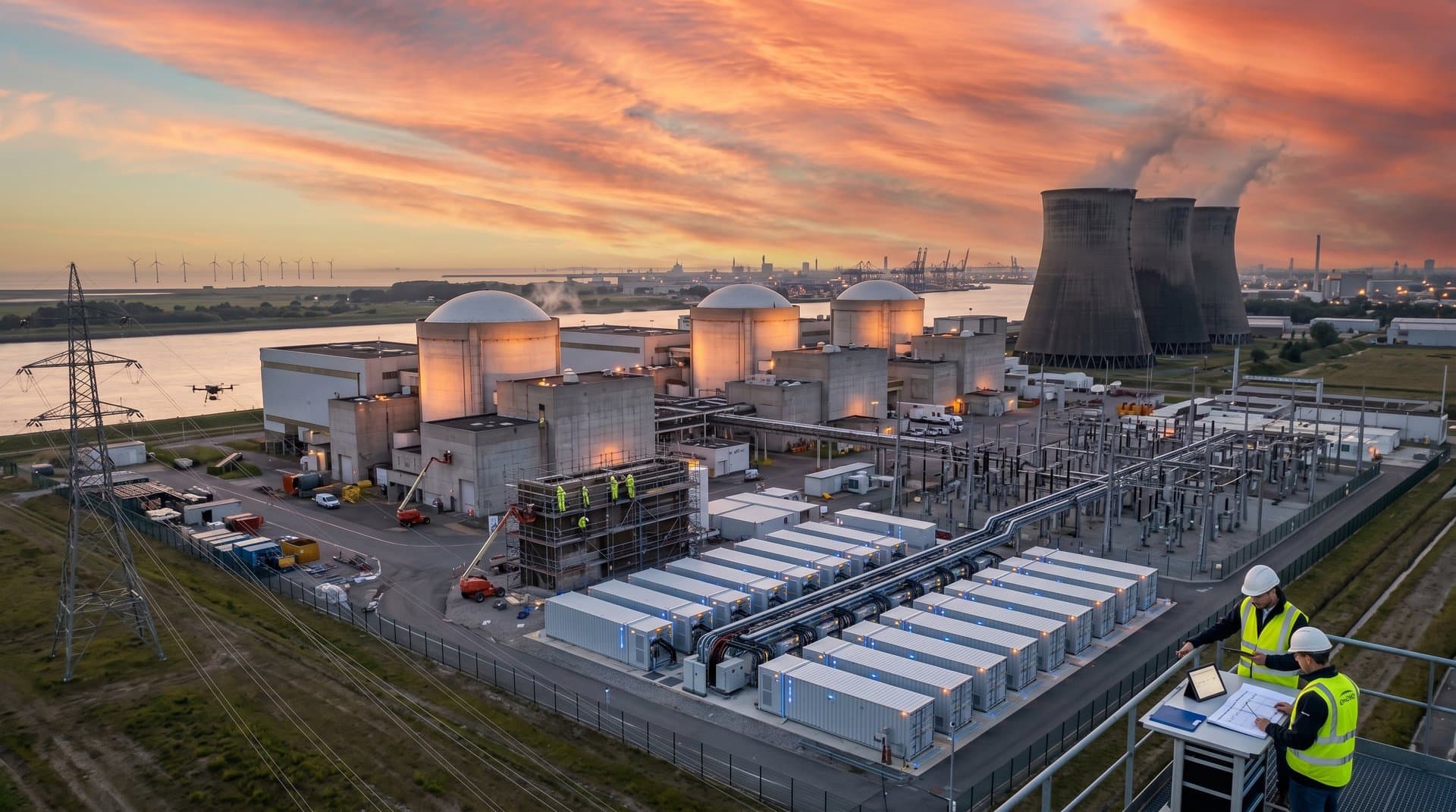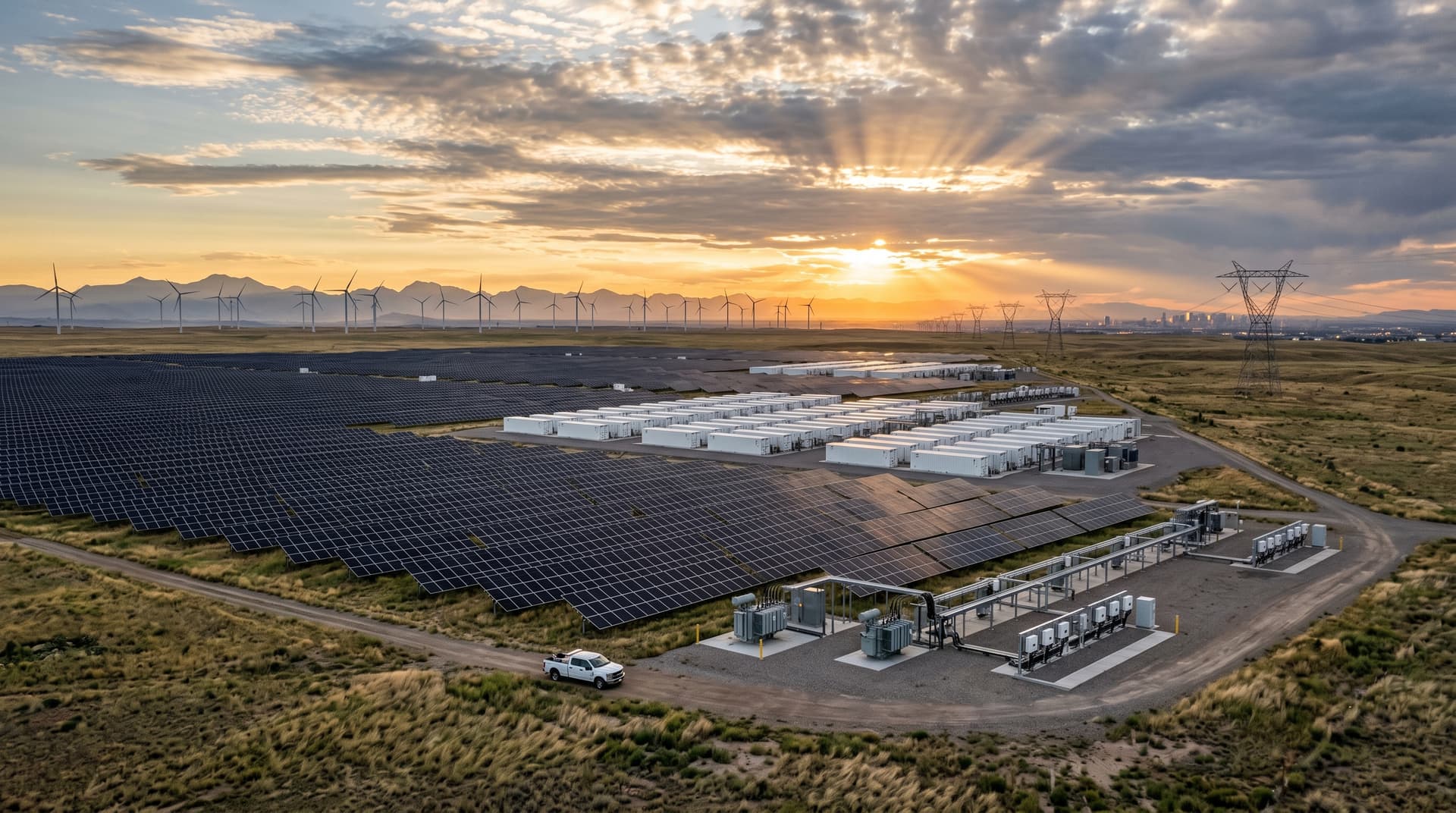
- US renewables generated 1,200 GWh vs. natural gas 1,150 GWh on April 14, 2026 (EIA).
- Lithium-ion batteries achieve 85-90% RTE at 0.25C (NREL 2023).
- 250 GW storage projects queue for interconnection (FERC).
US renewables surpassed natural gas generation nationwide for the first time on April 14, 2026, per US Energy Information Administration (EIA) data. Solar and wind generated 1,200 GWh, exceeding natural gas's 1,150 GWh.
Batteries dispatched 150 GWh to firm supply.
Renewables Reshape US Power Mix
Texas wind farms produced 450 GWh on that date. California solar arrays contributed 350 GWh midday. Natural gas plants ran at 40% capacity factor, per EIA's grid monitor dashboard.
Natural gas now acts as peaking backup. Amazon Web Services (AWS) AI forecasts boosted accuracy to 95%, according to National Renewable Energy Laboratory (NREL) analysis.
Utilities stored excess solar for evening peaks. This reduced curtailment by 25% year-over-year, per NREL data.
Grid Storage Bridges Intermittency
Lithium-ion batteries deliver 85-90% round-trip efficiency (RTE) at 0.25C discharge rates, states NREL's 2023 Cost and Performance report. They capture daytime surplus and discharge for 4-8 hours nightly.
PG&E's 400 MW/1.6 GWh Moss Landing hybrid pairs solar with storage. California Independent System Operator (CAISO) data shows it cuts curtailment by 70%.
Developers queue 250 GW of storage capacity for interconnection. FERC Order 841 lets batteries bid as generators or loads in wholesale markets.
FERC interconnection queue fact sheets list storage as the top new resource.
Policy Fuels Storage Growth
Inflation Reduction Act (IRA) offers 30-50% investment tax credits (ITC) for standalone storage exceeding 3 hours duration. California mandates 15 GW by 2030.
Renewable portfolio standards (RPS) target 100% clean energy by 2045. Utilities procure long-duration energy storage (LDES), including Form Energy's 100-hour iron-air batteries.
Nevada's lithium refinery processes 40,000 tonnes annually, aligning with EU Battery Regulation for domestic supply chains.
Hybrids Prove Economic Edge
A Midwest wind farm pairs with 200 MW/800 MWh storage for evening dispatch. Arizona's 800 MWh solar-plus-battery system achieves USD 120/kWh levelized cost of storage (LCOS), beating gas peakers at USD 150/kWh.
These systems endure 3,000+ cycles at 90% depth-of-discharge. Second-life EV batteries reduce costs by 20%. Revenues from arbitrage and frequency services top USD 200/kWh-year.
Storage maintained reliability during the 2025 polar vortex. Electric Reliability Council of Texas (ERCOT) reported zero outages tied to renewables intermittency.
Supply Chains Meet Demand
CATL's sodium-ion batteries reach 160 Wh/kg at USD 80/kWh cell cost. Vanadium flow batteries target 12-hour LDES at 75% RTE.
Tesla's Lathrop factory ramps to 40 GWh/year capacity with US Department of Energy (DOE) grants. Supply diversification cuts lithium reliance from 90% to 70% by 2030.
Storage Locks in Renewables Lead
This milestone cements grid storage as critical infrastructure. FERC's pending LDES rules will enable 100 GW commercial deployments by 2030.